Financing and partnerships
What Brandon Turner's Houston Deal Going to Zero Teaches Investors
A Texas syndicator breaks down how a Houston deal lost 100% of investor capital: short rate locks, brand risk, and why every deal must cash flow day one.
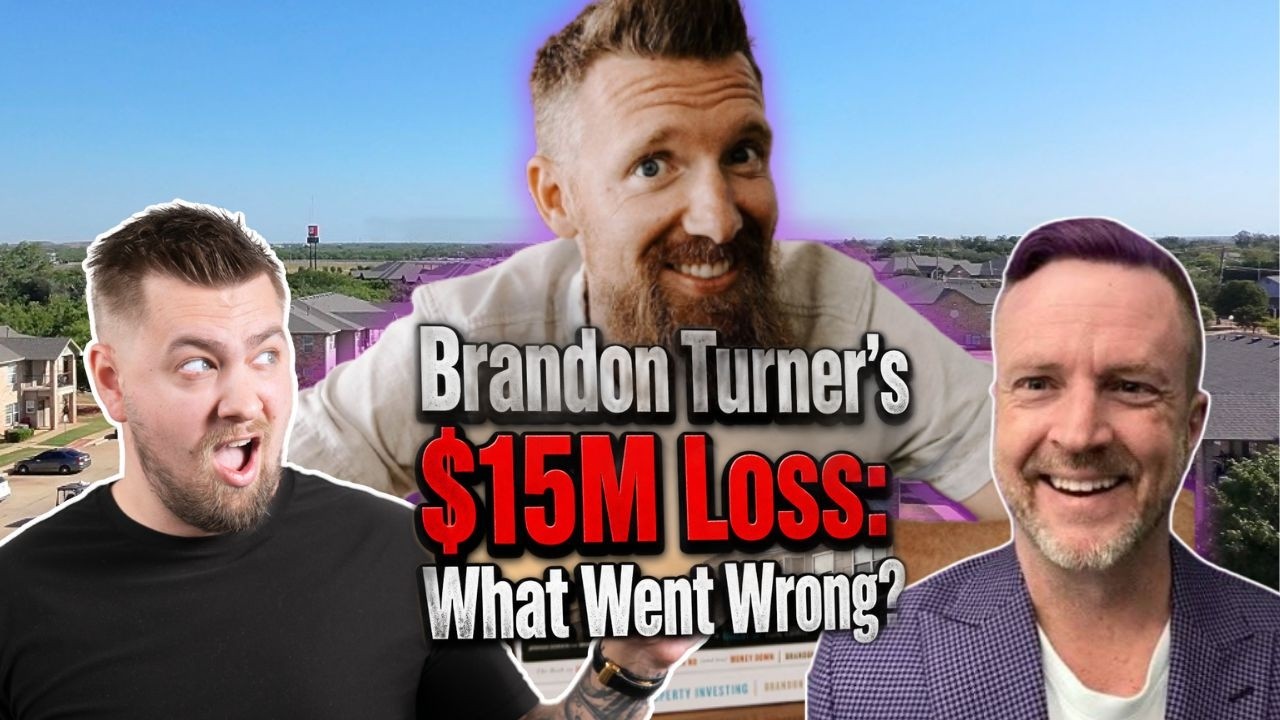
Brandon Turner's Houston deal went to zero. Roughly $15 million lost on the deal, investors in for something like $50 million, and people lost 100% of their investment.
Related reading: Brandon Turner's $15M Loss: What Actually Went Wrong
I want to talk about how that happened, why it happened, and what it means for real estate going forward, because I think I'm in a fairly unique position to speak on it. I'm a syndicator in Texas. I've syndicated three deals, done JVs in Texas, done solo deals in Texas. I own in Houston. I own in Abilene. I own in Stephenville. I own in the DFW area. As an operator, a fellow syndicator, and an investor in that same market, I have some observations that I think are valid.
My read: Brandon did some things very right and some things pretty wrong.
First, credit where it's due. Brandon Turner's The Book on Rental Property Investing was part of the inspiration for the name of my own book, The Book on Creative Real Estate. When he wrote it, I bought it almost immediately. It got me excited about rentals and it got me into my first two duplexes. He's an instrumental part of why I'm in real estate today. I like what he's done in real estate investing and I like most of what he says about it.
So this isn't a pile-on. It's an autopsy.
The Brand Problem Nobody Names
There's a common saying in syndication: the bigger the brand, the more popular the influencer, the weaker the deal.
That's not Brandon's fault: it's a function of his scale. His ability to raise capital is outsized, which means people will invest in him above investing in the deal. You see the same thing with Grant Cardone and other big names. You're not just investing in the operator, you're investing in the brand. Brandon had a massive brand through BiggerPockets.
That's actually a disadvantage. If he believes in a deal, there's going to be an outsized number of people who believe in it too. The scrutiny of the underwriting, the validity of the deal itself, becomes secondary to the fact that he's a massive trusted brand.
Is a brand a good thing to have? Absolutely. But it can work against you, much the same way it does in creative finance: you get what you negotiate. When you have that much personal capital behind your name and people believe in you as the operator, the hard part is that they may be a little more flexible in how they look at the deal, and how they invest.
On this one, they bought at a relatively low cap rate.
Operations Were Fine. The Purchase Wasn't.
Brandon wrote a letter about the collapse, and I want to be clear about what the letter shows.
From what we can see, their operations hit pretty much all their targets: top line income, increasing rents, property operations. I don't see any major holes in the game. They took the property from one place to a totally different place and massively increased the net operating income. On the top line, they did a really good job.
So where did it go wrong? They bought at exactly the wrong time, and his letter addresses that. Interest rates went up a lot, and they had relatively short-term rate locks.
I think that's a mistake. I think you should lock your debt on any of these syndicated deals. You're looking for long-term stability. That is how you do not lose people's money. The debt was too short and the rate locks were too short, especially when you're playing with really low interest debt: this was back when rates were in the 3s. The assumption that rates will stay anywhere near the same place when they're historically low doesn't make a lot of sense, and I think decisions were made on that assumption. That's the one major analytical error, where the assumptions were wrong from the shotgun.
And then everything else in that window went against them. Insurance skyrocketed well above what you'd reasonably anticipate. Property taxes in Houston came in above what you'd anticipate. Basically anything he could have gotten lucky on didn't happen.
Underwriting that deal today, with what we know about where the market went, would I have written it differently? Yes. But Brandon underwrote it where he did, and people invested where they did. The things that could be controlled after the point of purchase appear to have been controlled. The mistakes were made in the purchase.
The Letter Is the Template
Here's what means a lot to me as an investor. He points out what happened in the market. He explains why the deal didn't work. And then he says, in effect: you invested in me, not just this property, you trusted me for the timing of the market, and I chose the wrong time to invest in this deal in this location with these numbers.
Taking ownership is something we do not see a lot of, especially from syndications that go under. I appreciate that deeply. I actually saved his letter. In the event that anyone has a deal go wrong, I think that's the template you should copy. It accurately explains what happened while still taking accountability.
I also think his odds of seeing a significant lawsuit out of this are substantially decreased by the way he's handling it. It's really hard as an investor to look at this and say he did anything unethical. From all appearances he put in maximum effort, they tried everything they could, and on an operational level they did what they could do.
A total loss of investor capital is feasibly one of the worst things that can happen to you in real estate. Handling that the way it was handled: very good.
Where I Do Have a Problem: "One Hour a Day"
Here's the part I think will cost him.
Over the last three years, a lot of the ads and a lot of the branding has been: I work one hour a day, I've created this time freedom, I have the Hawaii house, the cars, the freedom. When you're doing this through syndication, a lot of the money is upfront fees: you make a lot buying and, depending on your structure, operating the deal in the first few years.
When there's a total loss of capital for other people, it's really hard for an investor to sit with that. You're advertising that you have all this time freedom, that you're working an hour a day and relaxing on your podcast, while everyone else is losing all their money. That's a hard thing to overcome.
I try very hard on this channel to say the opposite. Real estate is not easy. It's a job. Every business is difficult. You should give it more than an hour a day. Your business should be your business, and you should treat all business like a business.
There will never be a point where my investors see social media of me relaxing and talking about time freedom. While we have active deals, everything we have has my full attention. I'm out in the field at these properties. I moved to Texas because that's where the momentum of my portfolio went. While I'm raising capital, I'm on the ground working. I own and control the property management company and I'm the active CEO. It isn't delegated.
I can teach anyone on planet Earth how to build $10,000 a month of relatively passive income through real estate. It takes about two and a half to three years for most people using creative real estate strategies, and the average person can get there. That kind of time freedom is real.
But if you want to build a big business (and large-scale syndication is a big business) it's an unbelievable amount of attention, work and responsibility. I don't doubt Brandon put in the work or the effort. I don't have an ethical issue with how he ran this deal from anything I've seen or heard. My problem is branding off the idea that this is easy and the time is free. That's not business, especially not big business.
If real estate was that easy, everyone would be financially free through real estate. The money works like money in any other business: if you scale correctly and manage your pieces correctly you can build something big, but you have to outcompete. Do you believe you'll outcompete people in a business on one hour a day, when everyone else is roughly as intelligent as you and working full days?
Buy So the Deal Works on Day One
Brandon is not the only syndicator, especially in Houston, who got slammed. Insurance, taxes, rates: all of it got hit, in a window where everyone and their sister was under the impression that they could just syndicate, crowdsource, bring in a bunch of people.
You need to be very conservative on every deal you do, and it has to work day one. You do not ever buy a piece of real estate based on the future upside. If it does not work today, it's not a deal.
I've broken that rule on smaller deals and paid for it. You carry the negative longer and it costs more to get from A to B. I did it with the Robin Hood Village Resort. I did it in a hotel conversion. You think you know everything, you go in, the market changes, and the things you thought you knew might not be true at the time that it matters.
This is not in any way an ad for syndications: I have no active capital raises right now, so you couldn't invest with me if you wanted to. But our 76-unit, our 144-unit and our 80-unit were all bought where they cash flow day one, at excellent prices, at a point where if nothing went our way, if our business plan didn't work, no one would have lost a single cent. We've never missed a distribution. That's not just because we're good operators, though I believe we are. It's because we bought right from the beginning.
I prefer an ultra low risk, moderately high return. I don't need a home run where everyone who invests with me gets rich. I don't invest on the premise that the upside will show up and then you'll make money. Day one, on every deal we've closed, distributions start in month one. No lag period, no stabilization period. If you have the discipline to do that, it's very, very hard to lose in real estate.
I had the advantage of timing: the bulk of my buying was 2020 and 2021, right before rates skyrocketed, and I started in 2016. But we bought on long-term cash flow and fixed rate debt. Even the deals we bought at really low interest still have a long time left on the debt. I'm getting paid to wait for the market to improve, and all of those deals have paid us every single month.
Key Takeaways
- A big brand raises capital faster than it raises scrutiny. When people invest in the operator instead of the deal, underwriting discipline has to come from the operator alone.
- Operations weren't the failure here. Rents, top line income and NOI all improved. The loss was written into the purchase.
- Short rate locks on historically low rates were the analytical error. Lock long-term fixed rate debt on syndicated deals: that's how you avoid losing people's money.
- Insurance and Houston property taxes both ran well past reasonable assumptions. Underwrite expenses you don't control with room to be wrong.
- The letter is a model for accountability: explain the market, explain the deal, own the decision. It also reduces legal exposure.
- Don't brand off "one hour a day" while investors carry the risk. Treat the business like a business.
- Buy deals that cash flow on day one at a price where the business plan failing still doesn't cost investors money.
I believe Brandon survives this. He handled it well enough and has a long enough track record to overcome it, and I hope the branding shifts away from "this is easy." Watch the full breakdown above for the deal-level detail and my read on where the Houston market goes from here. If you want the structures I use to buy, "The Book on Creative Real Estate" is on Amazon, there's a free course on getting started in multifamily, a free community with a deal calculator, and mentorship details on the site.
Read the episode transcript
0:00 Ex Bigger Pockets host Brandon Turner's
0:03 Houston deal goes to zero. $15 million
0:07 lost. Investors like $50 million. People
0:09 just lost 100% of their investment. How
0:12 did this happen? Why did it happen? As a
0:14 syndicator in Texas, I have syndicated
0:16 three deals. I've done JVS in Texas.
0:18 I've done solo deals in Texas. I've
0:21 owned in the same market. I own in
0:22 Houston. I own in Abene, Texas. I own in
0:24 Stevenville, Texas. I own BFW area. as
0:26 an operator, as a fellow syndicator, as
0:28 an investor in Texas, I feel like I'm in
0:30 a relatively unique place uh to get to
0:33 speak on this. So, I I believe I have
0:36 some pretty valid observations here, but
0:38 I think Brandon did some things very
0:39 right and some things pretty wrong on
0:42 this. What actually happened? How do you
0:44 avoid this happening? And what does this
0:46 mean for real estate moving forward? Is
0:48 this going to be a trend that we keep
0:49 seeing? I'm going to get into that in
0:50 today's video. Uh, first of all, I just
0:52 want to point out I if anyone happens to
0:54 forward this to Brand Brandon Turner's
0:56 book, the book on rental property
0:59 investing, actually was part of the
1:00 inspiration of the name of my book, the
1:01 book on creative real estate. When he
1:04 wrote that book, I bought it almost
1:05 immediately. It got me excited about
1:07 rentals. It got me into my first two
1:08 duplexes. Uh, he's actually a very
1:10 instrumental part of why I am in real
1:12 estate today. So, I want to give credit
1:14 where credit is due. Um, I really like
1:16 what he's done in real estate investing.
1:18 I like most of what he says about real
1:20 estate investing. Where did this deal go
1:22 wrong? Well, there is a common saying in
1:25 syndication, and you're going to see
1:26 this often, but the bigger the brand,
1:29 the more popular the influencer, uh, the
1:32 weaker the deal. This is pretty common.
1:34 It's not Brandon's fault because of his
1:37 scale. His ability to raise capital is
1:39 outsized, which means people will invest
1:41 in him above investing in the deal. And
1:44 you see this with Grant Cardone, you see
1:46 this with other big big names is you're
1:48 not just investing in the operator,
1:50 you're investing in the brand. And he
1:51 had a massive brand through Bigger
1:53 Pockets. That's actually a disadvantage
1:56 to Brandon because if he believes in a
1:58 deal, there's going to be an outsized
1:59 amount of people who believe in it, too.
2:01 The scrutiny of the underwriting or the
2:03 validity of the deal already is
2:06 secondary to the fact that he's a
2:08 massive trusted brand. Is it a good
2:11 thing to have? Absolutely. However, it
2:12 can work against you much in the same
2:14 way with creative finance. You get what
2:16 you negotiate. Uh when you have a high
2:18 amount of personal capital where people
2:21 believe in you as the operator, um the
2:23 hard thing is they may be a little bit
2:25 more flexible on how they look at the
2:27 deal and how they invest. So on this
2:29 deal, they bought it at a relatively low
2:31 cap rate. Um I do want to point this
2:33 out. So he wrote a letter and I love the
2:35 way that he wrote his letter. First of
2:36 all, huge respect to Brandon. He
2:38 addressed this heads. their operations.
2:40 They hit for what we can see pretty much
2:43 all their operational targets as far as
2:45 topline income, increasing rents,
2:47 property operations. I don't see any
2:49 major holes in the game. They took it
2:51 from one place to a totally different
2:52 place. They massively increased the net
2:54 operating income. Um, as far as the
2:56 topline income, they did a really good
2:57 job. Where did it go wrong? Well, they
3:00 bought at exactly the wrong time. And
3:02 his letter does address that. and it's
3:04 like, hey, look, it interest rates went
3:05 up a lot and they had relatively
3:07 short-term rate locks. I think that's a
3:10 mistake. I think you should lock your
3:11 debt on any of these syndicated deals.
3:13 You're looking for long-term stability.
3:15 That is how you do not lose people's
3:17 money. Um, so I think the debt was too
3:19 short. I think the rate locks were too
3:20 short, especially when you're playing
3:22 with this really low interest debt. This
3:24 is back when rates were like in the 30s.
3:26 The assumption that rates are going to
3:27 stay anywhere near the same place when
3:29 they're historically low doesn't make a
3:32 lot of sense. And I think they made
3:34 decisions based on that. I think that is
3:35 the one major analytical error where the
3:39 assumptions were wrong from the shotgun.
3:42 That being said, what else did we see in
3:43 that time? Insurance skyrocketed well
3:46 above what you would reasonably
3:48 anticipate. Property taxes for Houston
3:50 and above what you'd anticipate.
3:52 Basically, anything that he could have
3:53 got lucky on did not happen. The things
3:56 that they could control, though, I just
3:57 want to I want to give him full credit
3:58 for this. It appears that the things
4:00 that could have been controlled were
4:01 controlled after the point of purchase.
4:04 There were mistakes made in the purchase
4:05 from what I can see in underwriting the
4:07 deal today. Being able to look back with
4:10 our knowledge from where the market's at
4:11 today looking back in the past, would I
4:14 have underwritten it differently? Yes.
4:16 However, Brandon underwrote it where he
4:18 did, people invested where they did.
4:19 Here's what I'm really here's what means
4:21 a lot to me as an investor. He points
4:24 out what happened in the market. He
4:25 explains why the deal didn't work. And
4:27 then he points out in his letter, "But
4:29 you invested in me, not just this
4:30 property, and you trusted me for the
4:32 timing of the market, and I chose the
4:35 wrong time to invest in this deal in
4:37 this location with these numbers." Um,
4:40 taking ownership is something that we do
4:41 not see a lot, especially from these
4:43 syndications that go under. I appreciate
4:45 that deeply, and I really wanted to I I
4:48 actually saved his letter. In the event
4:50 that anyone has a deal that goes wrong,
4:51 I think that is the template in which
4:53 you should copy it. it accurately
4:55 explains what happened. Um, while still
4:58 taking accountability, I think his odds
5:00 of seeing significant lawsuit from this
5:02 are significantly decreased by the way
5:04 that he's handling this. It's really
5:06 hard as an investor to look at this and
5:07 say like, "Hey, you did anything
5:09 unethical from all appearances. He put
5:11 in the maximum effort. They tried
5:13 everything that they could and on an
5:15 operational level, they did what they
5:16 could do." So again, if anyone happens
5:18 to forward this to Brandon or Brandon
5:20 sees this, um, respect for how you
5:22 operated the deal and a huge amount of
5:25 respect for how you handled the fact
5:26 that a terrible thing happened. Like
5:28 this is the feasibly one of the worst
5:30 things that can happen in real estate is
5:31 the total loss of capital for your
5:33 investors. So handling that the way that
5:35 was handled, very good. Uh, here's one
5:37 of the major problems I have. So going
5:38 the going the opposite direction. I
5:40 think where Brandon is going to be
5:42 feeling some pain is over the last three
5:44 years a lot of his ads, a lot of his
5:46 branding is I work one hour a day. I've
5:49 created this time freedom. I have the I
5:52 have the Hawaii house, the cars, the
5:54 freedom. When you do this through
5:56 syndication, a lot of it is upfront
5:57 fees. You make a lot of money buying and
6:01 in the first few years depending on your
6:02 structure operating the deal. When you
6:05 have a total loss of capital for other
6:06 people, it is really hard for an
6:08 investor to look at this and say, "Hey,
6:09 wait a second." So, you're advertising
6:11 based on, "Hey, I have all this time
6:13 freedom and I'm not doing, you know, I'm
6:14 working an hour a day and I'm I'm here
6:17 relaxing here on my podcast while
6:20 everyone else is losing all their
6:21 money." I think that's a really hard
6:22 thing to overcome. Something that I
6:24 personally try to do very hard on my
6:25 channel is uh real estate is not easy.
6:28 It is a job. Uh, every business is
6:30 difficult. You should give it more than
6:32 an hour a day. Your business should be
6:34 your business. You should treat all
6:35 business like a business. There will
6:37 never be a point where my investors see
6:39 social media of me relaxing or saying,
6:42 "Hey, I have all this time freedom."
6:44 While we have active deals, everything
6:46 that we have has my full attention. I am
6:48 out in the field at these properties. I
6:50 moved to Texas because that is where the
6:52 momentum of my portfolio went. As I'm
6:53 raising capital, I am here on the ground
6:57 working my butt off. I own and control
7:00 the PM company and I am the active CEO.
7:03 It's not delegated. It's not this
7:05 structure where, oh, you know, I have
7:06 all this time freedom. I can teach
7:08 anyone on planet Earth how to build
7:09 $10,000 a month of relatively passive
7:12 income through real estate. You can do
7:13 it. Takes about two and a half to three
7:15 years for most people. Uh, if you get
7:17 into multif family and you understand
7:18 how to do this again using creative real
7:20 estate strategies, but the average
7:22 person can get there. You can get that
7:24 time freedom. If you want to build a big
7:26 business, which is what Brandon did. I
7:28 mean, we're talking large large
7:30 syndication, it's an unbelievable amount
7:33 of attention and work and
7:34 responsibility. I don't doubt that
7:36 Brandon put in the work. I don't doubt
7:38 that he put in the effort. I really I I
7:40 don't have an ethical issue with how
7:42 Brandon ran this deal from anything that
7:43 I can see or anything that I've heard.
7:45 Where I have the problem is when you
7:47 brand off this is easy and the time's
7:49 free. That's not business. Especially
7:51 not big business. It takes time. It
7:53 takes dedication. Uh if real estate was
7:56 that easy, everyone would be financially
8:00 free through real estate. It is like any
8:02 other business. This is what I love
8:03 about real estate. The money works like
8:05 money in any other business. If you
8:07 scale correctly and you manage your
8:09 pieces correctly, you can have a big
8:10 business, but you have to out compete.
8:12 Do you believe that you will be able to
8:14 out compete people in a business with
8:17 one hour a day when other people who are
8:19 also roughly as intelligent as you,
8:21 we'll just assume the average person is
8:23 roughly, you know, roughly even playing
8:25 field. I know intelligence levels vary,
8:28 but do you think that people roughly
8:31 your intelligence will not out compete
8:33 you on a one hour a day? I just think
8:35 the branding had a massive problem. Um,
8:37 and I think it it as an investor that
8:39 would hurt me personally the most seeing
8:42 that content knowing that all the money
8:44 is gone. That would I would never want
8:47 to see that. So that's the one thing
8:48 that I really think was done
8:50 particularly wrong is that that it
8:52 should have been on longer term fixed
8:54 rate debt. There should have been more
8:55 protections uh on the actual debt
8:57 because the rate is really what smacked
8:59 this thing. Um, but there's a certain
9:01 amount of you can only control what you
9:02 can control and you're going to play the
9:03 game where the goalposts are. So, I
9:05 don't want to I don't want to hit him
9:06 harder than I I I see some people really
9:08 slamming one. I think the mistakes were
9:10 made in the branding and especially on
9:12 the personal brand side. I think that's
9:13 where the mistakes were made. If you're
9:14 looking at the actual operations of the
9:16 deal, you had a deal that operated well.
9:18 Uh what do I think is going to happen in
9:19 the future here? Well, Brandon is not
9:21 the only syndicator, especially in the
9:22 Houston market, uh who got slammed with
9:24 deals. The insurance, the tax, the
9:26 rates, all of these things got hit. And
9:28 this was in a time where everyone and
9:30 their sister was under the impression
9:31 that, hey, I can just syndicate,
9:33 crowdsource, bring in a bunch of people.
9:34 You need to be very conservative on
9:36 every deal you do. And it has to work
9:38 day one. You do not buy a piece of real
9:40 estate ever based on the future upside.
9:42 If it does not work today, it's not a
9:45 deal. I've done this on smaller deals.
9:47 You carry the negative longer. It costs
9:50 more to get from A to B. I've done this
9:51 with the Robin Hood. I've done this in a
9:52 hotel conversion. You think you know
9:55 everything and you go in and then the
9:57 market changes and so the things that
9:59 you thought you knew might not be true
10:01 at the time that it matters. Buy based
10:03 on cash flow day one in the syndications
10:05 that we have and this is not in any way
10:07 an ad for syndications. In fact, I have
10:09 no active capital raises right now. So
10:10 you could invest with me if you wanted
10:12 to. But our 76 unit, our 144 unit, our
10:15 80 unit deal, any of these uh we bought
10:18 them where they cash flow day one, we
10:20 bought them for excellent prices. We
10:22 bought them at a point where if nothing
10:24 went our way, if our business plan did
10:26 not work, no one would have lost a
10:28 single scent. We've never missed a
10:29 distribution. And it's not just because
10:31 we're amazing operators, though I
10:32 believe we are. It's because we bought
10:35 right from the beginning. We take the
10:36 risk profile. I prefer a ultra low risk,
10:40 moderately high return. I don't need a
10:42 home run. Hey, everyone who invests with
10:44 me is going to get rich. Um, and I don't
10:46 invest on, hey, we believe the upside's
10:48 going to be here, so if this deal does
10:49 this, then you'll make money. I go, hey,
10:51 look it, day one, every deal we've
10:53 closed, distributions start in month
10:55 one. There's no lag period. There's no
10:57 stabilization period. We buy deals where
11:00 they cash flow. And if you have the
11:01 discipline to do that, it's very very
11:03 hard to lose real estate. Uh that has
11:05 been something that I adopted early and
11:07 I I had the advantage of I started a lot
11:10 of my investing right before these
11:12 interest rates started skyrocketing. It
11:13 was like five years ago. So, a the bulk
11:16 of my investing I started in 2016, but
11:18 the bulk of my investing was 2020, 2021,
11:21 we bought on long-term cash flow and
11:23 fixed rate debt. Even the deals where we
11:25 bought with really low interest, we
11:27 still have a long time left on the debt.
11:29 I'm just getting paid to wait for the
11:31 market to continue to improve. And all
11:33 of those deals have paid us every single
11:34 month going through. That principle will
11:37 save you as an investor. But I wanted to
11:40 fully address the situation. It's a real
11:41 syndicator. as another Houston
11:43 syndicator, uh, or not syndicated in
11:46 Houston, but as a Texas syndicator and a
11:47 Houston investor. Um, I understand what
11:50 happened. I think Brandon handled it
11:51 well on the back end. You can't go back
11:54 in the past and fix anything, but I hope
11:56 that he learns from what they did
11:59 incorrectly on this one and continues to
12:02 grow. And I I believe that he will
12:05 survive this. That is my educated guess.
12:07 I believe that he has handled it well
12:09 enough and has a long enough track
12:10 record where he will overcome this and
12:13 will continue to survive as a brand.
12:15 Hopefully the branding changes a little
12:16 bit from this is easy. You can do this
12:18 one hour a day, but that's up to him. I
12:20 hope this was helpful. Again, if you
12:21 guys want to check out my book, The Book
12:22 on Creative Real Estate, it's available
12:23 on Amazon. Uh link is in the description
12:26 and I'll talk to you'all soon.
Put these ideas to work.
Get support from Christian and the coaching team with your next multifamily deal. See how the mentorship works or start your application.
Apply Now