Analyzing and negotiating
Brandon Turner's $15M Loss: What Actually Went Wrong
Michael Zuber and I break down the sub-4 cap Katy, Texas syndication that wiped out $15M of investor capital, and the five questions we'd ask Brandon Turner.
Michael Zuber and I were already deep into this conversation before we hit record. He finally said, "Dude, hit record," so we did, and you're joining us mid-argument about the Brandon Turner situation, the roughly $15 million of investor capital that went to zero on a Katy, Texas syndication, and why we both think there's more coming.
Related reading: What Brandon Turner's Houston Deal Going to Zero Teaches Investors
I want to be fair from the start, because this is easy to get wrong. The first real estate book I ever read was Brandon Turner's. I still like that book. I genuinely like the way he started investing: cash-flowing real estate in secondary markets, solid fundamentals, solid operations, mom-and-pop investor. He did great work at BiggerPockets and that was my favorite era of that channel. I would not be where I am in real estate if he hadn't written that book. So this isn't a takedown. It's a breakdown of what went wrong, so you don't repeat it with your own money or someone else's.
The best marketer in real estate
Michael's history with Brandon goes back further than mine. He knew Brandon as an intern at BiggerPockets: Michael was interview number 65 with Josh Dorkin, filmed in Dorkin's basement in Colorado. He wrote for BiggerPockets as a featured weekly writer, and he flew in from Asia to speak at the first unofficial BiggerPockets event in Denver. He still has the speaker shirt: "Mine are bigger than yours" on the front, "pockets. BiggerPockets" on the back.
Michael admits he hated Brandon for a while. Brandon came in and disrupted the blog to the point that Michael left. They talked decades later and Michael concluded that roughly 95% of the problem was his, not Brandon's. He held a grudge for a long time simply because he was wrong.
With that said, here's Michael's honest assessment: over the last 15 years, no single human being on the planet has gotten more people excited about real estate investing than Brandon Turner. Bigger than Rich Dad Poor Dad over that window. Part of why this story has so much momentum is that it's the guy we all looked up to: the golden child, the Midas touch, and the longest beard.
Michael's framing of the superpower is the part worth keeping. All of us have one; most of us don't know what it is; fewer still capitalize on it. Brandon knows exactly what his is and has been wringing it for everything it's worth: he can take a process, turn it into a story, coin an acronym, essentially trademark it. BRRRR is one example out of probably dozens of things he named that are now just how we all talk.
I'll add my own confession here. "The Book on Rental Properties" is why my book is called The Book on Creative Real Estate. I saw what he did there, thought it was genius branding, and when I was picking a name I just prayed nobody had taken it. So yes: my title is a Brandon Turner tribute.
What makes him different from a Grant Cardone or a Pace Morby, in my view, is relatability. Those guys always feel larger than life. When Brandon explained something, you could put yourself directly in his shoes. That's a real superpower. It's also, as you'll see, exactly what made this deal possible.
The deal was bought wrong
Michael has receipts, and he says so. He's been recording content for eight years and has been an accredited investor for 15, and he saw syndications in 2021 and 2022 that were dead on arrival and still got funded.
His read on Katy: the deal was bought wrong. Brandon bought it at a sub-4 cap. Michael's look at the underwriting had it at about 3.2. I've heard people say 3.2 to 3.8. As Michael put it, he doesn't give a rat's ass about the difference: sub-4 is sub-4.
To make the point, Michael used his own market. Fresno, California is a class B area with older inventory, a little rougher, and it has long run as an 8 cap for a decade. In 2021 it went to a six cap and he sold two apartment buildings because he thought those buyers were crazy. Then it went to four and a half. He was early, but he was out and liquid. That's the era Brandon bought Katy in: when people were paying four and a half for something that should have been an eight.
Katy, Texas does not normally trade at a sub-4 cap. I can verify that as an investor in the Houston area. Michael's estimate of the honest range: most of Houston is a five-and-a-half to six cap market, and Katy is probably a six-and-a-half cap market.
So why do it? Michael's answer is uncomfortable: "The only reason you do that, unfortunately, is you have mouths to feed." Overhead, teams, payroll. That's why so many syndicators are going bust: they did bad or skinny deals with stupid assumptions and tied it all together with short-term debt, three or four years. Dead on arrival the day they closed.
Related reading: Michael Zuber: Why the Multifamily Reset Is Only in the Third Inning
And here's the part that matters most for anybody trying to learn from this. When I look through the rest of what Brandon did (the rent increases, the management structure) I see no holes in the business plan. Near-perfect execution. Michael agreed completely. They technically hit their operational upside.
You cannot resuscitate a bad deal. When you overpay, you overpay. There's a small margin where a great operator outperforms, maybe a 10 to 15% push over the next guy if you're the best marketer with the best team. That does not save you when you paid almost twice what you should have. Michael's estimate is that Brandon overpaid by at least 50%. People win the lottery all the time; it doesn't mean you should play.
What the market actually looks like right now
This is where the conversation stopped being about one deal.
Michael cited Ken McElroy saying there are a thousand deals in Dallas from that era that are in trouble. That tells you how nutty it was.
For context on the other side: I've closed $12.5 million of syndicated deals this year outside of my JVs and other business, both in Q1, both in Abilene, Texas. Strong cash flow day one, over 90% occupancy: hyper-stable real estate. Meanwhile, a lot of what I'm seeing in Abilene, Lubbock, Houston, Dallas, and one in Addison in DFW are all selling for less than they owe. Every single one currently on the market.
It's not the bloodbath influencers describe. These are mostly big players who can maneuver, work extensions with the bank, and find plays. But some of these deals are hitting the end of the road, and lenders have accepted reality and are shaving off price.
Here's the thing I want you to hear clearly, and Michael said it best: when the bank is talking about a 5 or 10% haircut, that means 100% of the equity is gone.
Michael invested through the GFC, bought a ton of residential last time, and has raised multiple seven figures in the last nine months specifically to buy apartments at 60 to 70% of debt. He's been here before. He once bought an apartment building at $21,000 a door: that's $120,000 a door today, and it was in California.
That number is already showing up. A broker in Denton, Texas showed me four deals from portfolios negotiated directly with the bank at exactly 70% of what was owed. Seventy percent is the magic number they're trying to recover. And I'll tell you what: at 70% off in Denton, the deal still didn't work.
Michael thinks this plays out over 18 to 24, maybe 36 months.
The flip side is that 2026 deals are massively better than 2021 deals, because you're buying below replacement cost. Michael's rule: if you can buy at 60% of replacement cost and hold at least ten years, it's really hard to go broke. My best deal proves it. My first-ever syndication, in Texas, last year: 76 units on 13.5 acres, garages, two-story four-bedrooms, pools, gym, the whole campus. Replacement cost came in at $22 million. I bought it for $7.6 million: about 30 cents on the dollar, with Fannie debt at 5.8% for six to seven years.
If you're an LP, you have to underwrite like a GP
Michael's framing of the branding problem: the bigger the name, the worse the deal. He even warned me about it as my own audience grows, though he gave me "a decade before you're Brandon Turner."
Look for operators first. If Brandon had said early on, "I'm buying two side-by-side 12-plexes in a market I'm highly established in," I'd have believed him completely. He had the credibility and the experience in that space. What happened in Texas was the perfect case study of the opposite: everyone said Texas is amazing (and it is, and it's growing) therefore I can buy at a 3% interest rate, assume rates stay at 3%, assume 5% rent growth, and assume a lower cap rate on exit. All of it illogical.
So here's my rule for LPs. The beautiful thing about being an LP is that you get to skip deal finding, skip debt qualification, skip some of the risk, and you're not a co-signer on the loan. The one thing you don't get to skip is underwriting. If you're putting hundreds of thousands or millions into a syndication, you need the baseline: does this deal make sense? Would I do this deal if it weren't with this operator? Vet the deal first, then vet the operator. You need both pieces, in that order.
Michael starts a step earlier and I think his sequence is right too. Market first: do I want to be in that part of the country, in that asset type? Then the operator: who's on the ground, does the team have experience, do they have successful exits, who's the one throat to choke if something goes wrong? Then, and only then, the deal.
That connects to something Michael said on Ryan Pineda's show that deserved more attention than it got: you're not investing for appreciation, you're buying for cash flow in areas you expect to appreciate. You stack the deck with location, then decide on the fundamentals of the deal within that market. Brandon chose the market and let it carry the deal instead of the fundamentals.
Michael took some grief for years as the "one rental at a time, boring cash flow" guy. His reasoning holds up: he was a full-time employee raising a family and traveling, and the cash flow itself meant little to him. What it did was keep him from paying for his tenants to live in his house: he calls negative-cash-flow properties alligators. He knew that buying at 30 and holding to 65 meant those assets would be worth double or triple. Cash flow existed so he could hold and never become a forced seller.
Which led to my favorite exchange of the episode. So you're saying the secret to buy-and-hold real estate is that you have to be able to both buy and hold. The fact that this blows people's minds is why our slogan is "buy it and never lose it", which is just buy and hold, with better branding. We learned that from Brandon too.
Cash flow is the blood in the body; it's how you hold. Appreciation is what makes you wealthy. If Brandon had been able to hold Katy for ten years, he probably would have been fine: Houston has done decent. Short-term debt sealed the fate.
The five questions I'd ask him
Brandon published a letter that addressed the loss head-on: the market, the operations, the explanation, and at the end, ownership: you invested in me, and I made these decisions. I liked it. As an investor, I thought being out in front of it and owning it was the right move.
Related reading: Three Questions I'd Ask Brandon Turner About His $15M Loss
Michael changed my mind by doing the homework. His starting point: when people show you who they are, believe them. Brandon is a wonderful storyteller, so Michael read that post as a well-constructed story and got suspicious.
Michael also reached out and invited Brandon on his channel with ten questions. Brandon initially said yes and offered his admin's contact. Michael even polled his daily financial news audience for questions. Then came a long voice message: good news, bad news, can't come on, can't talk about this anymore, lawyers and partners said to stop talking. Both of us think that's correct advice: there's no upside for him, only liability, and as a fiduciary he arguably has an ethical obligation not to overshare. Michael would still interview him if he showed up. So would I.
The thing Michael found in the comments is what shifted me. About 70% of the replies were "attaboy, everyone takes a loss." But in one thread, Brandon himself replied (a comment Michael read live on his daily show, which may no longer exist) saying he has more deals in trouble to the tune of $30 million, and that he intends to fill that hole by selling more courses and masterminds, because he knows no better way to raise $30 million than selling education.
As a piece of marketing, that doesn't work. "My real estate is in trouble, will you please give me $30 million" is a hard ad to run. It reads like: I lost $15 million of your money, and before I lose another $30 million of your money, I need you to give me $30 million. I'm sure the intent wasn't that aggressive. That's how it read.
And I don't think the math is there. He'd have a hard time convincing people to buy overpriced real estate right now, and I don't think he's built the pipeline or the muscle for large multifamily at the volume required: his experience is in the RV, the house, the podcast, the media businesses that worked. He doesn't have $30 million businesses in that space. Which leaves two options: sell, or lose.
So here are Michael's five questions, in order:
- Did access to endless amounts of money make you do a bad or skinny deal? Michael and I combined couldn't have raised for that deal. Nobody could pitch those fundamentals without the brand attached.
- Did you really think a sub-4 cap in Houston (the lowest it has ever been) would go lower on exit? He might survive that one on operations if cap rates had held flat. Nobody survives the cap rate doubling on an overpay.
- Was it ego or boredom that made you risk it all moving to multifamily? Houses to duplexes to mobile home parks is a progression I'd invest in. He had already made it on every metric.
- You clearly have $30 million in problems ahead and about two years to fill the hole. Is the answer selling masterminds and education?
- Given what you know now, was it worth it?
That last one is the one Michael admits he struggles with himself. He gets online, sees the big names, and wonders whether choosing to sit down eight years ago was right. I have the same pull toward the next mountaintop, which is why I've set numbers in advance: a stop-buying point for the portfolio and a strike price for my property management company. I treat my businesses like the stock market; I just happen to own 100% of the stock. And knowing a couple of Brandon's friends, my jumping-off number is lower than where he already was.
Brandon reportedly moved from Hawaii to Houston for six months to try to save these deals. That's the right thing to do as an operator. But if the dream was sandals in Hawaii and now it's boots on in 90-degree, 100% humidity Houston (and I say that as an investor there with family there) it's very hard to argue that was worth it.
Key takeaways
- Operations cannot save an overpay. Near-perfect execution and real NOI growth still lost $15 million because the entry cap was sub-4 in a five-and-a-half to six-and-a-half cap market.
- Short-term debt on an aggressive basis is what turns a bad deal into a total loss. If Katy could have been held ten years, it might have been fine.
- When a lender talks about a 5 or 10% haircut, 100% of the equity is already gone.
- LPs get to skip deal sourcing, debt qualification and co-signing. They do not get to skip underwriting. Vet the deal first, the operator second.
- Buy for cash flow in areas you expect to appreciate. Cash flow is how you hold; appreciation is how you get wealthy. Buy it and never lose it means you have to be able to do both halves.
- Today's market is producing better deals than 2021 did: below replacement cost, with lenders accepting roughly 70% recovery. But even at 70% off, plenty of those deals still don't work.
- Decide in advance what "enough" is. Set your number before ego or boredom picks one for you.
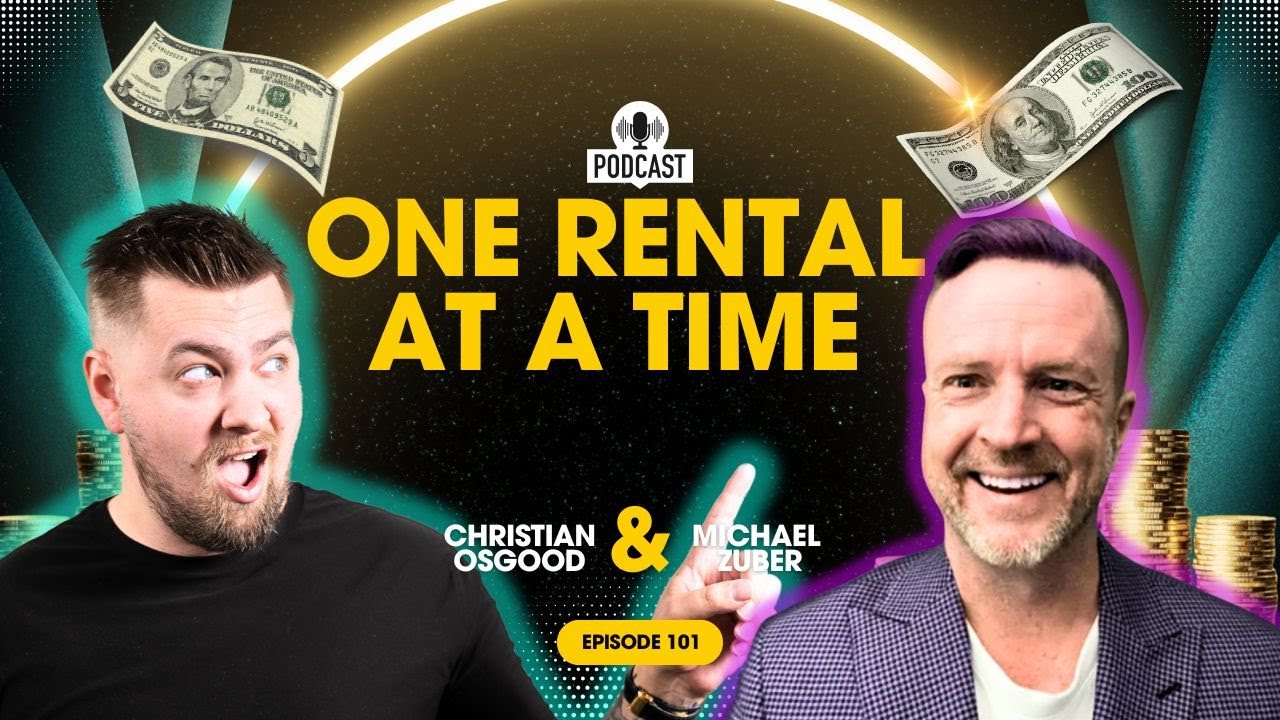
Watch the full episode for Michael's entire breakdown, the Fresno cap rate history, and the rest of the market read. Michael Zuber's book is One Rental at a Time; mine is The Book on Creative Real Estate, and both are on Amazon. If you want the underwriting frameworks we use, our course and mentorship programs are at multifamilystrategy.com, there's a free course at multifamilystrategy.com/get-free-training, and our free Skool community includes a free deal calculator.
And on a personal note, in the unlikely event Brandon sees this: thank you for publishing the story, and thank you for what you added to the community. I wouldn't be where I am without that book. He's taking a $15 million loss in public so the rest of us can watch, and I think it will make syndicators more cautious for years.
Read the episode transcript
0:00 I am a risky person. I do these big things. $700 million in debt right now, something like that. The only way to save the real estate deals are if I can
0:09 build and sell one of my other companies for $50 million or more. All right. Welcome back to Multif Family Strategy.
0:14 I'm already fired up. We just decided to hit the record button cuz we were getting so excited in the uh the pre episode. Michael's like, "Dude, hit record." So, we're here. You guys are
0:21 mid conversation. We're talking We're talking syndications. We're talking the the Brandon Turner situation. And so I always I always want to start this out
0:29 being fair. I started real estate. Uh the first real estate book I read was Brandon Turner's book and I still like the book and honestly I really like the
0:38 way that Brandon Turner started out his investing cash flowing real estate secondary markets. I mean granted they're Washington State which I I left
0:45 but he started on solid fundamentals solid operations mom and pop investor. Did some great work with Bigger Pockets.
0:52 I that was my favorite era of that channel. So, I'm going to do the kind thing here and we're going to start with the positive cuz uh honestly most the rest of this is probably going to go
1:00 downhill from here. Brandon Turner, as many of you know, I'll even Yeah, I'll even go deeper, right? I have a longer history with Brandon Turner. I knew Brandon Turner as an intern,
1:09 right? I that's how that's how OG I am on Bigger Pockets, right? I I was interviewed by Josh Dorcin in his basement in Colorado. I was like
1:16 interview 65. I wrote for Bigger Pockets as a featured writer once a week on their personal Bigger Pockets podcast. I
1:24 was a speaker at the very first unofficial Bigger Pockets event in Denver. I flew in from Asia to speak at
1:31 that event. I have a I have if if you're a true OG, Josh Dorcin gave speakers a shirt that I'm sure nobody remembers,
1:40 but it says on the front, "Mine are bigger than yours." And on the back it says pockets, bigger pockets. Again,
1:47 it's kind of a double entandra about, you know, mine are bigger than yours.
1:51 And then, you know, pockets. So again, I got some OG history and yeah, I remember Brandon Turner coming as an intern. I remember him completely disrupting the
1:59 the blog to the point where I I left. I I hated the man. He and I spoke decades later and we kind of realized that
2:07 frankly 95% of the problem was mine, not him. So, you know, it is what it is. I held a grudge for a long time simply
2:15 because I was wrong. But yeah, I I've known Brandon a long time. And what I will say again starting on the positive
2:22 is I truly believe over the last two decades, certainly the last 15 years, no single human being on the planet has
2:30 gotten more people excited about real estate investing than Brandon Turn. Absolutely.
2:34 He is the CR. He is bigger than Rich Dad Poor Dad in the last 15 years. If you want to go the last 30, Rich Dad's
2:41 probably got him. But last 15 I I think Brandon's I think and again part of the reason this this story is building
2:49 momentum is it's the guy we all looked up to the golden child. The guy with the mightest touch.
2:57 Yes. And the and the longest beard.
3:00 He did such a he just did such a good job and he told the story in such a real way. I think it's what related on the podcast and that voice carried through
3:08 in all of his writing. So he'd put out books and the books were just fantastic.
3:12 In fact, I I loved what he did with the book on rental properties. I love that he could say he wrote the book on rental properties.
3:18 That was some of the inspiration for why I wrote the book on creative real estate is I was like I see what you did there. I see.
3:24 I was like that's a genius. I I I have loved that since I read it. I'm like that's the best branding. And so when I was choosing the name like please please please tell me that that name please be available.
3:34 No one else has run no one else has written the book on creative real estate. So I was like aha. So that is uh that was inspired by uh by Brand
3:41 Brandon. So he did a lot of great things I think great things for the industry, great things for the community. No question. Let's talk about this.
3:47 So So one more one more thing get like again I've been lucky enough to know him a long time. He and I kind of squashed, you know, squashed the beef. Again, 95%
3:55 my problem. But his superpower, I think all of us have a superpower. I think most of us don't know what it is. And
4:02 then even fewer of us capitalize on our superpower. I believe Brandon Turner knows what his superpower is and the guy is just ringing it for all its worst.
4:12 It's what makes him the top guy and that's his ability to look at a process like Burr. like it's a process and he
4:22 has the ability to tell a story to create acronyms to almost trademark stuff and he has I mean Burr is just one
4:31 example of probably dozens of things that he'd done that's now just normal for us to talk about. He is uniquely
4:38 talented, uniquely gifted at just seeing and capitalizing on something. He's a He's a freaking marketing genius.
4:46 He He really is. And it it it kind of gets into a probably, you know, much smaller version, but it's it's almost
4:54 got into a a Grant Cardone territory where it's the same similar skill set of like, hey, I can take a thing and I can
5:00 brand it fantastically and story build around it. Uh though he really emphasis on the ability to tell a relatable
5:08 compelling story which is that is what I find unique to him is the branding when he explains it you can put yourself in his shoes directly.
5:17 Yes.
5:17 Which is something I was never able to do with a Pace Morby or a Grant Cardone or any of these other big big real estate guys. It's always like they're larger than life. He always felt Yeah.
5:27 real which is which is a superpower. So we we've said a lot of nice things about him and he's he's earned them. He's he's I really think he has. Uh let's let's
5:34 talk about this actual deal. I the news has already dropped on this. You've talked about it. I've talked about it.
5:39 Everyone's talked about it over the past several weeks.
5:42 But for those who have been living under Rock, uh he had a massive syndication uh that went under. Sounds like he lost about $15 million of uh investor
5:50 capital. I believe it was his uh second raise, but it all went to zero, which is that is worst case scenario as an LP.
5:58 That is typically your maximum the maximum bad.
6:02 Yes. Yes. Michael, how did how did how did we get to that point on that deal? I have some thoughts, but I'd love to hear your analysis from like where it went wrong.
6:11 So, again, I think we've need I you know, I I have learned to be more measured as I've aged because I think my initial reactions were probably over
6:19 vicious. Certainly, the ones that I thought I didn't put them out because I I' I've learned to temper my action.
6:25 But, you know, I have receipts. I have receipts unfortunately. And you know, I've been recording content for 8 years now, and I've been an accredited
6:32 investor for 15 years. So, I saw syndications in 21 and 22 that were DOA,
6:40 but they still went through. So, what we've got to remember is in 2122, inflation was still about 4%. Right? We did not see the crazy run to 9% yet.
6:52 Yes.
6:52 But the reason I think this deal, Katy, Texas, went bad is it frankly was bought wrong. As I've looked at the details
6:59 shared this far, he bought Katie for a sub4 cap. Yeah, I'll say that.
7:05 It was about 3.2 when I looked at the underwriting. Yeah, I've heard people talk 3.2 to 3.8. I don't give a rat's ass. Sub4. Sub4.
7:13 Yeah. And the reason that is a problem is I've been, you know, I've owned this. I've owned this stuff.
7:20 And I'll just talk about my market. So, in my market of Fresno, California, it has long run as an 8 cap. It's a class B
7:29 area. It's a little bit rougher. The inventory is older. It's an 8 cap. And it's been an 8 cap for a decade. In
7:35 2021, it went to a six cap. I sold I sold two two apartment buildings cuz I'm like, these people are freaking crazy.
7:44 Yeah.
7:45 Little did I know they went to a four and a half cap. They went as low as four and a half. Now, this is the era that
7:53 Brandon bought Katie when people in my market were paying four and a half for what should have been an eight. I sold it a six. So, I was early, but hey, I'm out. I'm liquid.
8:02 I have to imagine is never a mistake.
8:06 Yes. I have to imagine that Katie Texas doesn't normally trade at a subcap.
8:11 That is correct. I just have to assume as someone who invested in the Houston area, that is I can I can verify.
8:16 Yeah. So it makes no logical sense to to buy anything at a sub fork. The only reason you do that unfortunately is you have mouths to feed.
8:27 You have overhead, you have teams, you have people to feed. That's why so many syndicators are going bust now is
8:34 because they did bad or skinny deals with stupid assumptions. And you tie that all together with debt, short-term
8:42 debt, three or four years. As I've said and I have receipts, these deals are daya the DOA the day they closed.
8:50 Yes. And that's that's what I saw too.
8:52 If you look through the rest of everything else that he did, you look at the increases that they put in place, the management structure. As an
9:00 operator, I see no to low holes in the entire business plan. Almost near perfect execution.
9:08 Agreed. I totally agree. You cannotate a bad deal or resuscitate a bad deal.
9:13 When you overpay, you overpay. I mean, there there's a there's a small margin in which being an operator, you may be able to outperform, but you're talking a
9:22 10 15% push from one operator to another and what you could potentially do if you are the best marketer with the best
9:30 operating team. You cannot People win the lottery all the time.
9:34 People win the lottery all the time. It doesn't mean you should play. No, you have limited impact to do marginally better than other people if you're a
9:42 better operator. His near-perfect apparent near-perfect operations cannot solve a deal when you paid almost twice what you should have paid for it. There
9:50 there's no Yeah, he overpaid by at least 50%. At least.
9:54 I mean, it's just it's an insane overpay. And there's there's no way out.
9:58 There was never a way out. the risk here and this is this was you you you already nailed this but this was the era where
10:06 the zero down strategy was just become a syndicator and pick up all these fees and real estate's easy and the market's always going to be great which was the
10:13 dumbest thing ever. You had new people jumping in. What was disappointing to me cuz I remember looking at these deals going like man this is such a bummer
10:20 seeing this from Brandon because he's the small town hero you know buy small multif family. He he left what he was
10:28 good at and made weird assumptions and got paid fees to do so. It's the worst of syndication. It's a bummer seeing it from Brandon, but that is that that was
10:36 rampant there. He's not the only one who did it.
10:39 There was really no there was no path to make money on that.
10:42 Well, I'm sure you've heard this from Ken Mroy. I've talked about it a lot. So Ken Moyy's I don't know top five real estate investor probably of the era.
10:49 Certainly if you say people sharing content on YouTube, he's in the top five, not the top.
10:53 Absolutely. Absolutely. He said there's a thousand deals in Dallas that were done during this era that are in trouble. That just tells you how nutty that era was. It was bad.
11:03 The the amount of deals. So So for context, I've closed $12.5 million of of uh syndicated deals this year outside of
11:10 my JVS and other stuff. It's been a good a good start to the year. Those were both in Q1, both in Abalene, Texas.
11:16 Strong cash flow day one. Over 90% occupancy. Like we're talking hyper stable real estate. A lot of the deals
11:24 that I've seen in Abalene, in Levik, in Houston, in Dallas, we're looking at one in, uh, in Addison, uh, which is DFW.
11:31 All of them are selling for less than they owe. Every single one, those that is what is on the market right now. It
11:38 is not the blood bath that influencers would have you believe. I've seen every single year I've been in real estate.
11:44 It's all coming down. The debt's all coming through. These are mostly big players who can maneuver and and they can work extensions with the bank and they can there are plays available to
11:53 these large operators, but at some point some of these deals are hitting the end of the road and the lenders are saying, "Look, we're gonna everyone's come to an agreement. We're going to take a loss.
12:02 The lenders are going to be shaving a little bit off the price. They've accepted reality." I want the audience I want the audience to realize when the
12:11 bank or the lender is talking about a 5 or 10% haircut that means 100% of the equity is gone.
12:19 Yes.
12:20 That's what this means and that's that's why I feel bad. Right. So I invested through the GFC. I bought a ton of
12:28 residential properties last time. I am set up, you know, I've raised multiple seven figures in the last nine months
12:35 because I personally plan to buy a bunch of apartments at 60 to 70% of debt. Yes.
12:43 Again, I I've been here before. They get offered there. That is the uh dent in Texas. I I was shown four deals. I didn't buy them. They were It just not a
12:50 good fit for what I was doing. But they the broker was coming in saying, "Hey, uh here's the ones that I'm not personally buying.
12:58 [clears throat]
12:58 We've negotiated all of them at exactly 70% of what they owed on the building.
13:03 And that is the that is the standard pricing for what they're offering.
13:07 They're working direct with the bank and they're like, "Hey, everything for both these portfolios, they just want to try to recover 70% of the money. That is the
13:15 that's the magic number." And so it's a realistic goal. Michael, like what you're doing is what I'm getting calls from brokers trying to get buyers for. And I'll tell
13:24 you what, the 70% off in Denton, Texas, the deal still didn't work.
13:28 Yeah, it's it's it's going to be an 18 to 24, maybe even 36 months because again, it's really a weird time. And again, I say this as a guy that did this
13:36 before. I bought apartment build. I bought apartment buildings at 50% of debt and at like I mean, I bought one
13:43 apartment building at 21K a door. That's 120K a door today. You know, that's like that's like middle of nowhere Midwest pricing.
13:51 No, this California stuff, baby. get that that low though in California. That's that that's crazy. That's crazy. That doesn't suck.
13:59 Yeah. So, you know, I look forward to doing this again, you know. And the other thing you brought up, you did a bunch of deals this year.
14:04 This is the I I think it's amazing, but the audience may think it's sad.
14:09 Yeah. The crazy thing about doing deals this year, 2026, is they are 100% more better deals than 2021,
14:19 because again, you're buying bel you're buying below replacement cost. Here's a hint in real estate. If you can buy at
14:25 60% of replacement cost and have at least a 10-year hold period, it's really hard to go broke. It's just really hard
14:33 to go broke. Best deal. Also, Texas syndicated deal I did last year. This is my first ever syndication. Replacement cost came in at 22 million uh for 76
14:41 units, 13 and a half acres. Beautiful big buildings. We're talking, you know, garages, twotory, four bedroomedroom, pools, gym, the whole campus. I bought it for $7.6 million.
14:53 Replacement cost 22 million.
14:55 Dude, 30 cents on the dollar. As long as your debt's right, and I'm sure it is, it's correct with Fanny. 5.8% interest.
15:04 Hard to go.
15:04 Six seven years. These these are available. But this is this is getting back to the branding thing. This is where I think this goes wrong. So
15:12 common. The bigger the name, the worse the deal is such a Yeah. That's no end. Yeah. Bigger the name.
15:18 And so as the online presence grows for Christian, I I I worry about uh pushing that saying too much. But the You got You've got a decade before you got a decade before your Brandon Turner.
15:28 But I like the Moxy. I like the Moxy.
15:30 Yeah. I I'm all far away from that. But, you know, it's as the brand grows and as marketing goes out, I'm like, man, if I keep if I keep pushing the bigger the
15:38 investor, what if I become big? Always a risk.
15:40 But look at people who are operators first. If I was an investor in Brandon Turner and he was like, hey, early on.
15:46 And he's like, hey, I'm buying two sidebyside 12plexes in a market that I'm highly established in. He has the credibility. He has the experience. I
15:54 trust he's going to do that deal. He's an operator in that space. What happened? A lot of these syndications in Texas was just a perfect case study for this. Everyone and their sister said
16:03 Texas is amazing and it is and is growing and therefore I can buy at a 3% interest rate and the market's always going to be 3%. And these numbers will
16:11 make sense and 5% rent growth and a lower cap rate on exit and just all this other non logical things. Stu, stupid. But yes,
16:20 that's what happens. If you are an LP, you need to learn to underwrite like you're a GP. It's the only thing you need to do. The beautiful thing about
16:29 being an LP is you get to skip the deal finding. You get to skip the debt qualification. You skip some of the risk. You're not a co-signer on the
16:36 loan. You have all these cool advantages. The advantage you don't have is you don't get to skip underwriting.
16:42 You need to know how to analyze a deal, especially if you're going to invest hundreds of thousands or in some cases millions of dollars into a syndication.
16:50 You just need to know the baseline. Does the deal make sense? Would I do this deal if it wasn't with this operator?
16:56 And then you invest in the operator second. And you need both pieces. You need to vet the vet the operator. Vet the deal first, though. You're investing
17:04 in a deal and then you're trusting an operator. You know, that's your job.
17:08 This this this is your this is your thing. I don't do this stuff, but this is what I've told people. And again, it might be wrong. And I share this to
17:16 learn, not to preach. I want to learn from you. So when I when I've been looking at syndications, I actually start with the market. Do I want to be
17:24 in that market? Do I want to be in that asset type? So that's where it all starts for me, right? You could you could give me all the great stuff, but if it's storage, I don't want to play
17:32 there. It's just it's a thing, right? So for me, it's the deal type and the area of the country. Do I want to have my assets there? Then it's the operator, right? Who's going to be on the ground?
17:42 Do the does the team have experience? Do they have other successful exits? Who's the one throat to choke that I can yell
17:48 at if I see a problem? And then and only then do I go to the deal? Do I have it right or am I ass backwards?
17:56 No. Yes. Well, and this actually reminds you of something that you said on Ryan Petty. You were talking about cash flow is you're not investing for appreciation, but what you are doing is
18:04 you're buying for cash flow in areas that you expect to appreciate. What you're going to do is you're stacking the deck in your favor. That's the location. I'm going to get the highest
18:13 odds of getting some crazy appreciation and the highest return. Then I'm going to make my decisions based on the fundamentals of the deal in that market.
18:21 And what Brandon did on this deal is he chose just the market and he this market's going to carry us. It's amazing.
18:27 Not the fundamentals of the deal. You you nailed it on the Pana podcast that that short did not get enough love. He got love for me. I don't even
18:35 I don't even interact on social media and I commented on that post. I was like, "Yes, someone said the thing that everyone needs to hear. Buy for cash.
18:42 Buy for appreciation based on cash flow." That is that is my my version of it.
18:47 No, it's it's I'm glad you looked up on that. Okay. I wish I got that.
18:52 Well, well, hold on. I I want to hit that again because it's so important. People kill me all the time, right?
18:57 Michael, you're the one rental at a time guy. You're boring cash flow. $200 doesn't mean nothing to me. You know, all the stuff that I hear all the time.
19:05 But here's the deal. I was a full-time employee raising a family, traveling.
19:10 The cash flow, frankly, honestly, meant nothing to me. I didn't want to pay for my tenants to live in my home. That's why I call those alligators. But here's
19:19 the deal. I knew when I started buying at 30, if I held them until I was 65, they would be worth double or triple.
19:27 So, I know appreciation is coming. I want to be able to hold and not become a forced seller so I can cash that check.
19:36 That's the key to this that most people miss.
19:38 So, wait, you're saying that the secret to buy and hold real estate is you have to be able to both buy and hold.
19:44 [laughter]
19:46 The fact that that blows people's mind to to this day, my model, the the motto that I have, like the slogan for multif family strategy has been buy it and
19:55 never lose it. And and everyone's like, I resonate with this. I love that model.
19:58 I'm like, guys, that's another I'm we're just saying buy and hold. You have to be able to hold it.
20:04 But it's sexier. It's sexier. We're we're it's it's Granted this is we've all learned from Brandon. It's great branding, right? Yeah. Yeah.
20:12 But that's all it is. Cash flow is how you hold. Cash flow is just the blood in the body. As your business grows, you need more blood. You need the cash keeps you there.
20:21 Appreciation ultimately in real estate is what's going to make you wealthy.
20:25 That's why you invest in real estate is the way that it appreciates. It hedges against so much. But you base the business off of cash flow. Had that been
20:32 done on this deal, Brandon probably rolling in money. Uh it's Yeah. If he could have held that deal for 10 years compressed, but Houston's done decent.
20:40 Yeah. Yeah. If he could have held for 10 years, he probably would have been okay at short-term debt. Now, sealed his fate.
20:45 You had some opinions on the post and I I've flipped on this. So, I I started out very kind to Brandon and I'm going to If you guys saw that video, I was
20:53 having an allergy attack. It looked like I just got beat up. I had two black eyes from allergies. No.
20:58 So, if you guys saw my black eye video, I did not get beat uh except for by the uh the lovely state of Texas. The original thought that I had is he put out a letter addressing very head-on.
21:08 And here's why I liked it. He addressed what went wrong. He addressed the market. He addressed the operations. He did everything. He explained the situation. And at the end, he took
21:16 ownership of like, "But you guys invested in me and I made these decisions." It was the accountability was really high in his letter. And I appreciated that as a as an investor.
21:25 I'm like, "You know what? It's the worst thing that can happen and at least he's out in front of it owning it. I watched your take on it and you noticed something in the comment section that I
21:33 had missed that has really changed my opinion on this. Michael, can would you mind sharing with the channel a little bit of your due diligence on this on this post?
21:42 Yeah. The first So, a couple of things on this. So, first and foremost, you got to remember the kudos that we gave Brandon at the beginning.
21:49 He's an extremely good marketer. He's an extremely good storyteller.
21:54 So, you know, something I've learned through my career is when people show you who they are, believe them. So, I believe that Brandon Turner is a
22:01 wonderful storyteller. And as you said, that post was a story, well put together story, accountability.
22:09 But let's just say I was suspect, right?
22:12 Like, h why is he doing this? Is he doing it just because he's the man of the people?
22:20 because, you know, he wants to to to to just lay it bare and all of that. I don't believe that [ __ ] for a minute.
22:28 So, a couple of things. First, I immediately reached out to him because again, we have this Mayopa 90% my problem. I said, "Hey, Brandon, you want
22:35 to come on the channel? We can interview this. Uh, you know, I have 10 questions I want to ask you." And in the beginning, he said, "Yes."
22:42 He said, "Absolutely. Here's my admin cat. Let's schedule something." And again, I have receipts. I went on my daily financial news and told everybody,
22:50 "Hey guys, Brandon Turner might be coming on the channel. What questions do you have for him?" And that video got lots of questions. So, I I I created my
22:59 10 from that and others. But, as I've said always, I can't imagine his lawyers let this happen. I can't imagine I wouldn't be surprised.
23:08 And and you've noticed all of a sudden the conversation of what he was sharing has just all of a sudden cut off. So, I I I imagine that his apology tour is
23:16 likely over and that is likely his legal advice. That is my guess.
23:20 I guarantee you it's over. He sent me a rather long voice text or voice message basically saying, "Hey, good news, bad
23:28 news." You know, sorry, I can't come on the pod. I can't talk about this anymore. My lawyers and partners said, "Shut the [ __ ] up." You know, blah blah blah blah blah. So, you know, as
23:37 expected, again, dude, I've been around a long time. He shouldn't have he shouldn't be he shouldn't do interviews on this because it only there's no
23:46 upside, right? There's only liability, right? Yeah.
23:49 And as a fiduciary to your investors, I would actually say that he has an ethical obligation to not over overshare. Like he I agree.
23:55 He can only cause damage. And so agree.
23:58 It's the right thing to do. That being said, if he would come on the channel, I would interview him, too. Yeah, exactly.
24:02 By the way, I want I want to hear some of these questions you had written for him. If you're willing to share a few of them, I will I'll give you the top five. I'll give you the top five. Let me
24:10 let me go to the because again I assumed the great storyteller was telling a story.
24:17 So I dug into the comments and as expected 70% of the comments were add a boy great job. You know if you're in
24:25 real estate long enough everybody has a loss. It was very much at a boy add a boy add a boy. However, there was this one cop where Brandon Turner replied to
24:34 the comp. And I actually read his comment which may no longer exist but I read it live on my daily financial news that basically said I have more deals in
24:43 trouble to the tune of 30 million and I am going to fill this hole by selling
24:50 more courses and selling more masterminds because I know no better way to raise 30 million bucks than to sell
24:59 education. So the storyteller in King himself is getting in front of this going, "Hey guys, learn from me and give
25:07 me five grand or 10 grand or whatever the hell he's going to charge." So as expected, the storyteller chief is just
25:15 telling another story. Frustrating thing is like as a uh as a storyteller, I don't feel like that works very well as an ad. Hey, my real estate's in trouble.
25:22 Will you guys please give me $30 million?
25:24 Yeah, that was a crazy reply. I don't know why he would have typed that. I I feel like that's one of those things that may be an internal thought and you're lying in bed early in the morning
25:33 or late at night and this reply comes in and it's like I'm going to earn my way through this. I I don't understand
25:41 he got into this mess by leveraging his massive audience that and that's what happens with the big syndicators. They get such a big audience. That's the downside of having an audience.
25:50 You will have people who invest in you because you're big, not because your deal is good. And that's what happened to him. I feel like this is almost a
25:58 version of like, "Hey, I lost 15 million of your dollars. Before I lose another 30 million of your dollars, I need you guys to give me $30 million." Like it
26:05 that's pretty much how it read to me. It It doesn't feel good. And I'm I'm sure his intent wasn't as aggressive, but I'm That's how it read.
26:17 I read it. I read it word for word.
26:19 It's not a It's not a good look. And that is the I think that is the big lesson is if you're an operator, if you're raising capital, you do it by a
26:27 per deal basis. You go deal by deal. Is this deal a good deal? I actually turned down a good deal recently that um we could have gone under contract for
26:35 because we're going under contract for a deal that I like even more. And I just couldn't reconcile my head, how do I pitch someone on a really good deal when
26:44 I'm also pitching other people on a deal that's even better? I couldn't do both at the same time. So, I'm passing up on a on a a truly great deal in a market
26:52 that I really want to operate in. Um, I actually just referred that deal to a friend who should do that. It's a deal worth doing and I'd be doing right by my investors to do it. But like I can't figure out even that piece.
27:03 Yeah, Brandon, let me let me give you struggle with that. He always has that power is the is the problem is that that much raise power is actually kind of
27:12 dangerous as an operator. You can get lazy.
27:13 Yeah. Well, here's question number one and you're kind of dancing right on the grave.
27:17 Oh, yeah. Did access to endless amounts of money make you do a bad or skinny deal?
27:23 I would, if I was Brandon, I would probably answer that question as you know what, yes, it did. That had to be that had to be a factor.
27:30 And now you know why he doesn't want to come on my podcast because as soon as he says that liability, it's a hard it's a hard qu Yeah.
27:37 Exactly. Exactly. You you can't say yes, but the answer kind of has to be yes cuz no one else could have done that deal.
27:44 You couldn't on that deal's fundamentals have pitched that without the brand and got money. I just one.
27:50 Yeah. Michael and I combined could not have raised for that. I don't believe that two of us with with our little with our little reach but all of our capital
27:58 raised power. I could not convince someone, hey, massively overpay for this deal. I just don't see that being and it was a big deal.
28:06 Yeah, he raised I think he raised 25 million bucks in total. But yeah, so again, question one. Did access to endless amounts of money make you do a bad deal? All right, here's number two,
28:14 and again, why he won't become on my channel. Did you really? Did you really think a sub4 cap in Houston would go
28:22 lower right on the exit? Lots of people thought that. And I'm like, did you really like did you really really think that? What do you think? Yeah, the
28:29 historic lows. So, it's never it's never been lower in Houston ever. That's the lowest it's ever been. Now, to be fair, there was a lot of operational upside
28:38 and they did technically hit their operational upside. So there's probably our cap rate doubles doesn't matter.
28:44 No, no it does not. There's an argument of if cap rates had stayed the same, which they weren't going to, but let's just say let's say they weren't going lower. If they had remained the same or
28:52 even gone up a little bit, they added so much to the NOI that maybe it was okay.
28:56 So Brandon might might survive that question. There's there's an operational answer of, hey, this is what I'm good at. I wrote the book on uh I wrote the book on rental properties. I can I can manage this thing. There's NOI increase.
29:07 No one can survive the double when you overpay. My follow-up question for that if he would have answered the way you did is I would have asked him what's the historical cap rate for Houston because
29:15 I don't know the answer. Maybe the historical average is five. So you're within the realm but if historical average is 75 again that deal was dead
29:23 the day was 55 to 65 fluctuating in that range is probably we'll call it like a Houston's a five and a half six cap market in most
29:31 areas of Houston. Katie probably a six and a half cap market.
29:37 Okay cool. I have no idea. So question number three really goes back to and again this is my understanding of Brandon. Please tell me when I'm he
29:45 started very much one rental at a time, right? Absolutely. And again that got him to Hawaii.
29:52 Then Brandon started doing mobile home parks and near as I can tell had wild success and then he went Yeah.
30:01 I went from houses to duplexes to mobile home park. That that that makes sense to me. I would invest in that. That makes sense. Yeah. And then he went to multif family.
30:09 So here's my question assuming that is the right progression. Was it ego or boredom that made you risk it all moving
30:18 to multif family? Cuz he already had a good life. He did. That's the that's the thing is he made it on all metrics. He he had made it which was the the bummer
30:27 to see this happen at that point. I would love to see what it was. I would have to imagine it's a it's a mix of both as a serial entrepreneur because he
30:35 everything he's touched has mostly worked. The temptation is always to scale and add new stuff. Well, again, I
30:43 don't buy that for a minute, right? I again this is just we're different people, right? But again, there is certainly a percentage of us
30:51 that want to be Grant Cardone, Ryan Paneda, Brandon Turner. I want to be a billionaire. Os bigger, bigger, bigger.
30:58 But most people I talk with, Christian, are like, "I want time with family. I don't want to worry about my bills." So if you get to that point on the financial mountain, sit the [ __ ] down.
31:08 Enjoy life. Go for three weeks in Australia, come back, get bored, go to Canada. Come back, get bored, go on a Caribbean cruise. Life is good. You
31:17 don't have to keep moving the damn goalposts.
31:19 I I actually do agree with that. And and as someone who probably struggles more on the like, hey, I just I just want to reach the next mountaintop syndrome, I I
31:28 have numbers that I have set throughout my entire portfolio of I I'm done buying here and I have a size of my PM company where I'm like if when we reach this
31:36 value, I'm selling the PM company. Like I I have set my metrics. It's the same way you treat like I treat all the businesses exactly like you would the
31:44 stock market, which to be fair, I just own 100% of the stock of my businesses.
31:48 Like it's it's it it's the same thing. I have a strike price on everything that I am in. And there's that. Yeah, to be
31:54 fair, I'm pretty aggressive on liking the scale. You're right. Even I have a number. And I I'll tell you, knowing knowing a couple of Brandon's friends,
32:03 it is it is lower than where Brandon had made it at that time is my jumping off point. There's a point where I I love what I do, but I wouldn't do it if there
32:12 was just absolutely no functional use for the money. I would rather I would rather take my kids to the pool in the middle of the day, go to the go to the
32:20 zoo. Like there's there's a million things I'd rather do than show up in the office to make more money.
32:26 So So again, was it ego or boredom that made him do this? Because again, by all metrics, he was wildly successful. He was the golden.
32:32 Where can you be in Hawaii with your family?
32:36 Dude, he could have he could have sp went on a speaking tour once a year, made half a million bucks talking 10 times and not worried about life ever
32:44 again. He's bearded Brandon, the number one guy he had. He was set. And again, boredom or ego. All right, I got two left. Here's number four. And I would
32:53 pull up his tweet because I I took a picture or his post. I took a picture of it. Even if he's deleted it, I still have it. Nice.
33:00 And I would basically read it. Say, Brandon, clearly you have $30 million in problems ahead. It sounds like you have
33:07 two years to fill that hole. Is the answer selling masterminds education? Is
33:14 that what the plan is? So, that would be question number four. So, I would I would hold his feet to the fire a little bit because I think that I think it's almost a disingenuous comment.
33:22 Yeah. Well, it almost it almost has to be because it he's going to have a hard time convincing people to buy more overpriced real estate right now. And
33:30 and I don't know that he has the pipeline and has built the muscle on how to do great large multif family deals
33:37 and you have to do a lot of large multif family to make up that gap. So, I I just don't think that he has the experience
33:44 and the volume in successfully running that business because he put all of his eggs it I think rightly so into the RV,
33:52 the house, the podcasting, all of the other baskets that worked really well for him. That's where his experience is. He doesn't have $30 million businesses.
34:01 Like, he just does not have niches and experience where he can make that gap in that time unless he's leveraging his brand. The only path that he has other
34:10 than just calling his investors and saying, "Sorry, you guys all lost your money." Like, that's his only two options is sell or lose.
34:15 Let's Yeah, let's be clear on that, right? I And I think we said this earlier, all investors, if you're around long enough, do a bad deal. But if he has a series of bad deals, game over.
34:24 Yeah. Game over.
34:25 Yeah. And no one's almost impossible to recover from that. It's your brand as an investor is pretty much done. He can survive this one deal if all of his other deals did.
34:34 Totally agree. Totally. Yeah. Totally agree. So, here's number five.
34:38 I was fortunate enough to make all my bad deals in the beginning. I just I I just started with the wrong It was only your money.
34:42 Yeah. Yeah. I see. Yeah. I Well, I had to save one investor, but I did. I did.
34:46 I earned through a million dollars, which is a lot easier than 30. I I will tell you that. And it's still a lot. It's about 30 times easier. Yeah. Roughly.
34:54 Roughly 30 times. So, here's the number five. And this is probably the most important question for me because I will admit to struggling. I've admitted
35:02 plenty of times that I get online and every now and again I I look at Pace Morvy or Ryan Pana or Brandon Turner or
35:10 any of these big shots and I I too suffer comparison syndrome and I wonder if I'm doing the right thing, right? I chose to sit down eight
35:19 years ago and and really not do anything. And I I I I always ask, is that the right thing? So, here's question number five, Brandon. Given
35:27 what you know now after this loss and the problems ahead, was it worth it?
35:32 Yeah. Well, I see why he's not going to hop on your channel.
35:35 Those are hard those are hard questions and I don't think you can answer that.
35:38 Uh I I don't know an HR correct way to answer that question with the situation he has right now. Correct me if I'm wrong. Didn't he for a time or I don't
35:46 know if he did permanently. Didn't he move from California to Texas to try to salvage some of these?
35:51 Yeah, I think for six months he California Hawaii. Houston. Yeah. He moved from Hawaii to Houston for six months. He he tried he tried again back
35:59 to Yman's work. He he tried he he moved his butt to Texas to try to save it.
36:03 Yeah. Which the the right thing to do, but I can't I can't imagine there's an argument for that being worth it. Like if you made it and the dream was sandals
36:10 in Hawaii and now you're your boots on in in Houston, which sorry people in Houston and I'm an investor in Houston. You're not Hawaii.
36:18 Houston is not the best of Texas. I'm sorry. It's It's not It's not Hawaii, but not even the best of Texas.
36:24 No, it's Yeah, it's not even the Hawaii of Texas. If you If you go as a as as a tourist, just objectively, and you visit the the three majors, if you if you go
36:33 to DFW and you go to Austin and you go to Houston, Houston's very clearly in third place.
36:41 Is not Granted, I'm biased towards Dallas, but like Austin is beautiful.
36:45 Dallas just has awesome awesome awesome amenities and population and much better weather. I I just visited my sister. She lives in Houston, so I can make fun of
36:53 Houston a little bit because I own there. I'm I'm there often. My family is there. It's like this is this is what was it? It was It was like late April, early May. It's 90° and 100% humidity.
37:03 I'm like this miserable.
37:06 This is terrible. I can't imagine leaving Hawaii to deal with that was what Brandon would have wanted for himself, for his family. And that is
37:14 just a really expensive lesson to learn that far in the game. Yeah. Yeah. Well, I promised I promised Michael that I
37:22 wouldn't take him away from his wife all day. So, I will I I will start to rap here. Unlikely, but in the event that Brandon sees any of this. On a personal
37:30 note, thank you very much for publishing the story and and thank you for all that you added to the community on a sincere level. He's achieved some amazing things. So, I'm going to say one more
37:38 nice thing about him because I I I do mean it like bottom of my heart. I would not be where I'm at in real estate if he did not write that book. And if he
37:45 wasn't on Bigger Pockets, I would not be where I am today, making better decisions in syndications. I appreciate
37:52 that he is taking the $15 million loss uh for everyone else to watch. I think this is going to make syndicators more cautious. So, I think he's paying the
38:01 price for a lot of people to significantly positively impact the industry. So, painful lessons and I know
38:08 we're we're hard on Brandon. So, if Brandon for any reason gets upset about this, someone share the end of this podcast with him. We appreciate you.
38:15 Also, ouch, really painful. Uh, everyone buying deals. Michael hit it on the head. This is the model that both he and I uh we have some differences in model,
38:23 but this is the one that we are just locked stepped on. Buy in great areas.
38:27 Buy and appreciate areas and buy based on the deals fundamental, not the market, not everything else. Buy fundamentally good deals that pay you to
38:35 wait. Buy and hold. Make sure you can do both halves.
38:39 Yes. And bankruptcy is the opposite of what you're trying to do. So, don't do it. Michael, thank you so much for joining. As always, Michael has the book on you are one rental at a time. Very
38:47 easy to remember. There's his background here if you're watching it on YouTube, if you're listening on the podcast. Uh, he has a really cool background. Run one rental at a time is Michael. I have the
38:55 book on creative real estate. A whole bunch of deals that I have not lost uh and are all cash flowing and the actual clauses that we use to do them. Uh, you can check both these books out on
39:03 Amazon. But we appreciate you guys a ton and we'll see you on the next episode.
Put these ideas to work.
Get support from Christian and the coaching team with your next multifamily deal. See how the mentorship works or start your application.
Apply Now