Financing and partnerships
From House Hack to 81 Doors While Working a Full-Time Tech Job
Matthew Wang built an 11-unit personal portfolio and a stake in 81 doors while programming full time. Here's the market choice and mindset that did it.
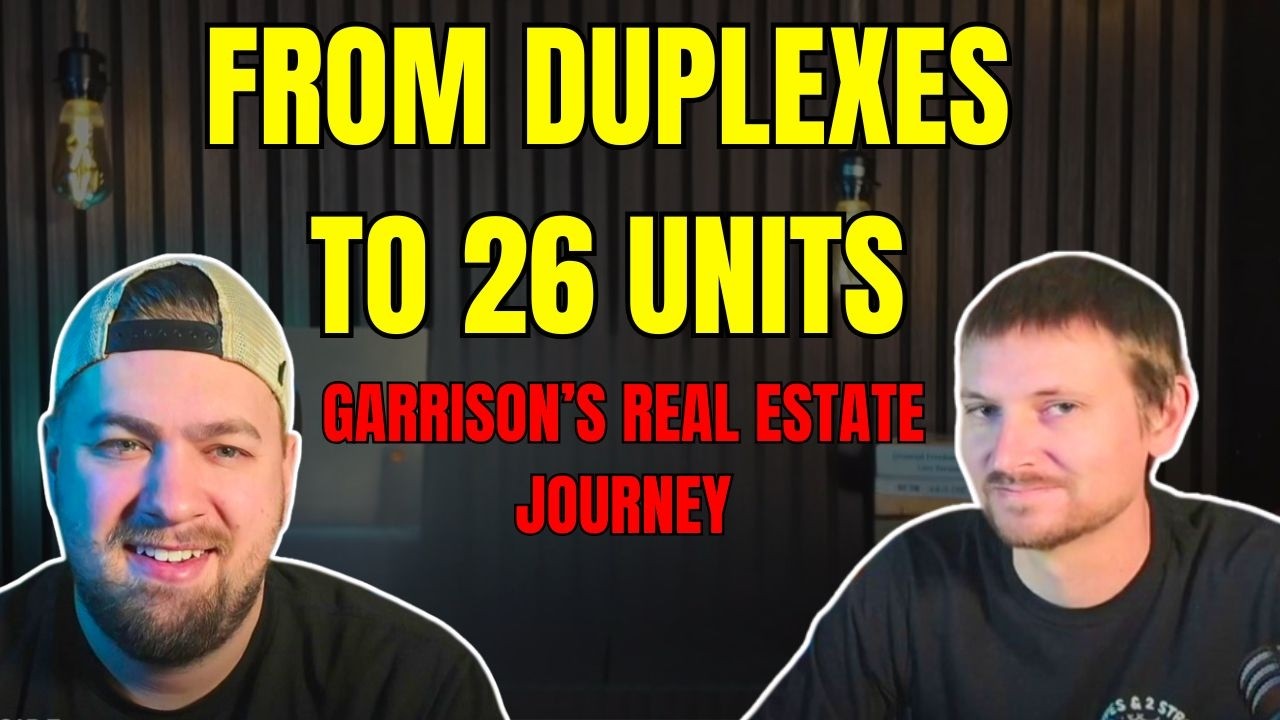
I don't do many in-person podcasts, but Matthew Wang was in Texas, so we sat down at my house in Dallas and recorded one. Matt is a programmer at a massive company that will not be named, and in the background of that job he has quietly put together one of the fastest-growing portfolios I've watched come out of our mentorship: five single family homes, a duplex he lives in, a quadplex, and an active stake in commercial deals he's partnered on with me.
The scale at which he has sped through this is fairly impressive, and by impressive I mean incredible. Here's how he did it: the house hack that funded the start, the reason he physically moved to a smaller market, the town both Cody and I told him not to buy in, and the one piece of advice he'd give anybody starting over.
The House Hack That Paid for Everything
Four and a half years ago, Matt bought his first home as a first-time buyer: a five-bedroom, three-bath single family house in Burien, Washington, right near the Seattle airport. He copied a guy named Todd Baldwin who was doing house hacks around Seattle and posting them on YouTube. Matt watched the videos and decided to try it to get his foot in the door.
There are two versions of the house hack. Version one is what Matt did: buy a single family home, live in one bedroom, rent the other bedrooms to roommates. Version two is buying a one-to-four-unit property, living in one unit, and renting the others to tenants who are not your roommates. Matt took the smallest bedroom and rented out the four bigger ones. Five people in the house. As he put it, he played landlord, roommate, and friend all at once.
I started the same way in a two-bed, two-bath condo. My wife and I kept our roommate through the first year of our marriage, which kept our cost basically zero: he covered about 80% of the mortgage. I made roughly $120,000 on that property over a two-and-a-half-year hold doing my own renovations. First time I ever made six figures.
Here's what Matt's numbers looked like:
- He put down 6%, the minimum available to him at the time to stay under the King County maximum loan amount. That was around $60,000.
- With him living in one bedroom, the property ran maybe a couple hundred dollars a month negative. Just shy of free.
- The home has grown about $200,000 in equity since he bought it.
- He still owns it. It's under professional property management now and leased as a whole home.
So for about $60,000 down in one of the most expensive markets in the country, he lived for roughly $200 a month and made $200,000 doing it. I don't love living in Seattle, which is part of why I moved to Texas, but never bet against Seattle as a real estate market. It has always done well.
Matt thinks Burien specifically hasn't appreciated as much as Seattle proper over the last three or four years, and that it's coming. Worst case he holds five years, but his rough approximation is another two to three to make another couple hundred thousand doing nothing but holding.
Twelve Roommates, Ten Great Ones, and One Nightmare
The hardest and most important part of the roommate house hack is picking people. Matt vetted for personality and culture fit during the walkthrough, which made leasing harder and slower, but prevented most of the problems.
Over four years he cycled through about 12 people. Ten were great. Two were problems. One of them was an extreme alcoholic.
That guy passed a background check with flying colors: stable job, money in the bank, good credit, good communicator. Ten days in, no issues. Then he came home in the middle of a Thursday workday and was just off. Over the next few days it became clear he'd gone on a multi-day bender, and it got worse from there. He lasted one month.
Getting him out came down to catching him sober. Matt prepared for the conversation and told him plainly: based on what's going on, this isn't working, the other roommates are uncomfortable, I'm uncomfortable. The guy felt terrible and agreed to move out.
The legal backstop was not good. Matt's attorney told him that because of how the lease was written and the notice that hadn't been given in time, the tenant was eligible to renew, and if he'd wanted to fight, he could have stayed something like another nine months, before you even add the court wait.
One thing that works in your favor when you live in the home: fair housing rules don't apply the same way to selecting roommates. Renting out a whole building, the first qualified applicant is in. Choosing roommates, you get to pick for culture fit, which mostly means you can decline to live with a raging alcoholic.
Matt still house hacks, just the other way. He bought a duplex in Olympia at the start of the year, lives in one side, and has a tenant on the other. His roommate era, in his words, has come to an end.
Why He Moved to Olympia on Purpose
When Matt joined the mentorship, two lessons stacked on top of each other.
The first is that people getting started should go find a secondary or even tertiary market: lower barrier to entry, less competition, and still plenty of money to be made. That's the misconception most people carry: they assume a small market means no money. The margin is actually higher. Management is a little harder, but it is so much easier to cash flow there.
The second came out of a guest speaker session at our Robin Hood event last year. Can you run properties from afar? Absolutely. But you have a real competitive advantage if you live in your market.
Matt combined the two and moved. He picked a triangle: Olympia, Washington; Aberdeen, about 50 minutes west (where Brandon Turner got started); and Centralia, 30 minutes south. Olympia is the nicest and smallest city he was willing to actually live in, and it's only an hour back up to Renton to see family.
The rest of his portfolio is spread wider: three small single family homes in central Florida and one in Tulsa, Oklahoma, bought out of state through a company providing white-glove setup. With his property managers in place, he says it's easy: approve a maintenance request, replace an oven, help set expected rent. Otherwise it's on autopilot.
Aberdeen: The Market We Told Him Not to Buy In
Both Cody and I cautioned Matt against Aberdeen. We said we wouldn't do it and we didn't recommend it. He wasn't going to.
Then he built a relationship with a broker who is also an experienced owner: a real owner relationship, and now a good friend. Six or seven months ago, when he was only hunting on-market multifamily in Olympia and Centralia, they looked at everything available and nothing penciled. She nudged him to at least look at Aberdeen. Suddenly deals were mathing.
There is a reason they math well. Aberdeen is not beautiful. It's at sea level, on the ocean, in a rainforest. There's a lot of water and a lot of old logging buildings, and when the logging industry changed, the population took a huge decline.
So Matt did the only thing that settles the question: he drove the neighborhoods to get a feel for the place. His fear was that Aberdeen was a dying city, and he would absolutely not have invested in a dying market. What he saw instead:
- Every fourth or fifth home in the neighborhoods had been remodeled or renovated.
- The shopping district around the Walmart looked fresh, updated, and modern, with packed parking lots and a lot of activity.
- New construction and new apartments going up.
- A few key employers holding the job market, plus the largest college in Grays Harbor, and that campus is genuinely nice.
Not a dying market. At minimum a stable one, and a good place to get a quick win. In January he closed the Olympia duplex, in March he moved into it after getting the existing tenant out, and a week or two later he closed a quadplex in Aberdeen. Boom, boom, boom. He currently has an offer out on 13 more units there, which would more than double his personal portfolio.
Owner vs. Investor: How Matt Counts His Doors
Matt and I also worked together on a 44-unit in Texas. I don't partner with many people out of the mentorship: the goal of Multifamily Strategy is perfect replication, where people learn to buy their own stuff.
For Matt, that deal was a first in almost every way. He'd never been part of an LLC, never handed money to an individual rather than a company, never had a legal review of an operating agreement, never done due diligence on a property he hadn't seen, and didn't know anything about LIHTC. What moved him was the numbers: the property, the plan, and the expected return laid out as an offer that was hard to say no to. Then he leaned in and figured out how to get himself to yes, treating the due diligence as training for doing it solo later.
When I asked for his door count, we separated the holdings. He personally owned 11 units: five single-family homes, a duplex, and a quadplex. His partnerships held a 44-unit property plus another 26 units. That brought the combined total to 81, with different ownership interests in the personally held and partnered properties.
His framing is the part worth stealing. A lot of people flash a unit count on podcasts. I only claim what I own of hundreds of units. Matt's distinction is between owner and investor: if you're buying, owning, running, and operating real estate, you're an owner. If you hand off money and it grows without much involvement from you, you're an investor. He owns 11 and invests in the rest. Being an owner has more stress and more work. It's also my favorite job in the world.
Related reading: Dion McNeeley and Matt Hawkins on 18 Units vs. 150 Units
Key Takeaways
- The roommate house hack still works: 6% down, about $60,000, a cost of roughly $200 a month to live in Seattle, and about $200,000 in equity gained.
- Screen roommates for culture fit, and know that your eviction leverage is weak: Matt's problem tenant could legally have stayed another nine months if he'd fought it.
- Secondary and tertiary markets carry lower barriers to entry and better margins, and living in your market is a genuine competitive advantage.
- Drive the neighborhoods before you write off a market. Remodels, full parking lots, and new construction told Matt that Aberdeen wasn't dying.
- Separate what you own from what you invest in. Both count, but they're different businesses.
- Go bigger sooner.
That last one is Matt's single answer to what gets somebody to their goal faster. Don't decide your first or second property has to be a single family or a duplex. Push it to a quadplex: house hack a quad and you get both the cheap start and the bigger asset. And don't cap yourself at four either; if you find a great duplex while hunting a fourplex, buy it, and if you can get a 12-unit with no money down, do that too. I started with duplexes eight years later than I should have.
Watch the full episode for Matt's account of the alcoholic-roommate month, the Stephenville flood we walked our senior living property in, and the rest of his Aberdeen thesis. You can see how the mentorship works at mentorship overview, get the free multifamily starter course at multifamilystrategy.com/get-free-training, and grab the free calculator inside our Skool community.
Everyone in the mentorship would have been successful with or without us. The point is to go bigger, faster, with fewer mistakes, and to get around people who let you move faster than you can alone.
Read the episode transcript
0:00 Hello and welcome to the owner meeting podcast by Moldy Family Strategy. Today I am joined with Matthew Wang, a friend
0:07 of mine. We are here in person in Texas. Matt, I rarely do in person podcast. Welcome to the channel. Well,
0:12 thank you for having me on. I am so excited to have Matt on. He is a programmer at a massive company that will not be named, but he has done some
0:20 very cool things in real estate. Started in single family, has joined multif family strategy, and has bought a bunch
0:27 of units by himself with partners. The scale at which you have sped through this is fairly impressive and by
0:34 impressive I mean incredible. So welcome to Xiaomat. Thank you very much. Thanks for having me. Absolutely. Absolutely. Matt, tell us a
0:39 little bit about where you started before you bought any of the multif family before you had a million7 units like you have today. Just kidding. We'll
0:46 get to that that real number here in a minute though. Where did you actually start with your real estate journey? Yeah, so four and a half years ago I
0:53 bought my first home. So first-time home buyer. It was a large five-
0:58 bedroomedroom, three-b home, single family home in Berian, Washington, which is near the airport, near the Seattle
1:05 airport. And it I actually ran as a house hack. I copied a guy named Todd
1:10 Baldwin who did house hacks a lot in the Seattle area. I saw his videos on YouTube. I said, "Let me try that. Get my foot in the door on
1:16 real estate." So, I lived in that single family home and I house hacked it for four four
1:23 years. So, I love the house hack. I started in a house hack condo, two bed, two bath,
1:28 had a roommate, got married. My wife and I kept that roommate for the first year of our marriage. That kept our cost
1:33 basically zero. Roommate paid about 80% of the mortgage. Uh for those who aren't familiar with the house hack, and if
1:39 you've ever heard Bigger Pockets, you've probably heard of this strategy, but you can do it in multif family, you can do it in single family. Give us the 30,000
1:46 foot view of what is the house hack and how did you use it in the single family. Yeah. So, the house hack is there's two
1:54 versions of it. Version one is you buy a single family home, you live in one bedroom, and you rent out the other bedrooms. So,
2:01 you have a bunch of roommates. The other version, which I'm not talking about here, is you buy a multi-family
2:06 unit, a multif family property that has one to four units. You live in one unit,
2:12 you rent out the other units, but they're not your roommates. I did the former five- bedroomedroom home. I lived
2:18 in the smallest bedroom uh and I rented out the larger bedrooms. Had four roommates. So, five of us living at the
2:24 home. I played landlord, I played roommate, I played friend. That's that's what I did. So, one of the weird things with
2:29 roommates, mine was really good for a long time and then they got a little bit weird and a little bit depressy and
2:34 changed the vibe of the whole house. Yep. That was right right around the time it was me and my wife and a dog and I was
2:39 like, I think it might be time to live by by ourselves. Five roommates or I guess four
2:45 roommates, five people. How did the roommate situation? Did you have any weird roommates? Yeah. So, overall it went well.
2:51 Yeah. Um, good. I The hardest part and the most important part that I think I did pretty well was finding the right people to
2:58 bring in. Very important. If you're renting to your roommates, they are people you want to live with.
3:03 Part of my criteria, which I listed and vetted for when we did a walk through and I did a tour of the home, was
3:09 personality and culture fit. Like that mattered. It did make Lisa harder. It took a lot more effort to find the right
3:14 people, but it prevented major problems. That said, I did have I did have two
3:20 roommates that were problems. And in four years, I cycled through about I think the number is 12 people. So, it
3:26 was a lot as a landlord. And 10 of them were great, two of them were problematic.
3:34 One of them ended up being an extreme alcoholic. It was a nightmare. I could talk for eight hours about all the
3:40 things we saw. He lived with us for only one month. So, how do you get rid of a roommate? You have like you have an extreme issue.
3:45 He moves in. What were the signs of the extreme alcoholism except for I assume all the alcohol disappeared instantly?
3:50 Yeah. Uh, well, things started out great. He lived at the home for 10 days, no problems. And when I did the background check and everything, he
3:56 passed with flying colors, stable job, money in the bank, good credit score, good communicator, checked all the
4:03 boxes, things are good for 10 days. And then he came home one day, middle of a Thursday workday, and he was just off.
4:11 Wasn't sure what was going on at first, but then after, you know, the next few
4:17 days, we learned he went on a multi-day bender and it just got worse and worse and worse, and we realized something is
4:23 extremely wrong with this guy. And then things just proceeded from there. Okay. So, he lives with you and three
4:28 other people, assuming you were fully occupied at the time. Correct. So there's four of us normal people and then one of him five five
4:35 people total. How do you get rid of a roommate? This isn't like a normal eviction process, I
4:40 assume. How does this work? The simple version is him and I actually had pretty good report when he was sober. When he when I caught him when he
4:47 was sober, I essentially prepared how do I talk to him and get him to agree that
4:53 the correct thing to do is move out. and when he's sober. And part of why he
4:59 he passed with green check marks and flying colors is he was super friendly, very caring, very nice, and
5:05 understanding when he's sober. And so I caught him when he's sober. I told him, "Hey, based off what's going on, this
5:10 isn't working out. Not a right fit. The other roommates are uncomfortable. I'm uncomfortable.
5:16 I don't think we can continue forward." And essentially, he understood, he actually felt really bad and agreed to, okay, I will move out. So I I got lucky.
5:24 It could have been worse. I was going to say in Washington state on a technical level is that do you have any legal
5:29 recourse or if he said no I'm not moving out what would the what would the situation have been then? So, I'm still
5:35 not a Washington legal expert on tenant laws, but I did consult an attorney briefly and the attorney said with the
5:42 way the lease was written up, I don't remember the exact details, but along the lines of because the way the lease was written up, because you didn't give
5:47 enough notice ahead of time, he's allegible to like renew his lease so that now on the next lease, you can give
5:53 him proper notice before he gets out. And it was something along the lines of if he really wanted to push it, he could
5:59 stay another like nine months. Just a casual nine additional months. Yeah, it was some combination of because
6:05 I'm not giving proper notice in time, he has the ability to renew. So once he's renewed, now you can give
6:11 proper notice in time. And then additionally, I think if you were to take it to court, there's a long wait to get through court.
6:17 And then even after you get the judgment, there's a wait to get the judgment executed. So like add it all
6:22 up, it could have been And is it the same process evicting a roommate as it is evicting any other tenant? More or less?
6:28 I don't think so. when you when you live in the home, you actually have more control. Okay, that's that's good.
6:34 Yes. Okay. So, for example, one thing I know for certain is fair not to say that I didn't do this, but like if you want to be
6:40 extreme, fair housing laws don't apply the same way when you're looking for roommates. So, in roommates, I can pick and choose
6:46 who's approved and lives with me. Whereas, if I'm renting out that home is the whole building, the first person
6:52 that that applies and is qualified, they're in no matter who they are. So, I get to pick and choose who my roommates
6:58 are, which is good. like I'm looking for like culture fit, right? So, not that I not that I, you know, was was mean and
7:04 and selective, but just an example of how the rules are different. Attempting not to rent to raging
7:10 alcoholics. Yeah. Exactly. Reasonable things. Exactly. And and you live there. You have the ability to pick and choose a
7:16 little more. Yeah. Okay. So, you you did the house hacking strategy. Do you still house hack? Technically, yes, but in a totally
7:22 different way. So, I just bought a duplex at the start of the year. I moved in Olympia, Washington, which is for
7:27 those who aren't familiar, that's an hour south of beer. It's about an hour and a half south of Seattle.
7:33 Yep. And Olympia is the capital of Washington State. Yep. Same same bad politics, a much
7:38 prettier area in my opinion. Yeah. And and so I bought a duplex. I live in one side now and I have a tenant
7:45 on the other side. So I've now switched to the other house hack model I was describing. But no more roommates. I
7:51 think while it went well for four years, I believe my roommate era has come to an end. I don't I don't foresee a need to
7:58 ever have roommates again. That is excellent news. I I've I felt the same way when the roommate era was
8:04 done. I think that the the the live-in like the roommate house hack is a
8:10 fantastic way for people to get started. I would agree. I I and I had a much smaller property than you did. I made like $120,000 on
8:18 that in a two-year hold. two and a half year old. Awesome. Awesome project. Did a little live and flip there. I did all
8:23 the rena myself. It was a little project. First time I ever made six figures. You had a full house with like
8:31 five roommates. Do you still hold that house or did you end up selling it? I do. I still hold it. I really like the home. I actually really like Berian. I
8:37 think it's kind of a undiscovered gem of the Seattle area. And so I want to own that home because I like it. I like
8:43 their I like the home. It is currently now under property management and just leased as an entire home. That's awesome. That's awesome. How much
8:50 equity do you think that you've built in that through your time holding it from when you bought it to where it's at today? Yeah, it grew. I think it grew about
8:56 200,000 in equity. There we go. And did those four roommates did that completely cover the
9:02 nut there? Were you living completely for free or better? It was just shy of free, but that's
9:07 still a massive win. So, with me living in one unit, it might have been negative a few hundred bucks in cash flow a
9:13 month. Okay. So, so, so net net you can live in the Seattle area, one of the most expensive markets in the country for
9:20 $200 a month is a couple hundred bucks a month. Yeah. And you're building all this equity at the same time.
9:26 And you make $200,000 to do so. Yeah. That's an incredible deal. That's a great way to get started. You cut down
9:32 one of your largest expenses to basically nothing and you get a property in a high appreciation area in a very
9:37 expensive market basically for free. Yeah. How much did you put down on that house, by the way? I actually did the minimum.
9:44 6%. Uh, that was the minimum I could do at the time to meet the maximum loan amount
9:51 for the King County area at the time. There we go. What was the What was the the total amount down?
9:56 I think it was around It's I think it was around 60,000. So, for $60,000 in the Seattle area, you
10:04 can get a house that cost you almost nothing per month to live in. What a great strategy.
10:10 Yeah. Thank you. and you're going to hold that a lot longer and it will keep growing and that's excellent place to do
10:15 so. While I don't love living in Seattle, which is why I moved to Texas, Seattle is a market that has always
10:22 done consistently well in appreciation. It has continued it. Never ever bet
10:28 against Seattle as a real estate market. It has always done well. Yeah. Market. And even though I've made the
10:34 two, you know, 200 in growth, I've seen Berian not appreciate as much as Seattle
10:40 proper or rent nearby over the past three or four years. I think it's coming because there's nowhere else to to
10:46 I think it's coming. And I think if I just hold on to that property for worst
10:51 case 5 years, but another two to three is my rough approximation. I'll probably make another couple hundred thousand
10:57 doing nothing just by holding on to it. So, and we're going to get into the dozens of other units that you have. and
11:02 you've scaled unbelievably quickly and it's been incredible to watch the journey. But you're in Olympia now.
11:08 That's right. That is not the Seattle area. Correct. You are significantly south. You're actually closer to my resort.
11:13 That's right. Why Olympia? Yeah. So, I joined your mentorship and it became
11:20 clear through the lessons for people like me trying to get started, it's recommended go find a secondary or even
11:25 tertiary market. Lower barrier to entry, less competition, yet still plenty of money to be made. I think that's the
11:31 misconception a lot of people have. They think small market tiny market somewhere between small and tiny like ah there's
11:36 no money made. Turns out there's a lot. The the margin is higher. The difficulty is a little higher in managing but the
11:42 ability to buy but I think barrier to entry lower. It's all about the margin. It is so much easier to cash flow in those markets.
11:48 But we've consistently found and you can still make tons tons of money. So with that in mind, tons of money is good. We like tons of
11:54 money. And with my goal, I'm all in on this rocket ship ride to hit my goal. So I said, "Okay, I'm going to take that to
11:59 heart." Combine that with combine that with I've also heard through the mentorship and that Robin Hood event
12:05 last year with with our guest speakers. You have a Can you manage and run properties from afar?
12:11 Absolutely. But you will have a competitive advantage if you live in your market. Yes. So I combined the two. Go find a
12:17 secondary or tertiary market. You have an advantage if you live in it. I'm trying to move really fast my goal. So I
12:22 want to maximize my my advantage. I settled on I got to move towards the market I want to build a portfolio. And
12:29 I settled on my goal is to build a portfolio in the triangle of Olympia, Washington. Aberdine, which is 50
12:35 minutes to the west of Olympia. Brandon Turner started in Aberine. Yeah, that's what I've heard. That's
12:41 what I heard. And then 30 minutes to the south, Centria. So, it forms a triangle.
12:46 I've settled on those are my target markets and target area. And Olympia is
12:53 the nicest and smallest city I'm willing to move to to pull it off. I could have moved to Central. I could have moved to
12:59 I wouldn't have moved to Aberdine. Um I settled on Olympia. So Olympia because
13:04 Olympia is not too small is quite nice and it's actually only an hour to go
13:09 back up north towards Reton where my family lives and go see them. All right, so Olympia, dude, I'm a huge fan of being close to your properties. I
13:16 just realized, everyone just realized we took a break because if you're watching this on YouTube, my hat just flipped around magically. Matthew,
13:21 my hair might have moved. Well done, Matthew. You look even better. Uh dude, so you moved to Olympia, you're growing there. Talk to
13:28 me a little bit. I want to talk about Aberine next. Talk to me about your larger portfolio. You own in Washington
13:34 State, you own in Burian, you own Olympia. Where else do you have properties? Yeah, so I have five single family
13:40 homes. House hack in Washington, three small single family homes in central Florida and one single family home in uh
13:49 Tulsa, Oklahoma. How hard is it to manage that many markets? So with the propert managers I have,
13:55 easy. I do little to nothing. I've just had to approve some decisions,
14:00 maintenance requests, replace a oven, help set expected rent. That's it.
14:06 Otherwise, they're on autopilot with property management out of state. Dude, that's awesome. Now, you joined
14:12 multif family strategy, and I always mention this whenever I have someone from multi family strategy on. This is not an ad for multi family strategy. This is the thing that you did.
14:18 Why multif family? Yeah. You you were succeeding in single family, right? You're you're property, you're basically living for free. You're
14:24 buying rentals that are cash flowing that are basically handsoff. At what point did you go multif family
14:30 is the path? Yeah. Uh I didn't at first. I had just learned okay single families work.
14:36 They'll be slow. But if you buy a single family, hold on to it. In 5 years you'll look back and go well I don't regret
14:42 that decision. So I thought that let's do it. I started to shift from up till up till about a year ago I was
14:48 predominantly stock investor. I still believe heavily in stocks, but I've come to learn over time, especially after the
14:54 house hack, I think real estate's the better way to go, more powerful. Strongly agree. And so, I've been shifting more of what
15:00 I have into real estate. So, I was doing single families. I found a way to buy them out of state through a company that
15:05 kind of provides white glove service for buying out of state investments, get them set up. That's that's why it was
15:10 easy. And I was going to keep going on that path of more and more single family. But then, uh, I actually got
15:17 persuaded by Cody to try the mentorship. This is back when Cody was part of the mentorship. And I I had known Cody a
15:22 little bit because I'd run to him in a couple real estate events. There's a funny story about how he actually showed up at my house unexpectedly for New
15:30 Year's as a friend of a friend. So that was totally wild that it happened. Is this the Berian house?
15:36 Correct. He showed up out of the blue New Year's Eve as a friend of a friend bringing a friend over and I was like, I
15:42 can't believe this. So I got to know Cody a little bit. Yeah. Already. And then he reaches out to me, tells me about the mentorship. I
15:48 eventually sign up going okay this by coding Christian who are the real deal I'll take the leap of faith and see if
15:55 it's something that can really change my trajectory in in real estate given given that I'm already very interested in real
16:00 estate once they're taking the course I realized okay this course is the real deal what they do is what Cody and Christian have done
16:06 and continue to do is is phenomenal and I think I could go really far really
16:12 fast with what they teach so then it clicked and it went okay multif family
16:17 is the way to I think uh you know in in in some of some of it's either your words or Cody's words. I I get them mixed up at this
16:23 point, but go bigger sooner. Yes. You probably both say that. I absolutely believe that. I wish I
16:29 started bigger sooner. I started duplexes eight years later. Yes. And if I were to do it all over,
16:34 anyone watching who's getting started, if I were to do it all over, start with a quadplex, house hack or quadplex because it's the combination of house
16:40 hack, which is good way to get started, and you start bigger right away. That's
16:45 going to speed up your journey in many ways. I really like that. I really like that. If I were to start over, that's what I
16:51 would do. And don't limit yourself to a four. Correct. If you happen to find a great duplex while you're looking for the four, still
16:57 buy it. Absolutely. If you happen to find a great 12plex and you can buy it, let no money down, still do it. Don't I see a lot of people
17:05 make the decision like four is the biggest residential. I'm only looking at forplexes now. Right. Yeah. Keep your options open. But
17:12 if you're able to find that quad, that's I think that's the perfect way to start. That's I absolutely agree.
17:17 Do the duplex or I just bought a duplex in Olympia. That was my first ever multif family. So case in point. There we go. Shortly after that, you
17:24 closed in Aberdeen, right? So my life has been a rocket ship ride since I set out on this really
17:29 aggressive goal on a super short timeline. In January, I closed on the duplex in Olympia. In March, I moved
17:37 into it. I had to get the existing tenant out so I can move in. A week or two later, I close on a quadplex in
17:43 Aberdeen. So, it's just boom, boom, boom. Um, yeah, the Quadplex is the largest building I have myself so far
17:50 that I, you know, I found, I bought, and yeah, it's out in Aber. And then you have one more market, well,
17:57 two more markets. You have Washington. You worked with me on a project in Texas. Yes. Now, I don't partner with a ton of
18:04 people, especially from the mentorship. The goal of multi family strategy is solely that people learn how to buy their own stuff. It's perfect
18:10 replication. That's the goal. You can build this business yourself. It's not easy as you've learned, but it's it's ludicrously simple. Very, very
18:17 simple to do. We worked together on a 44 unit in Texas. What made you after you're already, you know, you're
18:22 starting to buy stuff yourself? You've bought a bunch of single family, you're actively closing your multif family. What made you go, "Hey, I'm also opening
18:29 to partnering in a brand new market on a 44 unit building." That's a crazy new arm of the rapidly growing real estate
18:36 business of Matthew White. Once again, that's another big jump because I have, you know, prior to doing that
18:42 deal with you, I'd never been part of an LLC. I've never done LLC. I've never like given an individual money or, you
18:51 know, yeah, an individual money to to run a deal and invest it like all that's new to me. I was familiar with other
18:57 types of investments, your more traditional stocks, bonds, high yield savings accounts that you're giving to a company, right? Or buying a slice of
19:04 ownership in a company. totally different than giving an individual that you trust, right? So, all that was very new and of course there's a lot of
19:10 hesitation at first. I don't know. And you know, early on I didn't know you as well as I know you now. So, of course,
19:16 I'm still like, "Okay, do I trust that this guy Christian and Caleb can execute? I'm not f with how LLC's work.
19:23 I've never done a legal review of an OA. Uh, how do I do DD on a property I've
19:28 never seen before?" Right? So, there's a lot of hesitation, a lot of concern, but
19:34 I think it all starts with you're really good at pitching and you pitch an offer that's hard to say no to.
19:41 By the way, if you want your offers approved, uh do an offer people can't say no to. Yeah. So, once you laid out like here's
19:48 here's the property, the plan, and the expected return, it's like, okay, this
19:53 is so sweet. I want to lean in and figure out how I can get to my point to say yes. So
20:00 then I go through all the things I just described. How do I do OA? How do I do DD on a property scene? How do I learn
20:07 about LITC? I didn't know anything about LITC. Um so it was as much a you wanted to add
20:12 these skills of being in the partnership as it was it was also a great financial
20:18 investment. Yeah. I mean being totally honest, it's the financial investment. The great
20:23 financial investment is the hook that gets me really interested, but then I'm someone who likes to both because I'm
20:30 doing real estate myself. I want to learn as I go as opposed to super hands-off investors that are just like,
20:35 "Here's money. I don't care how it goes." So, I'm I dive into it because it's this is a perfect opportunity for me to learn to go do it myself.
20:43 Um, and and also do due diligence on on the investment at the same time. Oh, that's incredible. Now, you're
20:51 you're personally buying by yourself in Aberdine right now. Yes. You are working on multiple projects
20:57 there. I know you're working on going under contract, so we won't we won't say anything's happening before it happens, but you're absolut absolutely working on
21:04 trying to expand in Aberdine. Yeah. For those who don't know, Aberdine is in the middle of nowhere. Like my resort's
21:10 in the middle of nowhere, Washington. Aberdine's you drive another 30 minutes. Why Aberdeen, Washington?
21:16 Yeah. It's kind of funny. You know, at first I wasn't going to do Aberine. In fact, I was cautioned by both in the
21:21 mentorship. I was cautioned by both yourself and Cody. You guys said we wouldn't do Aberdine. We don't recommend it. And so, I wasn't
21:28 going to do it. But I partnered up with um I won't say partner up, but like I I found a broker who's also an owner. You
21:34 know, we all we talk about owner relationships. We've become really good friends. I really like her as both
21:39 broker and she's a very experienced owner. And this is six or seven months ago when we were trying to find onmarket
21:46 multifamilies in that triang I'm sorry in just Olympia and Centrellia at the time. Yeah, those were my two target markets at the
21:52 time. There were very few onmarket deals at that time. We looked at everything that was on market. Nothing nothing
21:59 penned out. So then she suggested have you considered Aberdine? And I even
22:04 relayed my concerns. Well, I was cautioned. Don't do it. She kind of nudged me towards well at least take a
22:09 look. I look at on market deals there and suddenly it's like, well, while things aren't penning in Olympia and
22:14 Centrella, the opposite is the case in Aberine. There's a lot of very interesting deals in Aberdine that might
22:20 math and be a good opportunity. So, now I'm interested. But there's a reason.
22:25 There's a reason they math well. Yeah. Aberdine is not beautiful. It's definitely got its challenges, but
22:32 mostly water. Lots of water. Lots of water. It's on the ocean in a rainforest.
22:37 Yeah. And it did have at sea level. I forget what decade it is, but if you go look at population graph of A time, it did have a huge
22:45 decline. I've re very recently learned that was when the logging industry changed there. Um,
22:50 so there's a lot of old buildings down there. A lot of the old logging buildings, right? And so population has leveled.
22:56 It's not declining, but it's leveled off. So my initial worry was, so even though my broker nudged me that
23:02 direction, I said, "Let's go look at a deal out there." When I drove through Aberdine, I went with the mindset of let me drive some neighborhoods and get a
23:07 feel for the area to see how does it look and feel. So, I think you learn a lot by just literally walking or driving
23:13 the streets. Yeah. And that's when a lot of my fears got abaded, which is good. I was originally
23:19 concerned that Aberdine is a dying city and you I would absolutely not have invested in that market if it's a dying
23:25 market. But when I got there and I walked the streets and I looked around, I saw positive signs. every like fourth
23:31 home in on neighbor in in neighborhoods has been remodeled, renovated. Every fourth or fifth home, uh the shopping
23:37 area, there's a Walmart and a lot of stores around centered around that Walmart. That area looks fresh, updated,
23:42 modern. There's tons of people there. Parking lots full. There's a lot of activity. And there's a couple of those signs that just showed me, okay, by no
23:48 means is it dying. In fact, people are putting time and money investing in this market. Their new construction builds going on, new apartments. They've got
23:55 they've got a few key players that keep their job market going. They've got the
24:00 largest college in Grace Harbor and that college is actually really nice. So, there were signs of okay, not a dying
24:06 market. It's definitely at least a stable market and that's a good place for me to just get started. If it means
24:12 I can find a small win quick quicker, I'll take it. Yeah. So, that's kind of why I settle on All
24:18 right. Ay, that's awesome. And the fun thing with settling on specific markets, you're get
24:24 able to expand again and again and again. And what ends up happening is you get some control over rents. You get
24:29 they use the same renovation teams, the same property management teams, the same legal teams.
24:34 You get all these efficiencies of scaling in one location. Matt, how many units do you currently have in your
24:40 entire portfolio? Partnered and personal, just combined, how many doors are you currently a part of? Okay, I have to break it up because I
24:46 don't think about them together at the same time. Personal, I have 11 units. Five single family duplex quadlex
24:53 partnered up. I've never counted them all together. You got a 404 55.
24:58 26. Yep. And then 26. 26. We're working towards
25:04 Was that 81 units right now? 44. Math is hard on on camera. Uh 44 + 11 55 plus 26. Uh 70 81.
25:13 81. I did it. Okay. Although I will say those partnered ones I I don't I don't know
25:19 mentally I don't feel like they are the unit count that you know that I can add because I'm not I'm not the main
25:25 operator. No, but on those you're an active member. It's is a joint venture on those
25:31 ones. Those are interesting and I think this is important to recognize on a podcast a lot of people flash unit
25:36 count. Yeah. You notice in podcast I don't usually oh you have hundreds of units. I have what I own of hundreds of units. Nothing
25:44 beats owning your own real estate. Yeah. And most of my LLC's, not every single one, but most of them, I have a clause
25:49 where at some point in the future, we'll refinance and I own 100% of the real estate. That's a lot of my LLC's, right?
25:55 Some of them are just straight joint ventures with other operators who, you know, like, and trust, and that comes with its own set of pros and cons. I
26:02 like the way that you mentally handle that, though. These are mine and they're mine and this is my business and my
26:08 business has 11 units right now and you're about to go potentially under contract for another I have an offer out for 13 more units in
26:15 Aberdine right now. There we go. Not bad. So, you'll more than double that portfolio. That's the goal.
26:21 But you're treating it like I think you should. This is my one business. Then I also have a business where I invest with
26:27 other people and I do joint ventures. And you do kind of keep those in separate silos because it's not like you
26:32 have the exact your 11 units here are 100% yours. That is a different thing. That is a completely different business.
26:39 A partnered real estate business. Exactly. And you know, here's how I like to think about it. We like to use the word investor a lot in real estate. I
26:47 actually don't like that term for the way it's currently it's typically used. Um, if you buy and own real estate,
26:53 let's say, oh, you're an investor. I actually like to say like we call it mentorship. If you're buying and owning and taking
27:00 care of and running and operating real estate, you're an owner. To me, maybe this comes from my stock
27:06 and bonds and high yield savings account background. I like to call it investor when I hand off money and I don't have
27:11 to do much and it it grows. Yeah. Whether it's through someone else, a company, a business. So, I feel like I'm
27:17 an owner of my 11 units. So, when someone asks, "How many do you have?" I own 11 of them. And then I invest with you because I
27:24 help make decisions, but you're you're the main operator. So I'm I'm pretty uninvolved in the most day-to-day. So I
27:30 feel like that's where I invested whereas I own over here. If you want to drive down to our senior
27:36 living facility, they love you on the dayto-day. You'll have a you'll have a blast and you can play bingo. Let's do it.
27:41 If that's not the highest and best use of your time. Yeah. Last time I was there, I got soaked. I
27:46 got absolutely drenched last time. We were down in Stevenville, Texas, and it flooded. Apparently, it's all over
27:51 the news, and we just we just chose a a random Sunday to go down. There's rivers
27:57 of water. They're closing lanes of the freeway. We're just bombing down in my Toyota Tundra. This is all good and
28:03 fine. We get there and I was like, man, I'm kind of worried about some of the drainage on some of these properties. They're like underwater. Turns out this
28:10 is like a historic flood where they're shutting down parts of the city. Uh people are like boating in the streets
28:17 and we're here just walking the properties outside like, "Oh yeah, no, you know, occasionally rains in Texas." We tried to cross the parking lot and
28:23 I'm pretty sure both our feet got completely just like we stepped in water up to our ankles.
28:28 It was it was a pretty wild experience. You don't have to do the day-to-day on every property you own. And you have
28:35 property management on on a lot. The goal is to not have to do the dayto-day. Yeah. But there is a difference. There's
28:41 absolutely a difference in being an owner and being an investor, right? And I would say this to all of my investors. I am super excited to make
28:48 all of you a ton of money together and we're going to make some decisions together. I'm really happy that you guys
28:53 get to be investors because being an owner has a lot of extra stress. It has a lot of extra work and it is my
28:59 favorite job in the whole world. It's fun that you're growing your personal portfolio. That is a a great thing to do. If there was one takeaway that
29:05 you've had from all that you've done. So, so quick summary, you've house hacked, you've done single family, you've done multif family, residential
29:11 multif family, you've done commercial multif family, you've bought buildings by yourself, you've professionally
29:16 managed, have professional management in and out of state. You've been an investor in larger multif family deals,
29:22 senior living, renovation, and stabilized. You have done an unbelievable amount of things in real
29:29 estate in a very short period of time. Yeah, it's been a rocket ship, right? if someone had a similar goal of I want to
29:36 get to an income level where my passive income is similar to my active income which I think is a great place for a lot
29:43 to be because magically the job that you love becomes optional then and it's different going to work even if you love
29:49 your job it's different going to work knowing that hey if I left I'd be okay
29:54 I'd be okay it's a magical place to be if someone else wanted to get to the same place what is one thing that you
30:01 would share to them that would get them there faster I'm going to repeat what I said before because I think it's the most important thing you can do early on. Go bigger
30:08 sooner. Don't limit yourself to my first property or my second property has to be a single family or duplex. Push that
30:16 first or second property to quadplex. Or if you're feeling really ambitious, you go commercial, five units or more
30:21 because that will speed up your journey real rapidly in many different ways from
30:27 income produced, equity gained, learning how to scale, learning how to manage
30:33 more at the same time, the size of the the repairs and renovation project, like the list goes on. You're forced to go
30:39 faster in many ways, learn quicker, and go and at the end of it, you go, you know what, that actually wasn't so bad.
30:45 I can go big, even bigger now. So, go bigger, sooner. Here we go, guys. This is another
30:52 episode of the owner meeting with one of the fastest growing owners I've ever met. Here at my house in Dallas, Matt
30:58 Wang, successfully through the mentorship program. I do want to point out one last thing. Everyone in the
31:04 mentorship program would have been successful with or without us. The goal is exactly what you said, help people go
31:09 bigger, faster, with less mistakes. If you can play the best game you can, I absolutely recommend you get in
31:16 community with other people. Whether it's multi family strategy, whether it's someone else who has a different strategy that aligns with you better,
31:22 get around the people that allow you to move faster than you can by yourself and you will play this game at a much higher
31:27 level, much quicker, which is why we do the owner meeting. If you're busy, you're at work, you're listening to the
31:32 car, we'll do the owner meeting for you. So guys, this was Matthew Wang. We'll see you on the next episode. Thanks for
31:38 having me.
Put these ideas to work.
Get support from Christian and the coaching team with your next multifamily deal. See how the mentorship works or start your application.
Apply Now