Markets and property types
Washington Rent Control: Why It Hurts Tenants and Pays Landlords
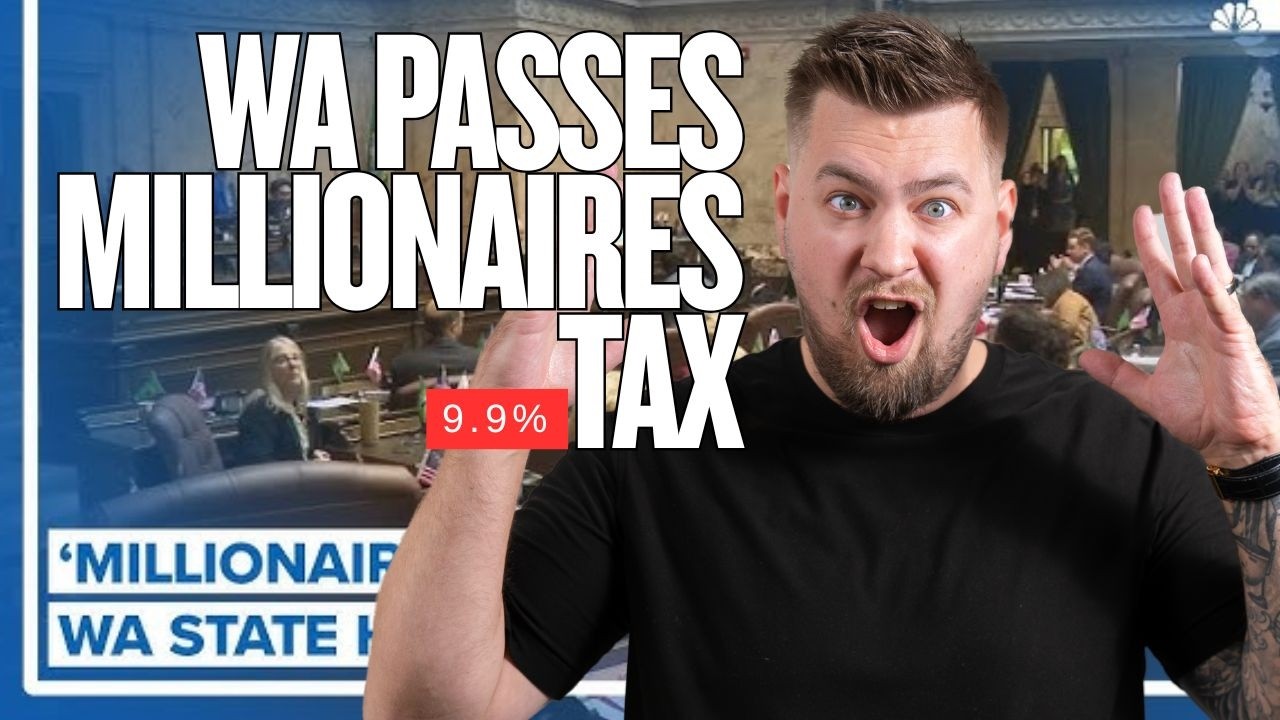
Washington capped rent increases. Here's the supply and demand walkthrough on why that creates slums and homelessness, and why landlords come out ahead.
Rent control is terrible for tenants. It's amazing for landlords.
Washington's newly adopted rent-control policy gives me an example close to home. I invest in the state, and I want to explain how I think caps on rent increases can affect both existing landlords and tenants. This is my view of the change at the time of this article.
Related reading: Michael Zuber on Rent Control, Rates, and Why Most Investors Quit
I want to walk through what the law actually does, what it doesn't do, and then the economics of why capping rent increases produces the opposite of what people voting for it want. Then I'll tell you what it means for you as an investor, because the honest answer is that it means I'm going to make a lot of money, and so is every other investor who owns here.
What the Law Does, and What It Doesn't
Start with what hasn't happened, because this is the part people miss.
There is no maximum rent. We don't have a cap on rents themselves. We also don't have any maximums or rules around what we can place new tenants at. So it's still a free market as far as placing tenants goes. If someone moves out, their old rent doesn't affect the new rent.
That last point is very important, and I'll come back to it.
What we do have is a cap on increases. In Washington state I can go from here to here (that's the 10% line) in one year. I can make that jump. What I can't do is exceed it.
So the question becomes: what does capping rent increases actually do to the market?
Economics, Step One: You Freeze People Into the Wrong Units
Picture a standard supply and demand curve. Price on one axis, quantity of units on the other. In a free market with no rent controls or other outside factors, supply meets demand and you get a price per unit. In our hypothetical market here, call it $1,000.
Now cap the increases. When you limit how much the rent can go up, people tend to not move out. And when people don't move out, you get unit inefficiencies.
Here's the concrete version. Say someone rents a four-bedroom apartment with their family. The kids move out. There's a breakup. Whatever the case: the leaseholder now needs a one or two bedroom. They don't need four bedrooms.
In a normal market, they'd move out and find a more appropriate unit that houses the right number of people, and they'd get a lower rent for downsizing. Under rent control, their price is locked in. And if their price is locked in, it can actually be more expensive for them to move into a smaller space. So they never move out.
Related reading: How I Find the Best Rental Property Markets in Under 10 Minutes
Now you have market inefficiencies: someone occupying a four-bedroom unit even though they don't need one. There are fewer units and less housing actually available for the people who need it.
That artificially pushes you down the supply curve. Their rent may be locked at $800, which feels great for that tenant. But look at what it did to everybody else. We've artificially decreased the supply available. The demand curve is now off. That's a weird place to be.
Economics, Step Two: Fewer Units Means More Homelessness and Higher Rents
With less supply, there's more homelessness and more displaced people. Families have a harder time finding housing in that market.
And what happens to those families when a four-bedroom does finally come available? They end up paying more, because that unit is harder to find. There are people sitting in the wrong size unit (people who arguably shouldn't be able to afford that unit anymore because they no longer have that family size) and families now have to pay a premium to rent the larger spaces.
More homelessness usually isn't what you're targeting when you say "rent control." But that is one of the effects.
Economics, Step Three: The Slum Problem
Here's the second effect, and it's the one that shows up on the buildings themselves.
When you put a cap on how much we can increase rent, no landlord wants to fall below that line. Everything below the 10% line becomes a market inefficiency. It can stop making sense for me to rent the unit at all.
If you're stuck in a market where you can't raise rents, that is where you end up with slums. That's where people can't afford to fix up their buildings.
Costs don't hold still. Material costs go up. We're in a bit of a tariff battle right now and prices are in flux. Look back at 2020 and 2021: we had major supply issues in shipping and in construction. When you artificially affect the market and prices go up on landlords, you end up with slums, because they can't afford the work and they can't pass the costs on. Most people don't want to pay out of pocket to provide housing to other people.
So you get stuck in a weird zone. Everyone who can't make that 10% jump has deals that don't make sense. The properties don't trade anymore. They don't get fixed anymore. You end up with slummy properties that are being incorrectly run, generating less profit than they should for the landlord, and the tenants suffer for it.
Either way, you get one of two outcomes: more homelessness, or slummier properties.
Why Rent Goes Up Every Year Now, By Default
Here's the part that should have been obvious to whoever wrote this.
Every landlord is now terrified of falling behind. So they always increase the rent.
In a normal market you see ebbs and flows in rent increases. I've had many times where I didn't do a rent increase at all, because the tenant was already at market rent. Or market rent didn't change much that year, so they got a 2% bump.
Under a cap, if we ever don't bump by that 7 to 10%, we fall behind. And if you fall behind the curve, there's a chance you can't catch up. If you can't catch up, you can't sell your building to the next person, because they can't come in and magically increase rents either. They're stuck with the same problem.
So congratulations, Washington state: rent now gets more expensive every year by default.
You'll never see a mega spike in rent, because it's capped. You'll just see the increase averaged out over the long haul: steadily, relentlessly, every single year.
The Only Real Winners
Rent increase caps are bad. You want a free market where supply meets demand. You don't want a market that's overbuilt, because too much supply is its own problem, and you don't want too much demand where too many people move in before you can build. Either of those is an economic problem. You want a simple curve. When you introduce these other factors, you artificially affect that curve, and it becomes very hard to be a real estate investor in that environment.
The only real winners here end up being the landlords. Landlords continue to get their rent increases: in fact, now they all have to do their rent increases. Rent goes up at an accelerated rate for a significant period of time.
For everyone who owns today, and arguably for anyone who buys over the next few years, you're going to reap all the benefits of being a landlord in a market that's artificially trying to affect the supply and demand curve.
Economics rule. You can't just change the rule and get the desired outcome. There's always an economic effect when you restrict supply or demand, and it works its way along the curve.
Don't believe me? Look at what happened in New York. Look at what happened in California. Look at Oregon. Look at parts of Colorado. They've tried this stuff.
Key Takeaways
- Washington capped rent increases, but there's no cap on rent itself and no rules on what you can place a new tenant at. Turnover resets to market.
- Capped increases lock people into units that no longer fit their household, which shrinks effective supply and drives up what families pay for larger units.
- Landlords who can't raise rents to keep up with material and repair costs stop maintaining buildings. That's how you get slums.
- Because falling behind the cap may be permanent, every landlord now raises rent every year. Increases become automatic instead of market-driven.
- Buildings that can't catch up also can't be sold, because the next buyer inherits the same ceiling.
- Owners today, and buyers over the next few years, are the ones who benefit.
As a landlord this puts us in a weird position, because we really do benefit from bad policy. The more bad policy they push through, the more we tend to benefit. That's true of business everywhere. If you push through bad policy, the people who understand how money works are always the ones who profit, and your tenants, the end user, are almost always the ones who suffer from overregulation and overrestriction.
My opinion: government should get out of rentals altogether and let the professionals do it. Historically, every government everywhere is really bad at housing. There have been very few exceptions (some smaller countries have had some interesting levels of success) but outside of that it generally always fails. It ends in slums, or it ends in the rich getting much, much richer.
I'm happy to be on the rich side of that equation, because I'm a landlord. But you can do the same thing. If you don't know how to buy rentals yet, regardless of how much money you have, that's what Multifamily Strategy exists for. The mentorship group is an actual community of people who have funded over $21 million of their own deals together: people who started with no money or low money, learned creative financing, learned how to understand a deal, bought for cash flow, raised their income, and moved from the tenant side to the owner side.
I built hundreds of units doing the same thing. Watch the full video for the supply and demand walkthrough on the whiteboard, grab the free multifamily course in the description if you're starting out, and come join the Facebook group. You can be the one benefiting from policies like the one Washington just implemented.
Read the episode transcript
0:00 Rent control is terrible for tenants.
0:02 It's amazing for landlords. Now, if you
0:03 don't believe me, I'm going to show you
0:04 exactly why and how this works. I have
0:06 the perfect example. I invest in
0:08 Washington state. We just this week that
0:10 I'm filming this past rent control. It's
0:12 officially in place. We have capped rent
0:14 increases in this state. So, what hasn't
0:17 this done? There is no maximum rent. We
0:19 don't have a cap on rents. We also do
0:22 not have any maximums or rules around
0:24 what we can place tenants at. So, it's
0:26 still a free market as far as placing
0:27 tenants. If someone moves out, their old
0:29 rent doesn't affect the new rent, which
0:31 is very important. However, what does
0:33 capping rent increases actually do to
0:35 the market? Why am I going to make a ton
0:37 of money and all the other investors
0:38 going to make a ton of money here? And
0:40 why is this not as good for tenants as
0:41 it seems? Well, let's talk economics.
0:44 Price on this axis, quantity of units on
0:46 this axis. So, this is the amount of
0:48 units available. And here is the price
0:51 per unit. This is a standard supply and
0:53 demand curve with no rent controls or
0:55 any other outside factors. In a free
0:58 market where supply meets demand, you
1:00 get the price per unit. In our
1:02 hypothetical market here, let's say it's
1:04 $1,000. What does rent control actually
1:06 do? If we're limiting what you can
1:08 increase the rent to, people tend to not
1:11 move out, which means you get unit
1:12 inefficiencies. For example, say someone
1:15 rents a four bed apartment with their
1:16 family. Their kids move out. They have a
1:18 breakup. Something h whatever the case.
1:21 They're now the leaseolder needs a one
1:23 or two bed apartment. They don't need
1:25 four units. In a normal market, they
1:27 would move out and find a more
1:28 appropriate unit that houses the right
1:30 amount of people. They would get a lower
1:32 rent for downsizing. In this case, they
1:35 might have had their price locked in. If
1:37 their price is locked in, it could be
1:39 more expensive for them to go to a
1:41 smaller space, in which case they're
1:42 never going to move out. So you get
1:43 market inefficiencies where they're
1:45 taking up a four bed unit even though
1:47 they don't need one. There's now less
1:49 units and less housing actually
1:50 available for those who need it. So we
1:52 move down the supply curve artificially
1:55 and let's say we end up somewhere around
1:57 here. Now their rent may be locked in at
2:00 800 which feels great for the tenant.
2:01 But what has it done? We have
2:03 artificially right in here we have
2:05 decreased the amount of supply
2:07 available. The demand curve is now off.
2:10 This is a weird place to be. There's
2:11 less units. there's more homelessness,
2:13 there's more displaced people. Families
2:15 have a harder time finding housing in
2:18 this market. What ends up happening to
2:20 those families when a four bed becomes
2:22 available because now demand is
2:23 suppressed. They end up actually paying
2:25 more because their unit is harder to
2:29 find. There's people who are in the
2:31 wrong size unit. You have people who
2:32 shouldn't be able to afford that because
2:34 they no longer have that family size.
2:36 They're taking up a four bed. Families
2:38 now have to pay a premium to rent the
2:40 larger spaces. Now, more homelessness
2:42 usually isn't what you're targeting when
2:44 you say rent control. That is why it's
2:46 one of the effects. What is the other
2:48 effect? Well, when you put a cap on how
2:49 much we can increase rent, we do not
2:51 want to fall below this. Here's our 10%
2:54 line right here. I can increase from
2:56 here to here in one year in Washington
2:58 state. I can make this jump. Everything
3:00 below this line, I now have market
3:03 inefficiencies. It could no longer make
3:05 sense for me to rent the unit. If I am
3:07 stuck in a market where I can't increase
3:09 them, this is where you end up getting
3:11 slums. This is where people can't afford
3:12 to fix up their buildings. As rising
3:14 prices happen, as material cost goes up,
3:16 you guys may have noticed we're in a bit
3:18 of a tariff battle right now. Prices are
3:21 in flux. If you look back in 2020, 2021,
3:24 we had major supply issues in shipping,
3:27 in construction. When we artificially
3:30 affect the market, if prices go up on
3:32 landlords, you end up with slums. They
3:34 can't afford it. They can't pass these
3:36 costs on. Most people don't want to pay
3:38 to provide housing to other people. So,
3:40 you get stuck in this weird zone where
3:42 everyone who can't make the jump at 10%
3:45 jump, the deals don't make sense. The
3:47 properties don't trade anymore. They
3:49 don't get fixed anymore. You end up with
3:51 slummy properties that are being
3:52 incorrectly run with not as much profit
3:55 as they should get to the landlord, and
3:57 the tenants all suffer as a result. So,
3:58 either you get more homelessness, you
4:00 get slummier properties. Either way,
4:02 what's going to happen to the rest of
4:04 the market? Every landlord is terrified
4:06 of falling behind. They always increase
4:08 the rent. In a normal market, you'll see
4:11 es and flows of rent increases. I've had
4:13 many times where I don't do a rent
4:15 increase because they're already at
4:16 market rent. Or maybe market rent didn't
4:18 change that much this year, so they got
4:20 a 2% bump in rent. Now, if we ever don't
4:22 bump by that 7 to 10%, we're going to
4:26 fall behind. Congratulations, Washington
4:28 State. Rent gets more expensive every
4:30 year by default because if you fall
4:32 behind this curve, there's a chance that
4:34 you can't catch up. And if you can't
4:36 catch up, you can't sell your building
4:38 to the next person because they can't
4:39 just come in and magically increase the
4:41 rents. They're stuck with the same
4:43 problem. Rent increase caps are bad. You
4:46 want a free market where your supply
4:48 meets your demand. You don't want a
4:50 market that's overbuilt because you
4:52 don't want too much supply. You don't
4:53 want too much demand where too many
4:54 people are moving in before you can
4:55 build. Either of those are economic
4:58 problems, but you want a simple curve.
4:59 When you introduce these other factors,
5:01 you artificially affect the curve. it
5:04 becomes very very hard to be a real
5:06 estate investor in this type of
5:07 environment. Now, the only real winners
5:09 in this scenario end up being the
5:11 landlords. The landlords continue to get
5:13 their rent increases. They all have to
5:15 do their rent increases. Rent goes up at
5:17 an accelerated rate for a significant
5:19 period of time. While you'll never see a
5:22 mega spike in rent because it's now
5:24 capped, you just see it averaged over
5:26 the long haul. For everyone who owns
5:28 today, and arguably for anyone who buys
5:30 over the next few years, you're going to
5:32 reap all the benefits of being a
5:34 landlord in a market that is
5:36 artificially trying to affect the supply
5:37 and demand curve. But economics rule,
5:40 you can't just change the rule and get
5:41 the desired outcome. There's always an
5:43 economic effect when you restrict supply
5:46 or demand. It affects along the curve.
5:48 Don't believe me? Look what happened in
5:50 New York. Look what happened in
5:52 California. Look what happened in
5:53 Oregon. Look what like look what
5:55 happened in parts of Colorado. they've
5:56 tried this stuff. As a landlord, it puts
5:58 us in a weird position cuz we really do
6:01 benefit from bad policy. The more bad
6:04 policy they push through, the more we
6:06 tend to benefit. This is true of
6:07 business everywhere. If you push through
6:08 bad policy, people who understand how
6:11 money works are always going to be the
6:12 ones who profit. Your tenants or the
6:14 enduser is almost always the one who
6:17 suffers from overregulation and over
6:18 restriction. My opinion, I think
6:20 government should get out of rentals
6:22 altogether and let the professionals do
6:24 it. Historically, every government
6:25 everywhere is really bad at housing.
6:27 There's been very few exceptions to
6:29 this. Some smaller countries have had
6:30 some really interesting levels of
6:32 success. Outside of that, generally
6:35 always fails. It ends up in slums or it
6:37 ends up in the rich getting much, much
6:38 much richer. Now, while I'm happy to be
6:41 on the rich side of this equation
6:42 because I am a landlord, you can do the
6:45 same thing. If you don't know how to buy
6:46 rentals yet, regardless of how much
6:48 money you have, check out Multif Family
6:49 Strategy, the mentorship group. There's
6:51 an actual group of people who have
6:52 funded over $21 million of their own
6:54 deals together. People who started with
6:56 no to low money, a community who's
6:58 learned how to use creative financing,
7:00 who've learned how to understand a deal,
7:02 buy for cash flow, and increase their
7:03 income and move from the tenant side to
7:06 the owner side. I've built hundreds of
7:08 units doing the same thing. You can do
7:10 it, too. And you can be the one
7:11 benefiting from stupid policies like the
7:13 one Washington implemented this
Put these ideas to work.
Get support from Christian and the coaching team with your next multifamily deal. See how the mentorship works or start your application.
Apply Now