Building the business
Washington's 9.9% Millionaires Tax: What It Means for Owners
Washington's House passed a 9.9% tax on income over $1 million. Here's what it actually does, who pays it, and why I left the state years ago.
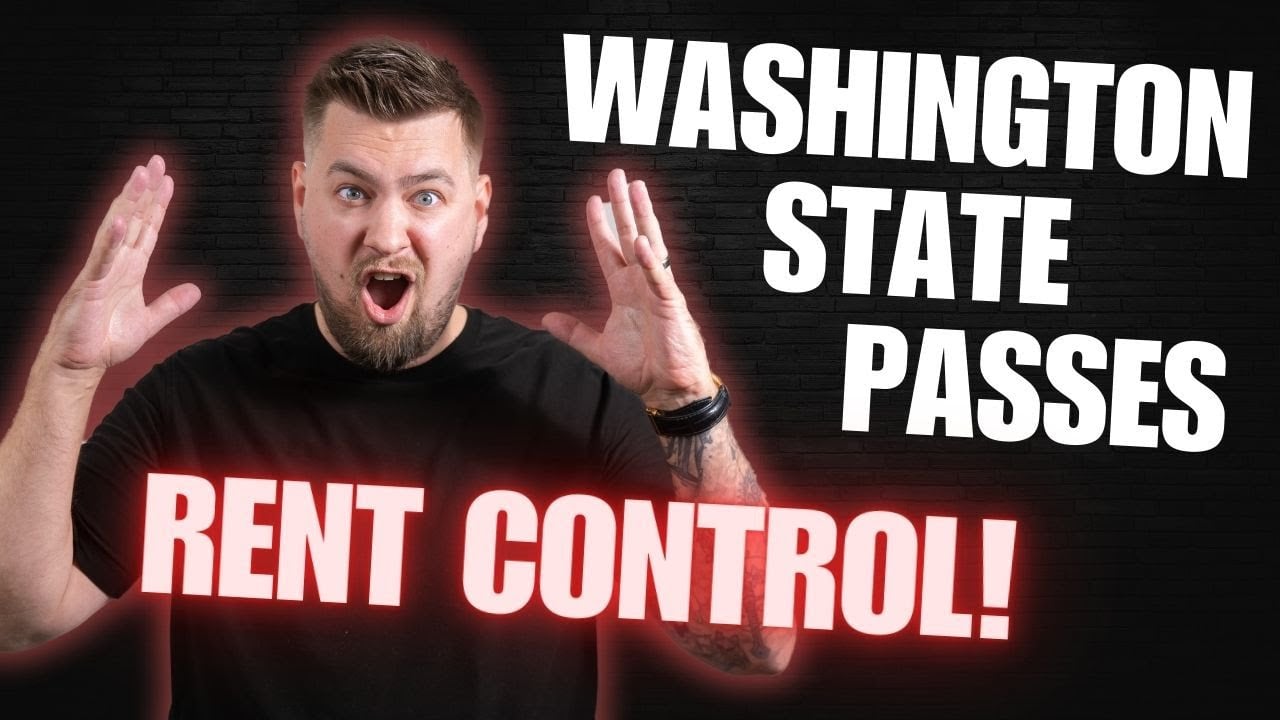
Washington state's House just passed a basically 10%: 9.9%: tax that they're branding the millionaires tax. And they did it on top of cutting a whole bunch of genuinely good state programs, including Running Start, the program where high school kids can knock down the cost of college and get ahead. They cut those so they could have more tax revenue, and then they added a new tax on top.
I want to walk through exactly what passed, what it actually means, and specifically why, if you are a job provider in Washington state, you are now the most likely person in the state to move. I have skin in this game. I used to be a Washington business owner. I left, largely because of this exact tomfoolery, and I still own property there. So this isn't theoretical for me.
What Actually Passed, and the Constitutional Problem
First of all, it passed. It cleared the House after a 25-hour marathon debate, and the governor has said they're going to sign it. If your family income exceeds $1 million gross in a year, you pay an additional roughly 10% on the income above that line.
There is one small problem: it violates the state's constitution.
Washington is one of nine states that does not have any income tax. That's a core part of the state's identity and a core part of its legal framework. The state makes up for the missing income tax by taxing you up and down the wazoo everywhere else, especially business owners and landlords. Very, very high sales tax. A pile of additional taxes on all sorts of goods and services. Tons of toll roads and toll lanes. Washington has an enormous number of revenue streams already.
Related reading: Washington Rent Control: Why It Hurts Tenants and Pays Landlords
So despite being one of the most expensive states in the country to live in, they're now going to make it so that you specifically don't want to live there if you're a millionaire or a high-income earner.
There is some good news if you're on the receiving end of this. It doesn't go into effect until 2028, which means the first payments wouldn't be due until 2029. If you're a Washingtonian and a business owner, you still have plenty of time to go live anywhere else.
And realistically, the lawsuits are going to start immediately, because this is again in violation of the state constitution. It still has to go through the judicial system, and I don't think it can make it. But I will say this: Washington state is crazy, and they have passed some wild things before. I wouldn't bet my business on the courts saving me.
Who Actually Pays This
Remember what we're talking about geographically. This is Seattle. This is home to Starbucks, Amazon, Boeing: a lot of companies that have already, you'll notice, moved second headquarters to other markets around the country. Kansas. Florida. Texas. That migration was already underway before this bill.
I'm not super good at math, but the arithmetic here isn't hard. If you make an additional million dollars, and let's say you provide a couple hundred jobs while you're making that money, you're going to pay an extra $100,000 per million that your family makes. That's $100,000 that was previously sitting inside a business that employs people.
The people hit by this are not passive. They're the ones who can most easily change their address, and who have the most concrete financial reason to do it.
The Taxes Business Owners Already Pay in Washington
To understand why this feels like the last straw and not just one more line item, you have to see the stack that's already there. Let me use my resort as the example.
Washington charges a 10% tax on transient rentals. What that means in practice is all hotels, period. If you rent to any guest for less than 30 days, 10% goes to the state. Why? Because they said so.
Then there's the equipment tax. The state sends an auditor out to my resort every single year to count the number of rakes, shovels, wheelbarrows, and (for some reason) mattresses that they find on the property. I get taxed for owning them. Not for buying them, which I also paid sales tax on. For owning them.
Why? The actual stated reason is that those shovels are taking away hardworking people's jobs. In theory, I could have paid an army of people to dig a trench with their hands instead of using a shovel, so by owning the shovel I'm depriving the state of all that taxable labor revenue. That's the logic. Buy a shovel, pay for it every single year.
On top of that I have property tax on 13 acres, plus the maintenance, plus the marketing, plus everything else it takes to actually run a resort.
So business owners are already paying the brunt of the taxes for Washington state. Property tax and employee tax and L&I tax and equipment tax and B&O tax and retail tax and all the rest. And now, if you happen to be too successful beyond all of those hurdles in an already very difficult state, the state is going to go ahead and take another 10% on top of your federal income tax.
If you think the wealthy are going to keep handing out high-paying jobs in that environment, you're crazy. The tech jobs are going to go literally anywhere else. Expect people moving to Dallas. To Arizona, if it lasts there: Arizona is getting a little weird lately. Florida is pulling in tons of tech jobs and tons of finance jobs.
Here's what we find when these taxes get passed and you beat up only your wealthy job creators: you lower median income. There's less to go around. Because how do you avoid the tax? You go somewhere else. I left a while ago. People are going to keep moving out.
The REIT Tax: The Other Reason I Left
A few years back, Washington passed something that gets far less attention than the millionaires tax, and it was another reason I left the state. It's the real estate excise tax: what people in the business call the REIT tax.
It applies to real estate at every scale, from your personal house when you sell it up to a massive apartment building. There's up to a 3% tax on the transaction. And critically, it applies to more than just sales. If we swap partners in an LLC and more than 50% of the equity changes hands, we pay the REIT tax. We pay as if the property had sold: up to 3% of the sales price of the property, not of the capital gains. There is a separate capital gains tax. This one sits on top of the gross value.
It's graduated. The first $500,000 is around 1%, and it migrates up until everything over a million dollars of purchase price or valuation is taxed at 3%.
Back to the resort. I bought Robin Hood Village Resort for $4.5 million. It's worth probably about $5.5 million today. If I had a buyout where a partner exited and half of the resort had a new owner, everything above a million dollars would be taxed at 3% of the value of the property. Someone has to pay six figures just to trade partners. Nothing was built. Nothing was sold to an outside buyer. The names on the operating agreement changed.
These sorts of taxes cause people to leave. They also cause landlords to want to invest elsewhere, which means less repairs and maintenance, which means rundown properties, which means tenants with fewer jobs, which means more homelessness across the board. That's the chain reaction, and it plays out over years, not months.
Related reading: Section 8 Changes: What the 40% Cut Means for Landlords
Key Takeaways
- Washington's House passed a 9.9% tax on family income above $1 million after a 25-hour debate, and the governor has said he'll sign it.
- It doesn't take effect until 2028, so the first payments land in 2029: there's time to plan or relocate.
- Washington has no income tax and is one of nine such states, which is why this is likely to be challenged in court as a constitutional violation.
- Business owners in Washington already stack property tax, employee tax, L&I, B&O, retail tax, a 10% transient rental tax, and an annual equipment tax on rakes, shovels, and mattresses they already paid sales tax on.
- The separate real estate excise tax charges up to 3% of a property's value (not its gains) even when partners simply swap more than 50% of an LLC's equity.
- Taxing only high earners in a high-cost state doesn't redistribute income, it exports it: jobs move to Dallas, Texas, Florida, and Arizona, and median income falls.
This is not a left versus right thing. This particular issue is crazy tax, period. It's just bad policy. You could do this in a red state and it would be stupid. There aren't a lot of states doing it right now because it's a wild idea: you can't just pass a blanket 10% tax targeting individuals, and especially not your highest-producing individuals.
And as an entrepreneur, it leaves you with nothing to aspire to. If I work hard enough, I might be able to give more money to programs I don't like that the state implements automatically. Washington state needs to tighten its budget and spend less on ridiculous programs. It doesn't need to do this.
But it got passed, officially, and now you're in the loop. Entrepreneurs, come on down to Dallas: we'll see you here. Watch the full video above for the complete breakdown of the bill and the debate around it. If you want to learn how I structure deals in states where the math still works, you can find my mentorship at mentorship overview. I'm always on the real estate channel, but anything that happens with taxes (especially to business owners in Washington state) is going to have a huge impact on real estate, so stay tuned.
Read the episode transcript
0:00 Absolutely insane. Washington state's house just passed a basically 10% 9.9% tax. They're branding the millionaire
0:07 tax. Now, on top of cutting a whole bunch of awesome state programs like Running Start where kids can actually cut down on the cost of college and get
0:14 ahead, they cut those so that they can have more tax revenue. In this video, I'm going to explain exactly what they have passed, what it means, and
0:22 especially if you are a job provider in Washington state, uh why you're most likely to move if this uh stays around.
0:30 So, first of all, it is passed. They're calling it the millionaires tax. It's passed the house. Governor said they're going to sign it. Now, there is a small
0:36 problem in that it violates the state's constitution. Washington state is one of nine states that does not have any
0:45 income tax. Now, they make up for it by taxing you up and down the wazoo, especially business owners and landlords, but they come in and they
0:53 have very, very high sales tax. They have a lot of additional taxes on all sorts of goods and services, tons of toll roads and toll lanes. They have a
1:01 ton of different revenue streams. But despite being one of the most expensive states to live in, they're going to make it so you don't want to live there if
1:10 you are a millionaire or a high income earner.
1:14 If your family income exceeds $1 million, which is a significant amount of entrepreneurs, remember this is Seattle, this is home of Starbucks,
1:21 Amazon, Boeing, a lot of companies that notice have already moved second headquarters to other markets around the
1:28 country. Kansas, Florida, Texas, they are going to make it. So, if you make more than a million dollars gross in a
1:36 year, an additional 10% tax. Now, I'm not super good at math, but if you make an additional million dollar and you know, let's say you provide couple
1:44 hundred jobs, well, while you are making this money, uh you're going to pay an extra $100,000 per million that your
1:52 family makes. Now, take this as an example. As a business owner who used to be in Washington and left because of
1:58 this exact tum foolery, uh when we're putting these things together, let's take my resort for example. Washington charges a 10% tax for transient rentals.
2:09 What does that mean? All hotels, period.
2:11 If you rent for less than 30 days to any guest, 10% goes to the state. Why?
2:17 Because they said so. I have an equipment tax. They will send an auditor to my resort every year and count the numbers of rakes, shovels, wheelbarrows,
2:26 and mattresses for some reason that they find. I get taxed for owning them, not for buying them, which I also paid sales tax on. I get taxed for owning them.
2:35 Why, you might ask? The actual reason?
2:39 Because those shovels are taking away hardworking people's jobs. Someone could have paid I could have paid an army of people to dig a trench with their hands
2:47 instead of a shovel. And I'm jacking all of that taxable labor revenue to the state. So that is the actual reason the
2:55 state's like, "Hey, we're losing revenue because of the equipment that you own." So, if you buy a shovel, we want you to pay for it every single year. Oh, also I
3:04 have property tax on the 13 acres and still have the maintenance and the marketing and all the things it takes to run a resort. So, business owners are
3:13 already paying a brunt of the taxes for Washington state. If you happen to be too successful though, not only will you pay property tax and employee tax and
3:22 LNI tax and equipment tax and BNO tax and retail tax and all the other taxes,
3:29 if you're too successful beyond all of those hurdles in a very difficult state, we're going to go ahead and just take 10% above your federal income tax. If
3:39 you think that the wealthy are going to continue to give highpaying jobs in this area, you're crazy. The tech jobs are
3:48 just going to go literally anywhere else. So, expect people to be moving to Dallas, to Arizona is if it lasts there.
3:54 Arizona is getting a little bit weird lately. Florida getting tons of tech jobs, tons of finance jobs. Here's what we find. When we pass these just
4:03 ridiculous taxes and you beat up only your wealthy job creators, you lower median income. There's less to go
4:11 around. It's like, how do you avoid the tax? You go somewhere else. I left a while ago. People are going to move out.
4:17 Now, there's some good news. This doesn't go into effect until 2028. So, the first payments wouldn't be till 2029. So, great news. If you're a
4:25 Washingtonian and you're a business owner, you still have plenty of time to go live anywhere else. Also, they'll probably throw this out as lawsuits will
4:33 start immediately when they pass this because it is again in violation of our state constitution. So, it still has to go through the judicial system and I
4:41 don't think it can make it. But I will say this, Washington state is crazy and they have passed some wild things. In fact, a few years back, another reason I
4:50 left the state, they passed what's called the REIT tax. So there is, and this is for like your house when you sell it or a massive apartment building.
5:00 There is up to a 3% tax on real estate.
5:04 It's called real estate excise tax. If we swap partners in an LLC and more than 50% of the equity changes hands, we have
5:12 to pay what's called a REIT tax. We will pay as if the property sold up to 3% of
5:19 the sales price of the property, not the capital gains. There's a separate capital gains tax. We're just talking about the real estate excise tax. I have
5:27 a partner who buys me out at 50% of an LLC. Well, one of the two of us is going to have to agree to pay uh on the first
5:35 it's graduated. So, your first 500,000 I think it's 1%. It migrates up to everything over a million dollar of
5:43 purchase price or valuation is taxed at 3%. So again, let's go back to my resort example. I bought a resort for $4.5
5:51 million. It's worth probably about $5.5 million today. If I had a buyout where a
5:58 partner exited and half of the Robin Hood Village Resort has a new owner, well, everything above a million dollars has a 3% of the value of the Robin Hood.
6:07 Someone has to pay six figures to just trade partners. And if you sell the building is also the state. These sort of taxes
6:15 cause people to leave. It also causes landlords to want to invest elsewhere, which means you have less repairs and maintenance. You get rundown properties.
6:23 You get tenants with less jobs, so you have more homelessness across the board.
6:29 These are bad policies. And this is not a left versus right thing. This particular issue is crazy tax, period.
6:37 It's just bad. It's just bad policy. You could do this in a red state and it would be stupid. They're just currently there's not a lot of them doing this because it's a wild idea. You can't just
6:46 pass a blanket 10% tax targeting individuals, but especially not your highest producing individuals. Um, it makes no sense. And then as an entrepreneur, there's nothing to aspire
6:54 to. If I work hard enough, I might be able to give more money to programs that I don't like that the state implements
7:01 automatically. Washington state needs to tighten its budget. It needs to spend less on ridiculous programs. It doesn't
7:09 need to do this. But that got passed officially. You are now in the loop. Entrepreneurs, come on down to Dallas.
7:16 We'll see you guys here. And as always, like, follow, subscribe. I'm always in the real estate channel, but anything
7:23 that happens with taxes, especially to business owners in Washington State, you better bet this is going to have a huge impact on real estate. So stay tuned.
7:30 We'll see you on the next episode.
Put these ideas to work.
Get support from Christian and the coaching team with your next multifamily deal. See how the mentorship works or start your application.
Apply Now