Analyzing and negotiating
Apartment Walkthrough: How $350K of CapEx Became $500K
A 30-unit under LOI in Weatherford, Texas. Here's the walkthrough that grew our capital budget from $350,000 to $500,000, and what yellow flags actually cost.
Today I'm at a 30-unit building in Weatherford, Texas doing an initial walkthrough. We have a signed letter of intent on this property. We do not have a signed PSA. So we're making a decision today: are we officially going to buy this or not?
Conveniently, Weatherford is on the way to Stephenville and Abilene, where I own multiple hundred units in each market. So even though it's only a 30-unit building, it makes a ton of sense in my portfolio: if the deal still works after today.
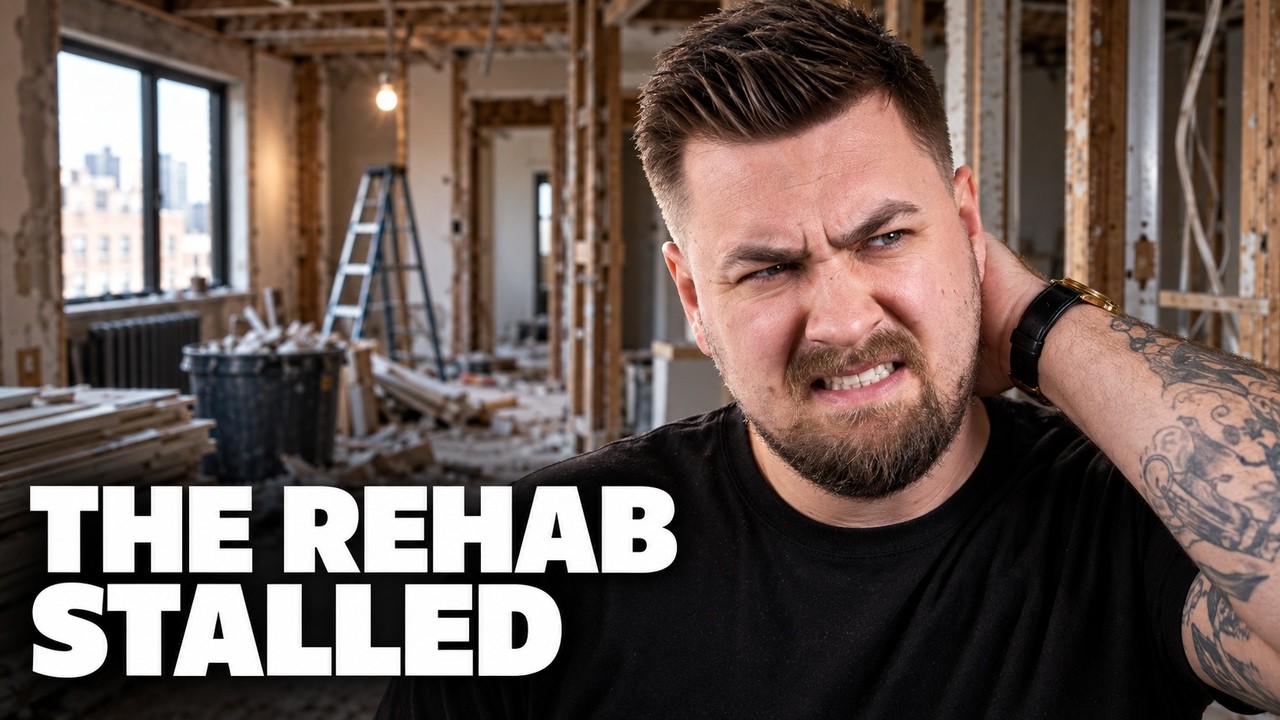
Here's what I actually look at on a walkthrough, why the small stuff matters more than most people think, and how our going-in capital budget moved from $350,000 to half a million dollars before I ever got back in the truck.
The first thing I noticed was in the parking lot. It's patched and very lumpy. We're going to want to repave that as part of this project, so it goes in the budget before I've even walked a unit.
The units: dated, but honest
These efficiency units are apparently the least nice of what we're seeing today, and they're not the worst I've walked. This is dated entry-level housing. This project is not going to be our fanciest: it's true Class C++ and we're a little out in the country.
Layout-wise, I don't hate it. You get a pretty big living area. The floors are in good condition. The countertops are nice. And they did my favorite little thing: the appliances all match. White appliance, white appliance, white range. That alone makes a unit look a lot better than most of what I see.
One item we'd replace is the vanity. Sitting on the floor, I could see it was barely above knee height. Its size made the bathroom feel like a children's playhouse.
The one-bedroom looks a heck of a lot better. Pretty big floor plan, the ground is completely level, and the floors are relatively new, which I like quite a bit. Not a fan of the popcorn ceilings. But it's clean, simple, and tidy, which is what I want to see. The bedroom is enormous: you'd be very comfortable putting a king bed in there, and I'm about 6'1", so I have a decent read on how much space that really is. Walk-in closets, too.
The windows are all old. That's the kind of thing you're always noting on a walkthrough.
Yellow flags, not red flags
The water heater is in good condition and hooked up correctly, but there are no drip pans. If that leaks, it causes damage.
That's the theme of this whole property. A bunch of yellow flags. No red flags.
More of them as I walked:
- The cabinets in the one-bedroom are on the older side. We'd pull some out and refresh. Not a super expensive kitchen to redo: one thing I really like about simple floor plans is you can elevate them quite a bit without breaking the bank. But it has to be budgeted for.
- The gutters are a gutter garden all the way down. Nobody's cleaned them.
- The fire extinguisher is correct and in the right spot, and out of date by about six months.
- The ACs look to be in decent condition, but they're all older. We'll factor for replacing a few in the first year.
None of that is a deal killer. But when you see this much of it, the question to ask is: what other little things aren't done? That gets factored into your math for the overall condition of the building. Here, all the big things are done, and a lot of the little things need TLC. That's genuinely good to know when you're evaluating any transaction.
One bonus I did find: the mailbox says US Mail, which means the post office manages it. I have a bunch of privately managed boxes, and when those get damaged we have to fix them. You don't think about that until you own a lot of properties, and then not dealing with mailbox maintenance is really nice.
The bathroom fan test that saves you money
Do this every single time: turn on the bathroom fan and listen.
When you have a super loud fan, the problem isn't that it doesn't work. It's that the tenants won't use it because it's obnoxious. Then you get moisture, and then you get mold.
I invest a lot in Washington State, which is a high-moisture state, so we get a lot of mold problems when we have a fan problem. In Texas (especially in Houston, where I own a few properties) mold explodes when it takes off because of the humidity.
If you hear a bad fan, replace it. Then service them every single year. It doesn't take a lot of work, and you can get them to last basically forever. Fail to service them and you'll start losing money on what becomes a major maintenance headache. It's one of the cheapest things you can do that saves you a ton.
The last vacancy, and my biggest pet peeve
In the final vacant unit, the countertops have about three layers of paint on them. Instead of replacing countertops, somebody's been painting them. That's a huge pet peeve of mine. It works fine and it's functional if you live there, but I want those to be nicer, so if we buy this we'll budget to replace them as tenants move out.
And then they did my personal biggest pet peeve: black refrigerator, white appliances. It just looks tacky. Don't do it. It costs you exactly the same to set them all up the same. If you're going to go black, go black. If you're going to go white, go white. Make them match.
Where the real money showed up: exteriors
Outside is where the number moved.
A downspout that isn't connected: obviously an easy repair, but it goes right back to the blocking and tackling. When the little things aren't done right, you're going to find more after you close. I promise you that.
Then a porch. I had real concerns about how it was constructed; that would have to be redone. There's brick breaking at the wall, covers missing underneath, and debris, with the whole thing leaning funky.
I got the camera down under the building. Not as bad as I thought, but there's a good deal of debris: carpet, wood scraps. I'd do a quick under-building cleanup. The next building over is pretty much more of the same: plenty of debris and the insulation is down. When we do the full inspection, I'll make sure we pay extra attention under there. I don't pretend to be a specialist in every piece of a property, but I know enough to be dangerous, and I know I want a second set of eyes on that while we're under contract. We'll also need to seal all of it off: I really don't want animals living inside and under the buildings.
Up top there's a lot of rotting trim. Not a massive red flag, but we'll call that a hard yellow. There are big cracks at the siding seams that need to be addressed.
When you're doing these, document all of it. I've seen people buy buildings without doing the little things and without accounting for them. It adds up to a few hundred thousand dollars on a project that you wouldn't have planned for.
Then I found the one genuine problem. There's a support structure built with a 4x4 post and another 4x4 post, like a normal adult would do it. But one of them has been "repaired" with: whatever that is. The support beam is sitting on a cracked brick and a little 2x4. It's propped up on twigs. The original post is right there; why they cut it and rebuilt it incorrectly, I don't know. What it's doing is ripping the structure out of the building. That damage was caused entirely by building it wrong.
That's a significant health and safety violation. If that breaks off and a tenant gets injured, you're looking at liability. It must be fixed.
Running the new number
Tallying it up: roughly $250,000 of actual work that needs to be done to the property. Probably another hundred-ish to get all the paving redone correctly so the parking lot stays really nice and clean: we'll get that quoted, but those are rough numbers. Plus unit turns.
Related reading: Inside a 44-Unit That Brings In $40,000 a Month in Rent
We're allocating about $500,000 for our initial going-in math.
Our original underwriting factored about $350,000. So we need to increase that by another $150,000, go back, and rerun the numbers.
We had an accepted LOI on a deal that looked absolutely stellar. What I expect is that this moves it from a stellar deal to a really good deal. We're probably still going to buy it: the numbers will probably still make sense, and it's on the path to both Stephenville and Abilene where I own quite a few buildings, so it makes a lot of sense geographically. It just has to work financially.
If you're unsure on the numbers, it's never painful to be more conservative. Many times you're not conservative enough. And never force one of these deals to work.
Why speed matters here
The key with brokers: get out there, do the work, make decisions fast.
If we sat on this for three, four, five, six days and then said we're ready to move forward, someone else could already have taken the deal. We have a signed LOI, but they have two buyers in backup and the seller is ready to pick their final buyer.
Conveniently, I've worked with this brokerage before. Of their three candidates (one high-volume buyer, one lower-volume) they ranked us as the most able and willing, because we've closed every time we've worked with them. We have a track record, we have volume, we have properties in the area, and we have the experience to turn this around. The only open question is whether a deal with a little more cosmetic value-add than I wanted still makes sense.
You don't need to nail every single number to answer that. You don't need contractor quotes for every piece. You need rough numbers to make a decision.
Key takeaways
- Budget from the parking lot in. Paving, exteriors, and structure are where the number actually moves, not the vanity you hate.
- A pile of yellow flags is information. Uncleaned gutters, out-of-date extinguishers, disconnected downspouts, and missing drip pans all predict what you'll find after closing.
- Turn on every bathroom fan. Loud fans go unused, unused fans create moisture, and moisture creates mold: fast in Houston, constantly in Washington.
- Improperly rebuilt structural supports are a real red flag, not a yellow one. That's liability, and it gets fixed.
- Rough numbers are enough to decide. Our estimate went from $350,000 to $500,000 of CapEx on 30 units, which reclassifies the deal without necessarily killing it.
- Move fast. A signed LOI with two backup buyers is not a reservation.
What's next on this one, and where to go deeper
The next phase is feasibility. We go under contract, deposit earnest money, and in this case we'll have 30 days to do all our due diligence: check the books, check the maintenance, get an official inspection, and run a full septic inspection on the field we didn't get into today. Then we fine-tune the budget with detailed quotes. If the deal works on those numbers, we finish lining up the debt product we're already working on and line up the rest of the equity. We'll probably only need one or two partners and will do this as a joint venture after we know exactly what we're getting into.
The video is worth watching for the walkthrough itself: seeing the twig-propped support beam and hearing that bathroom fan lands differently than reading about them. "The Book on Creative Real Estate" is out now and covers the actual structures and stories behind deals like this one, not theory. Our free course on getting started in multifamily is at multifamilystrategy.com, and the free community comes with a deal calculator. If you want direct help, there's a short strategy video on mentorship linked in the description.
This is what it actually looks like to do these in the field.
Read the episode transcript
0:00 Welcome back to Multif Family Strategy.
0:02 I'm Christian, your channel host. Today
0:03 we're at a 30-unit building. I'm doing
0:05 an initial walkthrough. We have a letter
0:06 of intent signed for this property.
0:08 However, we do not have a signed PSA.
0:10 So, we're making a decision today. First
0:11 thing I'm noticing, the parking lot is
0:13 patched and very lumpy. We're going to
0:15 want to repave that as part of this
0:17 project. So, we're going to make sure
0:18 it's part of our budget. But, we're
0:19 going to do today is walk through and
0:21 decide, are we officially going to buy
0:23 this or not? Now, conveniently for me,
0:25 Weatherford, Texas is on the way to
0:27 Steamville, Texas and Abalene, Texas,
0:29 where I own multiple hundred units in
0:30 each market. So, while it's only a
0:32 30-unit building, this makes a ton of
0:34 sense in my portfolio if the deal works
0:37 out after today's walkthrough. All
0:38 right, the camera crew couldn't make it
0:39 today, so you guys are with me in selfie
0:41 mode. So, bear with me. This is studio.
0:43 These are the efficiency units. They're
0:44 apparently the least nice of the units
0:46 we're going to see today. It's not the
0:48 worst. Now, this is dated. This is
0:49 entry- level housing. So, this
0:51 particular project is not going to be
0:52 our fanciest. This is like true class
0:54 C++ and we're a little out in the
0:55 country. Uh layout-wise, I don't hate
0:57 it. You actually have a pretty big
0:59 living area. The floors are in good
1:01 condition. The countertops are nice and
1:03 they did my favorite little thing. The
1:05 appliances all match. White appliance,
1:06 white appliance, white range. This just
1:09 looks a lot better than a lot of units
1:11 that I've seen. One thing we would
1:13 definitely swap when we bought this.
1:14 Check this thing out. That vanity, it's
1:17 hard to It's really hard to emphasize
1:19 this. I'm sitting on the floor. This
1:20 thing is just above knee height. This is
1:22 like the Teimu children's playhouse
1:25 vanity. I've never seen this low of a
1:27 vanity in my life. So, we will uh yeah,
1:31 we'll definitely be swapping that. I
1:32 don't think I can get my camera to do it
1:33 justice, but it is tiny. On to the next
1:36 unit. All right, our one bed is looking
1:38 a heck of a lot better. So, I'm in here.
1:40 Uh actually pretty big floor plan. The
1:42 ground is completely level. The floors
1:44 are relatively new, which I do like
1:46 quite a bit. Never a fan of the popcorn
1:48 ceilings, which you guys can probably
1:50 barely see up there at the right angle.
1:52 It's clean, it's simple, it's tidy,
1:54 which is what I want to see in here. The
1:55 bedroom's actually ginormous. You'd be
1:58 very comfortable putting a king-siz bed
2:00 in here. Uh, for context, I'm like 6'1,
2:03 so being in this room here, uh, this is
2:07 actually quite a bit of space. I like it
2:09 quite a bit. Walk-in closets. The
2:11 windows are all old. I did notice this.
2:13 This is the type of stuff you always
2:14 look for in a walkthrough, but check
2:16 this out. Water heater is in good
2:17 condition. It's hooked up correctly. No
2:20 drip pans. If this leaked, it's going to
2:22 cause damage. It's the little things
2:24 that I'm looking for that I It's just a
2:27 bunch of yellow flags. No red flags. I
2:30 also noticed in this particular unit,
2:33 the cabinets are on the older side. This
2:36 is one where we update. We'll go ahead
2:39 and pull out some of these and we'll
2:41 refresh. This isn't a super expensive
2:43 kitchen to redo. Well, this one thing I
2:45 really like about simple floor plans is
2:47 you can actually elevate them quite a
2:48 bit without breaking the bank, but it
2:50 does need to be budgeted for. Onward.
2:53 Call this the gutter garden all the way
2:55 down. These haven't been done. Again,
2:59 not red flags, but when you see stuff
3:01 like this, what other little things
3:03 aren't done? It just factored into your
3:05 math for overall condition of building.
3:07 It's pretty good. All the big things are
3:09 done. A lot of the little things need a
3:11 little TLC. So, this is really good to
3:13 know when you're evaluating any
3:15 transaction. Another great example, this
3:18 is a fire extinguisher. It is correct in
3:20 the right spot. It is out of date by
3:22 about 6 months. So, again, not major red
3:24 flags, but we are are noticing some of
3:26 the blocking tackling isn't quite done
3:28 up enough. Not a big deal. Something to
3:30 track. This is a bonus. US mail. I want
3:32 to see this on the mailbox. This means
3:34 that the post office manages this. I
3:36 have a bunch of them that are privately
3:37 managed and when they get damaged, we
3:38 have to fix them. In this case, US
3:41 Postal Service will actually be the one
3:42 who manages our mailboxes for us. You
3:44 don't think about that unless you own a
3:45 bunch of properties. But man, when you
3:47 own a bunch and you don't have to deal
3:48 with the maintenance for the mail, it's
3:50 really nice. Little bonus. By the way,
3:53 it is finally out. The book on creative
3:55 real estate. The link is below. You can
3:57 actually pick this up right now, but
3:58 it's how I bought deals like this one
3:59 and deals all over the country. I go
4:01 through the actual stories, the
4:03 structures, but this isn't theory. This
4:05 isn't some gimmick or a one-sizefits-all
4:08 strategy. the actual strategies that I
4:10 utilized and how they were implemented
4:12 to close every single deal. You can
4:13 check it out on Amazon right now. Links
4:15 below. AC's are looking to be in decent
4:18 condition, but they are all older, so
4:19 we're going to factor for having to
4:20 replace a few in the first year. So,
4:23 that will fall into our math as well.
4:25 Again, these are two of the worst two,
4:27 so it's not horrible. Uh, they're
4:29 certainly all working. They're also not
4:31 new. Pay attention. I'm going to save
4:32 you a ton of money here. So, I'm going
4:34 to turn on the fan in the bathroom. Do
4:35 this every time. I don't know how well
4:37 you can hear that, but I'm guessing
4:38 probably pretty well. I'm going to bring
4:39 my mic up to it.
4:45 When you have a super loud fan, what
4:48 happens? It's not even that it doesn't
4:50 work, it's that the tenants won't use it
4:52 because it's obnoxious and then you get
4:55 moisture and then you get mold. Now, I
4:57 invest a lot in Washington state where
4:58 it's a high moisture state. So that
5:00 means, yeah, we get a lot of mold
5:02 problems when we have this fan problem
5:04 in Texas, especially in Houston, uh,
5:06 which I own a few properties in. Mold
5:09 when it takes off, it explodes because
5:11 of the humidity. So, if you hear a bad
5:13 fan, replace it. You should service
5:15 those every single year. It does not
5:17 take a lot of work. You can get them to
5:19 last basically forever. If you fail to
5:21 service them, you'll start losing money
5:23 and it will be a major maintenance
5:25 headache. It's one of the cheapest
5:26 things that can save you a ton of money.
5:28 And the last vacancy we're checking out
5:29 today, there's a couple of things here.
5:31 This has like three layers of paint on
5:32 it. Instead of replacing countertops,
5:34 they're painting countertops. Uh, that's
5:36 a huge pet peeve for me. So, we're going
5:37 to go ahead and if we buy this, we're
5:39 going to budget to replace these as
5:41 tents move out. It works fine. It's
5:43 functional if you live here, but I want
5:46 those to be nicer. So, on you in terms
5:47 of we're going to budget for redoing
5:48 some of these kitchens. And they did my
5:50 personal biggest pet peeve. Black
5:52 refrigerator, white appliance. Yeah, it
5:55 just looks tacky. Don't do it. They cost
5:56 you the exact same to set them all up
5:58 the same. Just get the appliances to
6:01 match. If you're going to go black, go
6:02 black. If you're going to go white, go
6:03 white. But make them all match. Another
6:05 thing to look for on the exteriors. That
6:08 does not quite work as well as you think
6:10 it might. Does in fact need to be
6:11 connected. That's obviously a super easy
6:13 repair. It goes back to that block in
6:15 tackling I mentioned before. The little
6:17 things aren't done right. You're going
6:18 to find more after you close. I promise
6:19 you that. Yeah, I have some concerns
6:22 about the construction of that porch.
6:23 That would have to be redone. Check this
6:26 out. Breaking at the wall covers missing
6:29 under here and there's some debris. So,
6:31 I'll hop under the building here in a
6:33 second, but that's kind of leaning
6:35 funky. So, good to note. Okay,
6:37 conveniently, my camera can get down
6:39 here so I don't have to get as deep
6:40 under the building. Not as bad as I
6:42 thought, but there's a good deal of
6:44 debris down here. So, I'd actually do a
6:45 quick underbuilding cleanup cuz you see
6:47 carpet down there, wood debris.
6:52 This This needs a little bit of love
6:53 underneath here as well. into the next
6:55 building. It looks like it's pretty much
6:56 more of the same. Good deal of debris.
6:59 The insulation's down. So, when we do
7:01 the full inspection, I'll make sure we
7:03 pay extra attention to under there. I
7:05 don't pretend to be a specialist in
7:06 every single piece of the property. Uh,
7:08 but I know enough to be dangerous. So,
7:10 looking under there, I know I want to
7:11 get a second set of eyes while under
7:14 contract. And we'll need to seal all
7:15 those off. I really don't want animals
7:16 living inside and under the buildings.
7:18 You guys can see this.
7:20 Zoom in on this bad boy.
7:23 So up there,
7:25 lot of rotting trim. Again, not a
7:29 massive massive massive red flag, but
7:32 we'll call that a uh we'll call that a
7:34 hard yellow. I'll move over these here,
7:36 too. See those big cracks at the seam?
7:38 They're just sighting issues that need
7:41 to be addressed. Uh when we're doing
7:43 these, you just want to document all
7:44 these. I've seen people buy buildings
7:46 without doing [music] the little things.
7:47 They don't account for them. It will add
7:49 up to a few hundred,000 a project. that
7:52 if you didn't do this part, you wouldn't
7:54 have accounted for. Also, check this
7:56 out. So, this is done with a 4x4 post
8:00 and a 4x4 post like a normal adult.
8:03 However, this one has been repaired by
8:06 whatever the heck this is. You see this
8:08 thing falling off the building? Here's
8:09 why. Your support beam is sitting on a
8:11 cracked brick and it's a little 2x4
8:14 thing. I mean, it's like it's like a
8:15 it's propped up on twigs. Here's the
8:17 original post. Why they would cut it and
8:19 rebuild it incorrectly, I don't know.
8:21 But what it's causing, it's causing it
8:23 to rip out of the building. So, this
8:25 damage here is actually caused because
8:27 they built this thing completely wrong.
8:28 This is a significant health and safety
8:31 violation. Uh, if you had a tenant, this
8:33 breaks off and a tenant gets injured,
8:35 uh, you're actually looking at liability
8:36 here, so that must be fixed. So, what do
8:39 we learn from today's adventure? Well,
8:41 the first thing we want to repave the
8:42 parking lot, but the big lesson
8:44 throughout, and what you probably saw in
8:45 this, is that a lot of the little pieces
8:47 weren't done. So, when you see that the
8:49 porches weren't done correctly, there's
8:51 junk under the building, the gutters
8:52 haven't been cleaned, the fire
8:54 extinguishers haven't been done, and so
8:56 on. When you find all these little
8:58 problems, you're going to find more
9:00 after you close. We tallied it up, and
9:02 what we estimate is about $250,000 of
9:05 actual work that needs to be done to the
9:07 property. Probably a hundredish,
9:10 we'll get that actually quoted, but
9:11 rough numbers. 100,000 to actually get
9:14 all the paving redone and done correctly
9:16 so that the parking lot stays really
9:17 nice, really clean. And then we'll have
9:20 to turn some of the units. We're
9:21 allocating about $500,000 for our
9:23 initial going in math. So the next step
9:25 here on this deal, we had an accepted
9:27 letter of intent for a deal that looked
9:28 absolutely stellar. We factored for
9:31 about 350,000 our original math. So we
9:33 need to increase that number by another
9:35 150. Go back, rerun the numbers. What
9:37 I'm expecting because this was a stellar
9:39 deal is that's going to move from being
9:41 a stellar deal to a really good deal.
9:43 We're probably still going to buy this
9:45 as the numbers are probably still going
9:46 to make sense and it's on the path to
9:48 both Stevenville and Abene where I own
9:50 quite a few buildings. So, this makes a
9:52 lot of sense geographically. It just
9:54 needs to work financially. Now, if
9:56 you're unsure on the numbers, it's never
9:58 painful to be more conservative. Uh many
10:01 times you're not conservative enough.
10:02 Never force one of these deals to work.
10:04 Uh that being said, we're going to rerun
10:06 the numbers uh tonight. I just got home
10:08 from the field, so welcome back to my
10:09 studio. Uh but I'm going to be going
10:11 through uh each and every number again
10:13 and we'll make a decision tonight or
10:15 early tomorrow morning. The key on this
10:17 with brokers, get out there, do the
10:20 work, make decisions fast. If we sat on
10:22 this for 3, four, 5, 6 days, and then
10:25 went, "Ah, you know, I think we're ready
10:26 to move forward." Someone else could
10:28 already take this deal. We have a signed
10:30 letter of intent. That being said, they
10:32 have two people in backup and the
10:33 seller's ready to select their final
10:35 seller. The seller's looking to find
10:37 their final buyer. Now, conveniently,
10:39 I've worked with this firm before, the
10:41 brokerage firm. They have two other
10:42 buyers. One of them is a high volume
10:45 buyer, which means they're a pretty good
10:47 buyer. They transact often. One of
10:48 them's a lower volume buyer. So, they've
10:50 ranked us as their most able and willing
10:53 candidate as they've worked for as
10:55 they've worked with us. And we've closed
10:57 every time we've worked with them. So,
10:58 we have a track record, we have volume,
11:00 we have properties in this area, we have
11:01 the experience to turn this around. The
11:03 question is, since it's a little bit
11:05 more cosmetic value ad than I wanted to
11:07 do, uh, is it a deal that makes sense,
11:10 which is the question for us? Now, what
11:12 you don't need to do on this is you
11:13 don't need to nail every single number.
11:14 You don't need contractor quotes for
11:15 every piece of this. You need rough
11:17 numbers to make a decision. The next
11:19 phase is feasibility. You go under
11:21 contract, you deposit earnest money. In
11:23 this case, we'll have 30 days to do all
11:25 of our due diligence, check the books,
11:27 check the maintenance, get an official
11:29 inspection. We'll have them check the
11:31 septic field, which we did not have a
11:33 chance to get into today. Uh, but we'll
11:35 actually have them come out, run a full
11:37 septic inspection, and we'll get more
11:39 detailed quotes and fine-tune that
11:42 budget. But right now, going in, we have
11:43 a rough number of half million of
11:46 capital expenditures to get these 30
11:48 units where they really need to be. If
11:50 the deal works on those numbers, we move
11:52 to the next phase, then to feasibility.
11:54 Then we finish lining up our debt
11:56 product, which we're already working on,
11:58 and we line up the rest of the equity.
12:00 This will be uh capital to close this.
12:02 We're probably only going to need one or
12:04 two partners. We'll do this as a joint
12:05 venture with a few other people after we
12:08 vet the deal and know what we're getting
12:10 into all the way. But those are our next
12:11 steps. This is what it actually looks
12:12 like to do these in the field. Hope you
12:14 learned a lot, and I'll see you on the
12:16 next episode.
Put these ideas to work.
Get support from Christian and the coaching team with your next multifamily deal. See how the mentorship works or start your application.
Apply Now