Financing and partnerships
Solo, JV, or Syndicate? The Deal Structures That Built My 2025
275 units in four transactions: how I chose between solo deals, joint ventures, and syndications using the Deal, Debt, Equity framework.
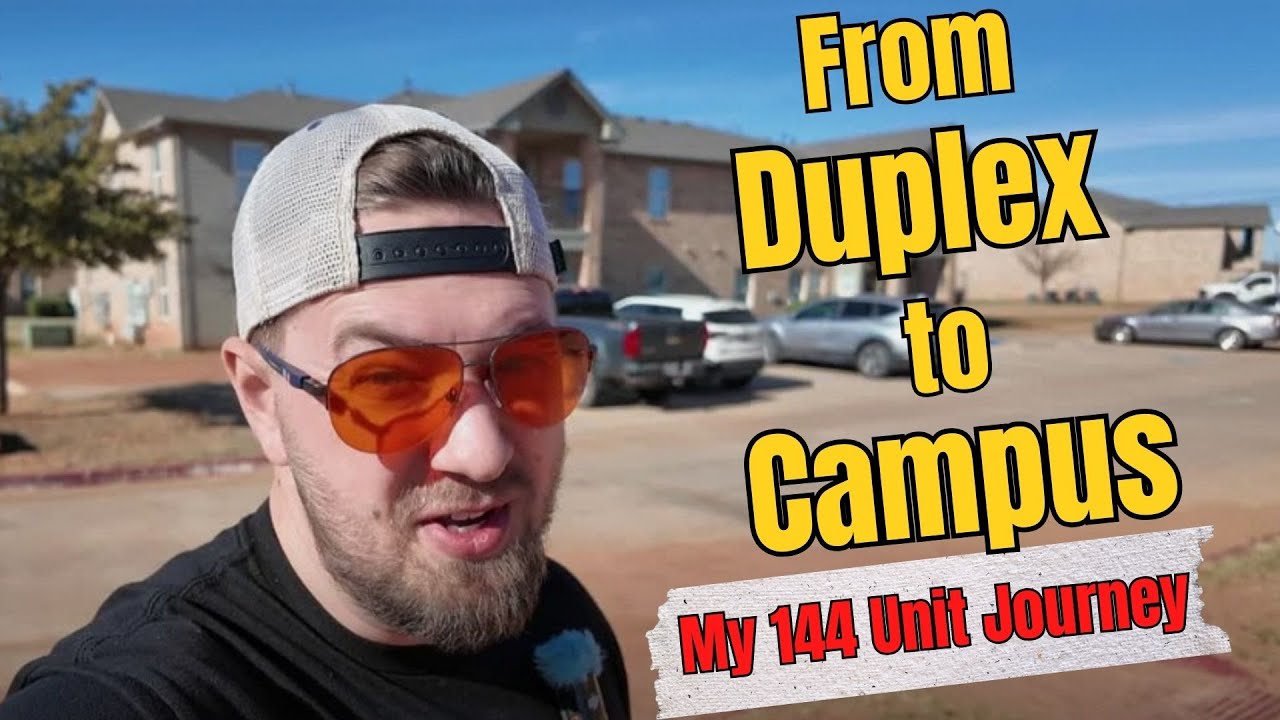
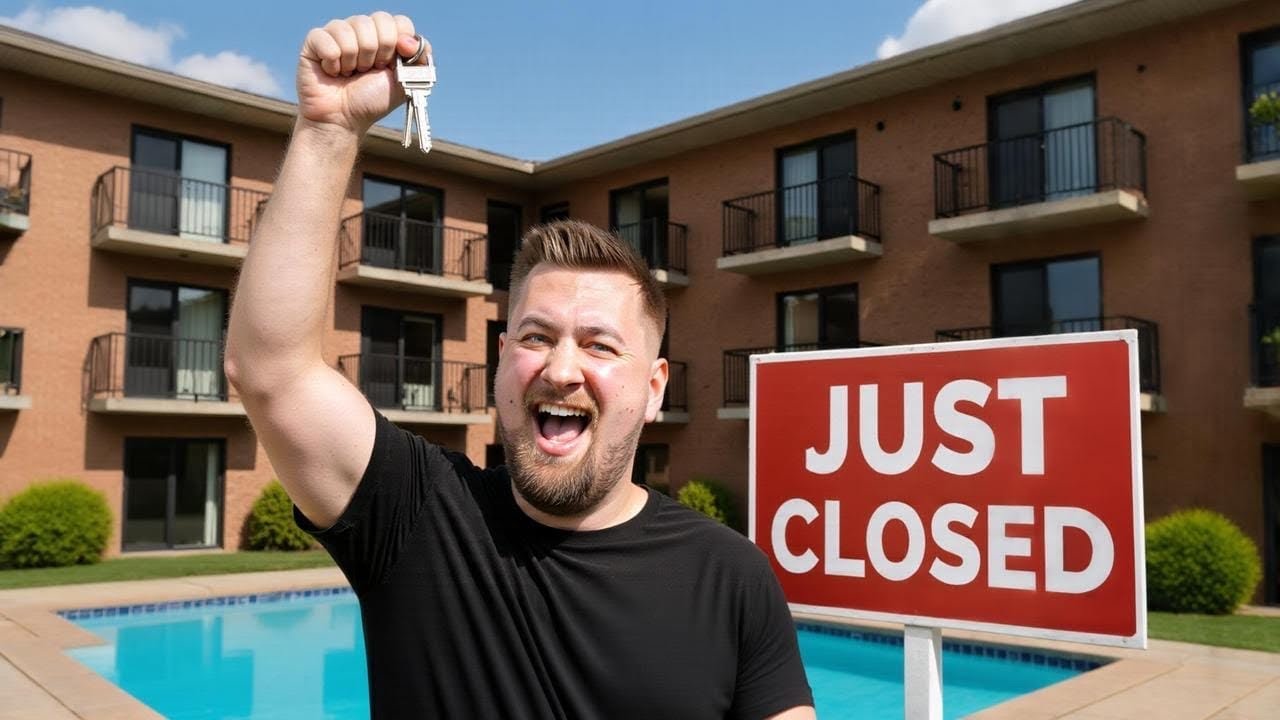
We closed on a new 144-unit complex at the end of December. That purchase is a useful starting point for reviewing the deal structures behind the year.
Related reading: How We Closed a 144-Unit With a $3.2 Million Capital Raise
That property has a basketball court, an in-office gym, a computer lab, a pool that needs more repair than I thought it did, retail space, a daycare center: the whole nine yards. It's the biggest transaction we've ever done.
The lesson from 2025 isn't just the size of the last purchase. It's choosing a structure that fits each deal and working through the decisions in the right order. Those are the two principles I'd carry into 2026 if I were starting again.
The Year in Four Transactions
This was the first full year I spent in Texas. I moved at the end of the prior year, and in twelve months we bought a 44-unit, a 76-unit, and a 144-unit here, plus nine more units added to my portfolio in Washington State.
Related reading: Inside My $6.4M 76-Unit Deal in Stephenville, Texas
That's about 275 units. Four successes.
We did solo deals, we did joint ventures, and we did syndications, and the important part is that we chose the right structure for each specific deal rather than defaulting to one.
Run the comparison honestly. If you were in single family, or trying to do the same thing buying small multifamily, you would have had to buy over a hundred duplexes to get anywhere near that volume. We did it four times.
The financial result: hundreds of thousands of dollars of actual earned income, about $15,000 a month added to Christian and Danny's family cash flow, and an expansion of our property management company into these new markets where we're now picking up more and more third-party business. All from succeeding four times in twelve months.
That's why I love buying multifamily. You don't need to be right very often. You need to do something roughly once a quarter.
Structure One: Solo: Fewest Variables Wins
I don't need to say much about solo ventures except to name the benefit.
If you can buy a deal with no partners and no other variables, and you get long-term fixed-rate debt, that's the most stable and simple structure you will ever have. I highly encourage everyone to add solo properties to their portfolio. If you can take one out with 100% debt, or you have a cash-out refinance from another property or some other liquidity event that lets you buy out partners, I strongly encourage you to do it.
Related reading: How to Structure a Joint Venture to Buy Apartments With No Cash
Here's the ranking of how people actually lose real estate. The easiest way is to have variable rate debt with a balloon coming due. The second easiest way is to have the wrong partner on the deal.
Fix your variables. Own your real estate yourself when you can.
Our big solo transaction this year was buying our partners out of Robin Hood Village Resort: a $4.5 million seller finance deal we've owned for three years. We bought out every single partner. It's now solo: Danny's, my wife's, and my property.
Structure Two: Joint Ventures: Five or Fewer, Actively Involved
On the joint venture side, we did a nine-unit, and we had new partners buy out old partners on a 12-plex and a five-plex in Ephrata, Washington. We connected the buildings.
I bought an adjacent building in downtown Ephrata with retail space, with brand new and genuinely great partners, and added those nine units to an existing portfolio. In the context of what we own in Ephrata, that made our position there much stronger: more retail space and a firmer hold on that corner downtown.
I love assembling properties. It was a small transaction and a major renovation (a very large project on a smaller building) but it was meaningful, and I'm excited to add it to that community.
The 44-unit was also a joint venture: me and three other partners. The nine-plex was me and two other partners. Bring the money, close it, done.
Structure Three: Syndication: When You Need More Than Five
The 76-unit was where the year changed for me.
It was an over $2 million capital raise, and to that point the largest raise I'd ever done was $1 million. This is the deal that proved the thing I keep telling everyone in the Multifamily Strategy mentorship group and here on the channel: good deals will find money.
The deal itself was phenomenal. We had a debt product at 80% loan-to-value through Fannie and Freddie (we went direct through Fannie Mae as the lender) and came in under 6%, at about 5.7%. Great debt product, high loan to value, day one cash flow, excellent property, great price, great location.
But to close it, we needed a reserve account, some renovation money, and the cash to close. $2.15 million later, that deal was done, and it felt amazing.
It's a LIHTC property, which is something we've worked on mastering this last year. There are rent restrictions and limits on how much residents can earn to live there, and limits on what we can charge, which actually makes the math really easy. The cash flow is based on what the property is allowed to bring in. There's no guesswork. We always rent under market price to the tenants there.
Right after that, Caleb Hommel called me: "Hey, I have a deal. I want to work on it with you, like the last few. It's 144 units. We need to raise about $4 million."
I had just done the largest raise of my life at $2 million.
What made the timing work was that a bunch of investors wanted to place capital in a deal by year's end for tax reasons. We closed on the 30th of December. Because it's LIHTC, you need state approval to manage the property, and we got permission from the state of Texas on the 23rd: the day before Christmas Eve. We barely snuck it in, but we got it done.
Where the Rest of the Money Comes From
Here's the encouragement I want to leave you with: the dollar amount is not the issue. Having an amazing product is the issue.
Think about a car dealer. You walk in knowing you want a red Toyota Tundra, full cab, because you have a family. You know what you want.
"Awesome, I have your car." Great: what colors do you have? "Well, it's not actually on the lot yet. I'm going to try to find it. I sell great cars." Okay, so you don't have a product. What colors will be available? "I don't know." How much do I need to put down? "It depends on the cars that come in."
If the salesperson doesn't know the price, the color, or the model, how would anyone make a buying decision?
Raising capital works exactly the same way. You have to have a product for people to invest in. Period. If there's no product, there is no investor.
So many people worry about the money first. If I had done that on any of these deals, I never would have raised $2 million, and I certainly never would have raised $4 million. How did we know we could do it? Because it was a fantastic opportunity. We started with the deal.
And the raise is never the whole purchase price. The 144-unit was an $8.5 million purchase, and the majority of that came from debt: a loan over $6 million. The deal came in at 72.5% loan to value. Then you add a little renovation money, your reserve, and your cash to close, and that's what the raise actually covers.
The Rule: Solo, Then JV, Then Syndicate
Here's the line that decides the structure for you.
If you have completely passive partners, you are creating a security and you must file a syndication. If you're using other people's capital to acquire the property and you're bringing in more than five investors, there is no argument to the IRS that everyone has an active role.
- Five or more investors: syndicate.
- Completely passive investors: syndicate.
- Five or fewer active investors: joint venture, almost always. It's cheaper, easier, and the correct structure.
- If you can own it yourself, or you have a way to finance the partners out: own it yourself.
Do them in that order. Can I own it myself? No. Can I do it as a joint venture? Yes: do it. No? Syndicate.
Syndication is an option, not a badge. Out of the last hundred deals in the Multifamily Strategy mentorship, it has been the appropriate model for about four of them. If you're seeing the syndicated method online and it looks like the pinnacle of the business, it isn't. It's just another way to close deals when you need more total capital partners on a larger raise.
Solo, basic LLC, syndication. It depends on your deal size and the number of people involved. That's the only structural thing you need to worry about going into 2026.
Buy Bigger, Succeed Less Often
The lesson I'd underline from the whole year: if you're trying to build financial freedom, a portfolio, or a business, it's always easier with larger properties.
If you're buying your first one, anywhere between five and 50 units will do. As you scale, it's not that hard to add pieces as you start looking just a little bigger. That was a huge lesson for me in 2025: the step from a $1 million raise to a $2 million raise to a $4 million raise happened in one year, not because I became a better fundraiser, but because the deals justified it.
Key Takeaways
- The order never changes: deal, then debt, then equity. Money follows a product; it does not create one.
- Own it solo when you can. Variable rate debt with a balloon is the easiest way to lose real estate; the wrong partner is the second easiest.
- Five or fewer active partners means joint venture: cheaper, simpler, and the correct structure. Passive partners or more than five investors means you must syndicate.
- Syndication was the right model for roughly four of the last hundred deals in our mentorship. It's a tool, not an achievement.
- LIHTC makes underwriting easier, not harder: the allowed rents remove the guesswork from your cash flow projections.
- Four transactions in a year moved us about 275 units forward. The same volume in duplexes would have taken over a hundred closings.
Watch the full video for the B-roll of the 144-unit campus: the gym, the daycare, the retail space and the pool we're rebuilding. If you want the structures and underwriting behind these deals in detail, my mentorship is linked in the description, there's a free course on getting started in multifamily, and our free Skool community comes with the deal calculator I use on every transaction.
Let's go buy some real estate.
Read the episode transcript
0:00 Hello YouTube, it's Christian. I filmed an amazing video for you at our new 144 unit complex that we just closed the
0:08 very end of December. We snuck in one more deal. However, my camera apparently deleted the whole thing. So, I'll film
0:16 it here and we'll add some B-roll so you can see the cool property while I talk here. Uh, but we're talking 144 units
0:22 with basketball court with a inoff gym, computer lab, pool, which needs a little bit more repair than I thought it did.
0:30 Uh, retail space, daycare center, the whole nine yards. Uh, we closed this for the biggest transaction we've ever done.
0:37 I had some takeaways from this and some encouragement for everyone going into 2026 as we closed the biggest deals in my career this year. In one year, this
0:46 is the same year that I really moved to Texas. I moved end of last year. This is my first full year in Texas. We bought a 44 unit, a 76 unit, and 144 unit
0:55 building. I also added nine units to my portfolio in Washington state. We did solo deals, we did joint ventures, and
1:02 we did syndications. We chose the right type of deal structure for the correct deals. And so, I'm going to share with you the deal structures that worked for
1:10 me in 2025 so that you can use them in 2026. I don't think I need to go too into the first one, but solo venture, I just want to give you the benefits. If
1:18 you can buy a deal with no partners, no other variables, you get long-term fixed rate debt, that is the most stable, simple structure you'll ever have. I
1:26 highly encourage everyone to add solo properties to your portfolio. If you can take them out with 100% debt or you have a cash out refinance from one property
1:35 or some other liquidity event and you can buy out partners, I strongly encourage you to do so. The easiest way to lose real estate is have variable
1:43 rate debt and a balloon come due. The second easiest way to lose real estate is to have the wrong partner on the deal. Fix your variables. Own your real
1:51 estate yourself when you can. Our big transaction was buying partners out of the Robin Hood Village Resort. A $4.5 million seller finance transaction we've
1:59 owned for three years. We bought out every single partner in that deal that is now solo. Danny, my wife, and my
2:06 property. Now, for the joint ventures, we did a 9-unit. We actually had new partners buy out old partners on a
2:13 12plex and a 5plex in Afraid of Washington. We connected the buildings.
2:17 I bought an adjacent building downtown Afraida with retail space with brand new amazing partners and we added nine units
2:24 to an existing portfolio bringing us to a much bigger portfolio at least in context of what we owned in Afraida. We
2:31 now have a much stronger portfolio. I have more retail space and a stronger hold on that corner in downtown. I love assembling properties. While it's a
2:39 small transaction, it was a really meaningful deal and something that I'm excited to get to add to that community.
2:44 Major renovation, very large project on a smaller building. The 76 unit was an over $2 million capital raise. And to
2:52 date, the largest raise I've done is a million dollar deal. This was the big encouragement for me. I always tell everyone in the multif family strategy mentorship group and here on the YouTube
3:00 channel, good deals will find money. If you have a fantastic product, it goes deal first, then debt, then you line up the equity. We had an amazing deal on
3:09 the 76 unit. A phenomenal deal. We had a debt product for 80% loantoval Fanny Freddy debt. So, we went direct through
3:17 Fanny May is the lender we chose to go through. We got sub 6% interest coming in at about 5.7%. So, we have a great
3:24 debt product, a high loan to value, day one cash flow, excellent property, great price, great location. But to close that
3:33 deal, we need a reserve account. We need a little bit of rena money, and we still need the cash to close.
3:39 $2.15 million later, we closed that deal, which felt amazing. It's a lite-ch property, which is something that we've worked on mastering this last year.
3:49 There's some rent restrictions. There's limits on how much people can make you live there, and there's limits to how much we can charge, which made the math
3:56 really easy. The cash flow is based on what the property is allowed to bring in. There's no guesswork involved. We always rent undermarket uh price to the
4:04 tenants there. After this, I was like, "Wow, we uh we did something that we've never done before." Caleb Homo calls me and says, "Hey, I have a deal. I want to
4:13 work on it with you. Like we have our last few. It's 144 units. We need to raise about $4 million." Now, I had just done the largest raise of my life for $2
4:21 million. The most important pieces of closing for this year is we had a bunch of investors who did want for tax reasons to place capital in this deal by
4:28 year's end. We closed on the 30th of December. We got permission to close from the state of Texas on the 23rd.
4:35 Again, LITC low-income housing tax credits. You have to get state approval to manage these. We got the state approval the day before Christmas Eve.
4:44 We barely snuck it in, but we got it done. Here is my encouragement for everyone. The dollar amount is not the issue. It is having an amazing product.
4:54 If you go to a car dealer, this is the easiest way to think about this. You go to a car dealer and you have a specific car in mind. Say you want to get a red
5:02 Toyota Tundra. You want a truck. You need a full cab because you have a family. You know what you want. You go in, hey, I'd like to buy a car. Awesome.
5:10 I I have your car. Awesome. Um, what colors do you have? Well, it's not actually in the lot yet. I'm going to try to find it. I sell great cars. It's like, okay, so you don't have a product.
5:18 Uh, what colors will be available? I don't know. How much do I need to put down? Uh, it depends on the cars that come in. If you have if you're a car salesperson and you don't know the
5:26 price, the color, the model, how would someone make a buying decision? In the same way for raising capital,
5:34 you have to have a product for people to invest in. Period. If there's no product, there is no investor. So many people worry about the money first. If I
5:43 did that on any of these deals, I've never raised $2 million. I've certainly never raised $4 million. How do we know we can do it? Because it is a fantastic opportunity. We started with the deal.
5:52 Now, where does the rest of the money come from? The 144 was an $8.5 million purchase. Where does the rest of the money come from? Well, majority of it came from debt over a $6 million loan.
6:04 We have a little bit of rena. We need to have a reserve and we need our cash to close. This deal was 72.5% loan to value. So, we had a big capital raise.
6:13 And what ended up happening is that we hit exactly what we needed to do. We eventually did close on this property successfully. We now have added 144
6:22 units into the portfolio to close out the year. We closed a 44, a9, a 76, and
6:29 a 44. Mental math, that's about 275ish units. You guys can check me online. I'm doing that super fast in my head. I think it's 276.
6:38 We moved forward in a very massive way and only four transactions. It's why I love buying multif family. We don't need to have that much success that often.
6:46 Once a quarter, we need to do something.
6:48 We made hundreds of thousands of dollars in actual earned income. We've added to our cash flow about $15,000 a month to
6:56 Christian and Danny's family through these transactions. And we have added to our portfolio and helped expand our
7:04 property management company into these markets where we're now adding more and more third-party business. We have grown our business in a massive way, only
7:11 succeeding four times. If you're in single family or you're trying to do your first deal and you're trying to buy small multif family to do the same
7:19 thing, you would have had to buy over a hundred duplexes to get anywhere near the same volume that we got getting four
7:27 successes. If you're trying to build financial freedom or you're trying to build a portfolio, you're trying to build your business, whatever your goals are is always easier with larger
7:36 properties. If you're buying your first one, anywhere between five and 50 units will do. As you scale, it's not that hard to add pieces as you start to look
7:44 just a little bigger, which was a huge lesson for me this year, 2025. Now, the bigger raises were syndicated. I told
7:51 you I was going to give you deal structure here. The 9plex, that was a joint venture, me and two other partners. The 44 unit, that was a joint venture, me and three other partners.
8:02 Brought the money, closed it. For these two and three and four million raises, I need more than five people. If you
8:10 have completely passive partners, you're creating a security, you must file syndication. If you're using other people's capital to acquire the
8:17 property, if you are bringing in more than five investors, there is no argument to the IRS that everyone has an
8:24 active role as an investor. Five plus investors syndicate. Completely passive investors syndicate.
8:33 Five or less investors, it's almost always better to joint venture. cheaper, easier, the correct structure. And if
8:40 you can, or you have the money or you have a way to finance them out, own real estate yourself in your own portfolio.
8:47 Less variables always better. Do them in that order. Can I own it myself? No. Can I do it as a joint venture? Yes. Do it.
8:54 No. Syndicate. Syndicate is a option.
8:58 But in multif family strategy, the mentorship out of the last hundred deals, it's been the appropriate model for about four of them. It doesn't come up that much if you're seeing online
9:07 like the syndicated method. It's amazing. It's nothing special. It's just another way to close deals if you need to involve more total capital partners
9:15 on a larger raise. That's as simple as you need to keep it. Solo basic LLC syndication depends on your deal size,
9:23 number of people involved. That is the only thing that you need to worry about going into 2026. Other than that, focus on the order. Deal, then debt, then equity. Let's go buy some real estate.
9:31 I'll see you guys on the next episode.
Put these ideas to work.
Get support from Christian and the coaching team with your next multifamily deal. See how the mentorship works or start your application.
Apply Now