Multifamily investing
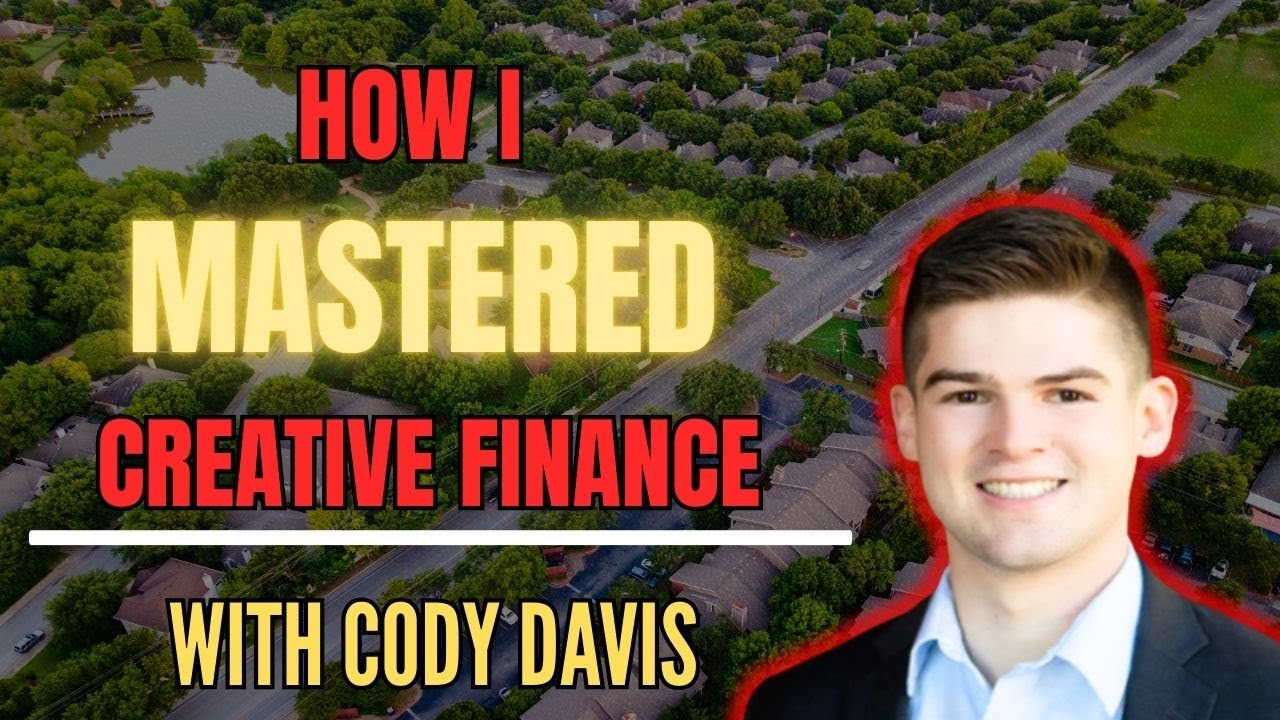
Mastering Creative Finance in Multifamily Real Estate: Insights from Christian and Cody Davis
Explore practical creative finance strategies in multifamily real estate with Christian and Cody Davis, focusing on deal structuring, seller financing, partnerships, and scaling portfolios.
Understanding the Role of Creative Finance in Multifamily Deals
Creative finance is a crucial tool in multifamily real estate investing, enabling buyers to acquire properties even when traditional funding is limited. Christian emphasizes that the goal is not to be as creative as possible but to find the simplest, most repeatable, and scalable deal structures that align with both buyer and seller needs.
Related reading: The 4 Creative Finance Strategies That Close 99% of Deals
The foundation of creative finance lies in understanding what the buyer needs and what the seller requires, then structuring the deal accordingly. This approach minimizes unnecessary complexity and focuses on cash flow from day one, avoiding pitfalls like over-leveraging or complicated clauses that may not be sustainable.
Cody Davis’s Journey: From No Money to Bank Loans
Cody Davis shares his personal experience starting with no money, no W2 income, and no real estate connections. His breakthrough came through seller financing, using promissory notes, legal IOUs that specify payment terms between buyer and seller.
His first deal involved a 12-unit property in Quincy, Washington, where he secured 90% of the purchase price via a seller-financed promissory note and covered the remaining 10% with a second promissory note from an investor. This structure allowed him to acquire the property with no upfront cash and generate positive cash flow immediately.
Cody highlights the importance of building a schedule of assets and a debt schedule, which are critical for qualifying for bank loans and scaling a real estate portfolio.
Related reading: Cody Davis on Creative Finance: Deal, Then Debt, Then Equity
Seller Financing and Promissory Notes: Key Tools Explained
A promissory note is a flexible legal document where the buyer promises to pay the seller a specified amount over time, with negotiable interest rates and terms. This flexibility allows investors to tailor deals to fit their financial situation and the seller’s expectations.
Collateralization is essential to protect the lender’s interest. Typically, this is done through a deed of trust, which secures the loan against the property. The order of mortgages (first, second, third) determines the priority of repayment in case of default, with first mortgages being the least risky.
Christian and Cody caution against overcomplicating deals with too many creative clauses and stress the importance of clear, logical structures that both parties understand.
Partnerships and Buying Out Partners with Seller Financing
Partnerships can be an effective way to pool resources and acquire larger properties. Cody describes a deal where he and Christian brought in partners to fund a 38-unit property that had negative cash flow if purchased outright with conventional financing.
They structured the partnership so that partners provided equity, then later bought them out using seller financing. This approach allowed them to gain full ownership without upfront cash, while partners received attractive returns through interest payments on promissory notes.
The flexibility of seller financing enables creative buyouts and restructuring of ownership stakes, which can be tailored to meet the needs of all parties involved.
Related reading: Key Insights from Multifamily Strategy’s Live Q&A: Broker Relations, Creative Financing, and Market Choices
Combining Bank Loans with Seller Financing for Optimal Leverage
Cody explains that combining traditional bank loans with seller financing can reduce the amount of cash needed upfront. For example, in a recent eight-unit property purchase, he secured a 75% bank loan, put down 10% cash, and negotiated seller financing for the remaining 15%.
This structure allowed control of a nearly half-million-dollar asset with a relatively small cash investment, increasing the return on invested capital compared to conventional financing requiring larger down payments.
Local community banks are often more flexible with these arrangements than large national banks, and investors are encouraged to explore various lenders to find suitable financing options.
Creative Equity and Trading Ownership Stakes
Beyond financing, creative equity strategies involve trading ownership interests to align with partners' goals and operational roles. Christian shares an example where he and Cody swapped equity in properties and a property management company to better fit their individual objectives.
This flexibility allowed Christian to take on a project he wanted to manage while Cody regained equity in his portfolio. Later, Christian sold the property management company through a seller-financed transaction, turning a small initial investment into a significant return.
Such equity trades require clear agreements and mutual understanding but can unlock value and facilitate scaling without traditional capital.
Practical Advice for Aspiring Multifamily Investors
Christian and Cody emphasize starting with clear personal and financial goals rather than arbitrary cash flow targets. Understanding the lifestyle you want to achieve helps in mapping out the types of deals and financing strategies needed.
They recommend thorough underwriting of deals, including analyzing financials beyond listing photos, and engaging brokers to obtain detailed information.
Creative finance is a tool to solve problems, not a one-size-fits-all solution. Investors should evaluate if a creative approach fits the deal and their goals, and be prepared to adjust strategies as needed.
Finally, building relationships with local lenders and understanding the nuances of different financing products can open doors to deals that might otherwise be inaccessible.
Read the original episode transcript
I see Dylan's earned a hug from Lori. That's an important part of the event. >> All right. >> So, in just a few minutes, Cody's going to come up and talk to us about creative finance. I'm going to actually intro this section, though, because I'm really excited about this. We have a creative finance event. It's kind of like my favorite thing on planet Earth. >> So, >> with Creative Finance, as everyone filters back in, >> as we mentioned in section one of today, you have the ability to buy >> absolutely anything when you can get creative. anything that can't help you with >> this is actually really fun in mentorship. Usually I just automatically everyone just listens when I talk. It's fun that you guys are so uh so in conversation. I'm I'm just going to keep saying words and eventually they'll listen. This is awesome. This is honestly it's very very very rewarding to just watch the first presentation. I I realized I I was about 20 minutes early. I said what I wanted to say. I'm like h this is probably going to be fine. I'm just let everyone talk. This is so fun to see all the community. Should turn this back on. It's so fun just to see the community happening here. It's so rewarding to see this come together. Cody will be up in just a few minutes. I wanted to intro creative finance because this is one of the two pieces. We've talked about doing the deal. We talked about deal structure. We talked about finding deals. We met with brokers. We've done all of this cool stuff. Where does the money actually come from? That's like 90% of why everyone's here. get reminded on is the money actually going to come in from my deal and how do we get creative? Now, the answer to creative finance and Cody's going to go super into depth in all the different ways that we do this. But the answer for creative finance is what is the least creative way to get this deal done. It's that same map of what do I need and what does the seller need? Think of it like a ven diagram. I know that I need long-term cash flowing fixate debt. I just want to get paid when we close a deal. I just want income to go up. We just do that. You don't have the Robin Hood pain. And you don't do you skip all the things that I just said were dumb if you just do things that pay you from day one. I was just in a conversation over there talking about our deals that like our harder projects that we've done over the last little bit. Some of them we we we went really low in the account finishing the rena, but we have a whole bunch of units that are 90 to 100% rented all over Texas in Stevenville, in Abalene. We've never missed a distribution. Everything is pretty much running more or less like a welloiled machine. We did have one project where it's 144 units. We did 822 work orders as of Monday. That's an insane thing to expect. That being said, the property is printing money because we just structured a deal in a way where it was making enough money where if we had to spend our two-year budget in year one to get it doing what it's supposed to do, we can do that. We've had deals that have gone perfectly. We've got had deals that were, you know, they were not exactly what we expected, but everything's more or less working because there's that intentionality to the deal structure. And what I found is we just stopped getting so darn creative. There the goal is never how creative can you get. One of my favorite Cody quotes, uh, if it's simple, it's, uh, it's was if it's simple, it's repeatable. If it's repeatable, it's scalable. The structure for some of these deals, the Robin Hood is three transactions. Two of them are contract for deed. One of them is seller finance. So there they're different ways of structuring a seller finance note. One of the cabins had some additional debt on it that we did subject two. So I have a subject two cabin. I don't remember if it's three or four. Might be it might be Phil's cabin. One of those has a small subject two on it. Like a super super super small one. It's three transactions and a seller finance business transaction that what a stupid way to put and then we did a special allocation of taxes for the investor. Like I don't know what we were like what a stupid non-re repeatable structure. The goal of creative finance. All I'm saying is the goal is not I want to get creative. And hopefully that landed with with Eric yesterday of you're not meeting with your broker being like oh I don't have money so I'm hoping we can get creative. It's are you solving a them problem and does the structure make sense for your pieces? What I'm sure Cody's about to get into is you're looking for cash flow. You we've already established what you need. It's just structuring the deal the way the deal wants to be structured. That is that is all it is. Get your inputs. Understand what it is that you are buying. Do your due diligence and then structure around that. What would make this deal make sense? do not go. I heard this really cool creative clause and so I'm going to try to force this into a deal, which is so easy to do. Most common questions that I personally get in the top 10. What do you think about this specific strategy? And I hear a ton of different, hey, I saw this online. This one guy said this one thing. I'm like, love that clause. Don't build a business around a clause. My my my total use of subject two has been one cabinet at the Robin Hood. It doesn't mean that subject two sucks. It also doesn't mean that it's amazing. It's just it is a strategy that you can do. So, the ability to get creative, very important. The amount that you can minimize your creativity, the simpler your business is going to be. Cody Davis, welcome back up. [applause] I was so excited for your section that I just uh There goes my magnet. There you are, sir. I was so excited for your section, I just started talking. This is my favorite thing. Creative finance is so fun. Cody got me started on the creative finance train. This was the missing piece for me. I did the stupid thing where I sp I read every book and did every podcast and got a career in real estate because I was missing what Cody's going to talk about today. So Cody, I'm super super excited for you to lead this section. Thank you for making it. All right. By the end of this section, everybody here will be able to get a bank loan. [laughter] >> Amen. >> Seriously though, right, the the point of what what I ended up building, I was probably amongst the least qualified to get into real estate. Had no money. I still have never had a job uh like a W2. I didn't have a good source of income. I didn't have any family in the real estate business and you know just this last week signed for bank loans for just shy of $4 million without partners that's off of the merit of the portfolio that I built. And so my goal of today is to share the how. It's the different structures that I've done. I'm only going to share structures that I've personally done that allowed me to build a few things out to qualify and be a real estate investor. So, if you're taking notes, which I would recommend you do, there's a few things you have to build and you have to be able to build a business around if you want to scale. One of them is called a schedule of assets. That's going to be way more important than your credit score. Another one's a debt schedule. This is something that I'm sure anybody here that's built a portfolio has built out. Schedule assets is just all it's the business you're trying to build. If you built a business, I met with two guys, they they did like 40 houses and you know that that's their schedule of assets. That's what a bank's going to look at eventually. And however they did it, where they did it with a bank, they got creative. They eventually built a business of that. Your debt schedule is just all your payments and what you owe. So those are things that you're going to want to build. But as far as the creative piece, I'm going to share deal by deal what I did. If anybody has any questions along the way, please raise your hand. Stop me because I'm just going to go in the order of how things happened. I ended up buying a 12plex in a little place called Quincy, Washington. I talked about that a little bit yesterday. Small town America. And what ended up happening, I did true seller financing. The owner, they ended up having it paid off. They bought it for not a lot of money a long time ago. They had no debt. And so what ended up happening, I signed something called a promisory note. A promisory note is an IOU. It's a promise to pay. It's a piece of paper that says, I promise to pay you this amount per month for this loan at this interest rate in one day. I'll pay you off or it'll just get paid off over these payments. That is a super important document that most people don't even understand because the promise to pay, you make the rules. You say, "I promise I'm going to pay 3,000 a month for 37 months and then I'll pay you off or it's going to be 8% interest or 1% interest." Anything you can think of, you can do. And so my first deal, I ended up having two IUs. What's better than one? Two. So I did 90% of the purchase price as a promisory note to the seller that was seller financed with 10% down. So they basically said, "I'll accept payments on the 90%. You just have to bring a 10% down payment." What's the problem? >> You don't have it. >> I didn't have it. So it was $112,500 down. I was only short $109,500. So while I had a little bit, it wasn't quite enough. So what did I do? I got a second promisory note. Except for this time, it wasn't from the seller. This was from someone who wanted an interest rate. So, I pitched everybody I knew that was at the real estate brokerage I was working at. That's where I met Christian. I was a real estate agent, wasn't really making a whole lot of money, and I had to go pitch people that had money, six figures to lend, asking for a loan. I almost had to bank on the fact that I was going to fail over succeed and they were going to get the property from me. But basically what I did is I pitched all the other agents in the office. I asked to pitch their clients. I botched majority of the meetings and I got one person to say yes. Granted, the meetings before that, I forgot the purchase price. And I'm a numbers guy, so if when I forget numbers, it's a it's a big deal. I forgot the purchase price. I forgot the NOI, forgot the cash flow, the mortgage payment. There's not a whole lot more numbers that you got to know when you're making a pitch. and I couldn't remember them. So, I botched pitch after pitch until eventually I got one. And what I did is I wrote it out on a whiteboard. We were sitting downtown Tacoma in an office. Christian knows exactly where I was sitting. >> There was a whiteboard and I just I wrote it down ahead of time. Put it on the board so I couldn't forget. And they said, "Sure." They ended up giving me a one-year promisory note. Again, every term is made up. All numbers are made up. terms are made up. I have one year to pay them back. It's 1% a month. This is when rates were 3 to 4% a year. I was paying 12% a year. But what ended up happening is I had one promise to pay for 90% of the money, one promise to pay for 10% of the money. You add those two together, I had 100% debt from the get-go. That was my first 30 units. I did that on a 12plex. I then did it on another 12plex, which Christian eventually bought in. And then I bought him out and then I did it on a sixplex. And that essentially that structure doing a seller finance note at a a low interest rate and an investor loan at a high interest rate allowed me to cash flow with no money in day one. No partners, no syndication. I could just buy stuff with the signature. And what I didn't know back then, which I know now, is exactly what I talked about yesterday. My total cost of capital as a percentage between the two notes was lower than the cap rate. I had a lot of the money at a cheap interest rate and a little bit of the money at an expensive rate and I still was able to cash flow with no investment. So that is preferably my favorite way to do real estate. You cut out the partners from day one. You can do 100% debt. You can do a first mortgage. You can do a second mortgage. Can anybody guess how I paid off the second promisory note? >> Refund. >> Nope. >> With money. >> With money. But it wasn't my money. So what I ended up doing is I called up the seller and I said, "Hey, I've been paying you interest." The the loan was at 6% interest, 30-year am fixed rate, no balloon. I called up the seller and said, "Hey, I would like to pay off this second mortgage." Which I'll get into the clauses later because clauses are not the most important thing. They are important, but I called up the seller and said, "Hey, I would like to borrow $150,000 a second. I've been paying you interest. Will you do this?" And you know what they said? >> Yes. So, I ended up doing 100% seller financed. I did a cash out seller financed refi because my uh my second mortgage I borrowed a little more than I needed to close it. I had $125,000 loan. Call the seller. I got 150. I paid off the 125 and put some cash in my pocket. So the seller actually ended up financing more than 100% of my purchase price. That was the first property I ever bought. Truly no money in that second mortgage they gave me is for four years with an option to extend. And so they gave me a lot of flexibility. And since I bought that asset, day one, it was cash flowing about 800 bucks a month. I thought it was going to be a little more than that. And then reality hit. Today, it cash flows consistently over five grand a month. That's one asset, zero money down, and I've been able to scale from there. So, let's fast forward to the first partnership deal that I ever did with a mutual contact of all of ours. Bought a 38 unit with Christian. We ended up instead of doing 100% debt, we looked at the deal. You could have paid cash for that property and it would have been negative cash flow. It was a negative cap rate. I've met some real estate agents that say you can't have a negative cap rate. Well, that may be in theoretical land, but in reality, the operating expenses were actually more than the rental income it produced. And so, we couldn't justify borrowing a down payment at 12%. It probably looking back would have been cheaper, but getting started, you do what you can with what you have. You get in where you fit in. So, we ended up taking on three partners. The cool thing about creativity, and meanwhile, we're just building the schedule of assets, right? Back to the first thing I mentioned, we got a couple assets on the board. When we did that, we brought in partners. Let's say I'm going to pick people out of the crowd. We got Chris and Chris. I only had to know one name there. And then we got Phil and they all want to throw in 100 grand. They put money in. Now we're in business together. We shake hands. We sign the docks. And we're off to the races. Down the road. Chris A and Chris B want to get bought out. I don't have the money. So I say, "What if you sell or finance your position to me?" And that's how Christian and I were able to get 100% ownership of a 38 unit in our 20s without having any cash. We ended up doing a seller finance note with the partners. They gave us ownership. We gave them a promisory note. What's the problem with that? An IOU is only as good as the collateral. If I just sign I will pay you X. There was a We're like Are we uh This is going to get recorded. >> Do it anyway. do it. Anyway, close does work, by the way. So, there was a broker that Christian and I knew that borrowed money from someone and their collateral was they wrote on a promisory note, I will not f you. And then signed it. >> They got >> Yeah, the person did. [laughter] It was awful. So, it's one thing to do seller financing, but you also have to know how to collateralize it, right? If which all that means is if I don't pay you, what do you get? Meaning, if if I just say I owe you to Matt and uh borrow $100, right? What are his chances of getting $100? It's only based off of the scheduled assets that you have. If it's personally guaranteed and if you actually give him something. If I give him my shoe, maybe that's $10 of collateral. If I give him my phone, he probably feels pretty good about the loan. So, there's different things that you can do. And this isn't going to be a legal day where I put everybody to sleep. But the main way that real estate loans are collateralized called the deed to trust. The way I remember it is one's the IOU and one says, "I trust you're going to pay it, but just in case you don't, I'm going to record a loan against your property." And in Washington state, granted, there's different ways different areas do it. I don't know how Texas does it, but in Washington, they're just ordered in the way that they get paid off. So, the first mortgage to the seller, if I sell it, they get paid off first. The second mortgage, if there's any money left over, gets paid off next. I've seen people with third mortgages and fourth mortgages. Do you want to be paid off first or fourth? Right? I'd want to be paid off first. And so the the order is first is the least risky, second's a little bit riskier, or third is a little riskier, or fourth, don't do fourth. But people do it. You have to find a way to make everybody satisfied. So if Matt was satisfied with loaning me 100 bucks and I give him my shoe, great. If he wants my phone, no, you have to find what's the level of collateral that your partners are okay with accepting. And so we ended up doing uh the partnership and then we bought out the partners seller financed. That is something that we've done again and again. Another structure. Let's fast forward to Peninsula. Oh, you got a question? >> What's the point on that? >> So yeah, so the question what's the incentive in that situation? People put in 100,000. There was three people for hundred. We signed a promisatory note for $150,000. That $150,000 we did that in the first year. So they had an immediate bump on their principal, right? And then we were paying interest. I think it was 10% interest on that deal. Here's the thing. If we pay 10% on 150 grand, but they only invested 100 grand, the return is actually 15%. Right? Okay, they were getting a wonderful cash on cash return and it was supported by the real estate. Here's the other thing. Because Christian and I did an IOU to these people, we did a seller financed buyout. Christian mentioned we did a massive cash out refi and pulled out a lot of money. We didn't have to split it with anybody. We had mutually agreed upon terms with the seller financed partners. So, we got to keep 100% of the cash. We basically got to bur out their money and pay them later, which everybody wanted. They they wanted the interest. They didn't want the cash. So, it was a win for us, win for them. You can trade around pieces, but you can buy out partners seller financed. You can buy out uh owners seller financed. There's a lot of ways to do it. Something else that I ended up doing, the very third project I ever bought, I bought it by myself. It was at 16 100% debt. I had that seller finance second mortgage. It was $90,000 based on what I've shared. Can you guess how I paid that one off >> with money? >> With money. Okay, we're there's a trend here. Money has to come from somewhere. However, unlike the first property I bought, the seller was not willing to pay that off. They had no interest in doing that. So, I also could not have qualified for a bank loan at that time. I didn't understand what a schedule assets was. I didn't know what a debt schedule was. is I didn't know what a T12 was. There was no way a bank was going to give me a loan. So, you guys are ahead of where I'm at at that point in time. I ended up taking on a partner. You can buy out partners. You can also take on partners. Christian had a little bit of money from his career and from some deals that he had done. He bought 10% I think of that deal. >> Six bucks. >> Yeah. >> So, he bought in. I sold a small share of the LLC and I got cash. >> So, I'm glad you're covering this up. Chris and I had a text conversation and I was talking with Chris number one here about it. >> Chris one. Okay. >> And uh I had forgotten about it till just now. But is that a equity pledge agreement is what you're going >> No, not if I'm taking on a partner. So, it wouldn't be an equity pledge. I would I would sell my equity in the LLC is what I did. So I actually took on partners. So Christian bought 10%. When you're in real estate, you meet people that own real estate, right? And so I met someone along that journey that ended up becoming a good friend and they bought in 30 39%. And so essentially I sold 49% of the LLC. I took that newfound cash and I paid off the second mortgage. Now I owned about 50% of the LLC, just a little bit north of it, but I had zero investment and now I had time. And later, as the business grew, had cash flow, I got a bank loan and bought them out again. Pieces can move. It may not be the most taxefficient way, but if you want to do something in real estate, you can. And there's mechanisms to do it. talked about a promisory note. Talked about a deed of trust. You can take on partners. You can buy out partners. Now, let's get a little bit more creative. We talked about seller financing the majority of it. A recent deal that I did, I bought a little eightplex. This is a freight. I paid $430,000 and that was 13 months ago. They said it's not seller financable. Can't do it. Won't do it. We have a loan. So, you know what I got them to do? Got them to seller finance it, but they didn't seller finance the majority of the purchase. I connected, and I'll give you the bank names. I connected with Columbia Bank and what they ended up doing, they gave a loan for 75% of the purchase price. They said, "You have to put 10% down. No matter what you do, you got to put at least 10%." So, I called the seller. I said, "Look, I need you to seller finance 15% of the purchase." And what I'm going to do is I'm going to give you 85% of the money up front. Bank comes in with 75. I come in with 10% down, which was $43,000. And they're just going to hold back. It was about $60,000. It was 15% of the purchase price. Now all of a sudden, I control almost a half million asset with $43,000. Doesn't suck. You can do 10% down with banks. you can do it seller financed, but if you're just trying to do one strategy of the high leverage seller financing, you're going to limit yourself. The main thing is understanding you can do anything you want to do. You just have to figure out who has what you want and how to qualify for it. So, a few lenders that you could connect with that allow seller finance seconds, Columbia bank, Kashmir Valley Bank, uh MC Bank, and it's just a a tool in your toolbox that can help you get deals done. A question I want to propose for everybody here. Anybody can answer. I've asked this every single year, so if you've already answered this question, please don't ruin it. If I buy an asset for 100 grand and I sell it for 200 grand out of fees, what's my return? >> Can you repeat it? >> If I buy something for $100,000 and I sell it for $200,000 net of fees, that's just I get a check for 200. What is my return? >> Yep, you got it. Depends on the down payment. This is where creative finance becomes important. If I put in 100 and I walk away with two, I doubled my money. In that 8plex example, let's simplify it to numbers. If I bought it 10% down for 100 grand, I sold it for 200. I turned my and I borrowed the 90. I turned 10 into 110.00% return on capital. Everybody else that looked at that 8plex that did not buy it was looking at putting 25% down, 30% down to get the same amount of upside. this because it's not like it's going to just have more upside because I put less money down. They're getting the same physical dollars and upside, but they have to put triple the investment into the deal. So, this is how you can make a base hit property into a home run. That deal sat on the market for 221 days. It's just sitting there. It's right next to one of Christian's properties. We're basically neighbors. But because I only had to put 10% down, I it just appraised for $725,000 and I got a loan for 57. I'm in it for 480 all in between my down payment, some closing costs, some rental. Got to pull all that money back out with the bank. And the main thing is I didn't have to tie up very much money. There was less than six figures tied up in that deal. Whereas someone else would have to put six figures just for the down payment, not even including the renovation. So, a seller finance second mortgage can be a huge tool for you. Something else you can do, you can have two seller finance mortgages upfront. This is something that can be very helpful. Let's say a seller wants to be at 8% interest. All you have to do is give them a path to be there. The seller could finance two mortgages instead of one. They could have a first mortgage at 4%. for most of the money and then you could have a second mortgage at 8%. Just show them a path to get them what they want. And I just want to spark ideas here. I My goal is that at least gets you to think. There's so many ways to do this. Another one we bought Tquila. Tquila is a a little seven unit. This was a Christian negotiation. He did this, not me. They wanted $250,000 down. Christian got it accepted at $50,000 down. The way he did that, he had additional down payment structured every 12 months and he wrote the note where the cash flow paid for it. The real estate bought the real estate. So rather than having this big capital investment, I mean, if you think about going and buying a big deal, it's a lot easier to come up with 50 grand than it is to come up with 250 on your first deal. But the numbers could be bigger. Maybe it's instead of a million, it's 100 grand, or instead of a million, it's 200 grand. whatever the number is, we structured it where the real estate cash flow was more than enough to make that additional down payment every year. That's why we thought we could do the Robin Hood. We structured additional down payments every year, right? And we thought the real estate was going to pay for it. It can be a two-edged sword. All of these things can help you. They can hurt you. The beauty of real estate and creative finance, you can do anything you want. The problem is there are repercussions and consequences for doing anything you want. So you have to be highly intelligent and calculated about how you structure it. Does anybody have any questions on this so far? I'm so far from this world that it's hard for me to accept in the example and Chris these guys are capital incentive for these guys. >> Yeah, it just depends when enough is enough. So, I'll give you an example. I'm working on buying a property from someone right now. It's seller finance. I've bought a lot of seller finance stuff from them. My monthly payment to them when I buy this last project is 83 and a half thousand a month. When is enough? Like they don't have any money invested in the deal anymore. They've already gotten their return. They've been investing for decades. A million dollars a year or shrink it down 100 grand a year or 50 grand a year. Some of these people have no money invested and all they want to do is spend time with their family or they just want to go travel. They don't want to think about anything. Even as passive as my apartments are, I've got a few hundred apartments. I had to take a call right before coming up here, right? It there's some level of work with ownership. Even if I 10:31 and buy something nicer class A, I have issues at my class A stuff, too. It happens. So, a promise I know it's truly passive. unless they stop paying. So as long as you believe in the collateral and you think that there's going to be income for decades to come, then a promisory note just walking away is a very logical solution and a lot of people do it. >> On that what percentage of folks you're talking with that do financing like that reference tax return? Did they have it structured where there was no tax, no big deal or saves me on tax. I don't have to give away the big capital gains tax. What percentage did that factor in their mind? >> None of them have ever brought it up to me. >> And I don't bring it up to them. I'm not their CPA. They're all grown adults, right? They can pay to have professional advice. I'm just here to give them a solution because at the end of the day, everybody has what you want, right? And so right now, if I don't have a lot of assets, I got more time than people that have been running these assets for a long time, but they have more money. And so what I'm doing is I'm giving them their time back with a payment. And that's worth more to them than necessarily a tax consequence. But a lot of the people that I buy from, I'm putting 5% down, 7% down, 10% down. They're not really realizing a lot of cash up front. Are you able to take Q&A question right now or you need to finish up? >> No, I don't see why we can't do a Q&A. >> Question trigger something. I rent airports about 90. They want to sell. We don't want the tax consequence. We don't want you know big tax. The problem is dramatically more than they're receiving in rent because it's in a favorable location. They think somebody might figure out a way to pay them multiple millions of that which they got a good point and they're wonderful people. They know me. They give me extra keys to their mailbox. I give suggestions on who to use if they need maintenance property. I would like to buy that commercial building from them. location ever, but they're going to be asking more than it's worth in the way of cash flow. So, I'm thinking, well, if I give you 5% down, if I structure it this way and I give you your cash flow, you don't have to worry about it anymore. And then I owe you the balance when I sell it or your heirs, shall we say, that's what they're thinking. Is there a better way to structure it than you come up with? >> Well, it just depends on the end goal. If you want it to cash flow more and they're stuck on their price, you borrow less money or you borrow cheaper money. So you negotiate an intro period. It sounds that's a commercial deal. >> Yes, just a commercial. >> Okay. So like if it's triple net, maybe every five years or maybe it's already built into the leases there's bumps. Maybe you structure your pay increases as principal pay down additional mortgage payment when you get those bumps. So, as an example, let's say the net cash flow before debt today is 20 grand a month. Put it the payment at 15. And then if the new rent is supposed to bump up five grand in 5 years, then the payment goes to 20 in that 5,000 month extra payment. It's just paying down the loan balance. Structure it with the deal, though. Make sure the deal will pay for it, right? Look at the actual net income and then just subtract a little bit. till you're comfortable and that's your payment. And if there's built-in clauses on that commercial deal to go up, if they want their heirs to inherit more, you know, increase the payment, but don't make it more interest, make it principal pay down. So, you start actually chunking that down over time. And it sounds like in that type of situation, that's more of a legacy play for them anyway. So, they don't need necessarily, they don't need to take you super tight on the cash flow. They just want their kids to have something. So give them something but make it logical and make sure that the real estate pays for the real estate. I should circle back to what you were saying earlier. You know your question, they don't want to throw their money high, right? What are they going to do or what's other investment or something investment? So, I think they're already in the real estate world. They love the idea. What are they going to do? Some kind of they get in a range maybe just love the idea of having exposure to real estate like you said I was surprised by >> Absolutely. Yeah. And when people lend money, whether it's seller financed or investor capital, people care about three things really. It's just three things. Where's the money going? What's the stability of what backs it and how are they getting paid? If you can't logic test your way through those questions, you're not going to get very far. So, whenever I think about a seller finance deal, promisory note, private money, if I'm buying something on payments, where's the money going? It's not going anywhere. It's staying in their asset. Their equity is just staying there. What's the stability of it? If they believe in the asset, they've been managing it for a while, they understand the risks of that cash flow. >> No, nobody nobody understand it's better than them. Like >> exactly. The seller is the expert in that situation. And how are they getting paid with the income that they've already been cash flowing? It's a very simple pitch. You don't have to ask those questions to the owner, but you need to be able to outline those questions in your conversation with them. >> So, to try to help answer this gentleman's question about seller financing is sometimes you'll find an owner who wants to sell and finance because their property is not bankable in a conventional way. which is I've run into that a couple times already. And then my question is the promisary note is that like a legal document type there? >> It is. Yeah. >> It's a legal promise to pay. But again, you got to have collateral too, which is typically a deed of trust. >> Yep. It does have to be backed. And there's different ways to do it. Like here on the Robin Hood, we had some promisory notes for parts. There's multiple partials here. So, some of this is on a promisory note. It was seller financed. Some of it was on a real estate contract with a subject to clause. So, real estate contract, it's it's just a little different. Promisory note here in Washington, the the buyer gets legal title. With a real estate contract, typically the seller keeps legal title as collateral, and you get as a buyer equitable title. So, you get to do what you want with the property within the contract terms, >> right? >> But they're holding on to legal title similar to a car loan. So, there's so many ways that you can structure it. >> So, would that be similar, I guess, to like a master lease agreement type? >> Oh, that's different because in a master lease, and granted, I don't do lease options. I I don't think there's really a use case for it in the type of real estate that we've been buying. If you're going to do that, you might as well do a real estate contract. So, I I definitely not an expert on the lease options, but I haven't found a use case yet where I would take that over a real estate contract personally. >> Okay. at the beginning. >> Yeah. So, actually talking with owners or talking with brokers. I mean, it can be very similar. It's conversational. I let them know what I'm working on. When it comes to the actual payment terms, what I and I just did this last week because I'm helping a buddy of mine sell some of his stuff, seller finance to another buddy of mine. Do you need to be cashed out or are you open to holding a contract? That's it. I put the necessity on the one I don't really want and I put the optionality on the one that I do want. Do you need to be cashed out or are you open to holding a contract? It's very easy to say that they're open if they can do it. So that's that's the way that I've phrased it in the past and continue to do it. Okay. Yeah, you like the stats around it. Majority of the deals that I've done have been some element of seller finance. >> Well, I've so I've personally underwritten every single deal on the MLS and I still do that. So if it's on correction right now in Washington state, I've seen it and that is up to date as of yesterday. So I I've looked through what is online. And the reason I do that is so that while I'm not actively pursuing all of them, I have to know what's going on, right? I have to understand what markets are doing what and if I like the trends in a certain market. There are certain markets that I'm just going to stay out of. Like I would not buy in Pierce County. Uh at least I wouldn't buy in Tacoma. I would not buy in uh King County, Seattle area. Been there, done that, learned lessons. But I I still look at all the deals, right? And then >> Well, yeah, you can pick your markets, right? Because you need your cap rate to be above your factor rate. And so >> you're not going to be able to tell just from the photo, right? You got to actually call the broker. But again, if you see a listing, Christian talked about this yesterday. Okay. Yeah, Christian talked about this yesterday. If you see a project that you want to buy, call the broker. And once you get the financials, you get the T12, you look through everything. This is just a tool. Just like a partnership is a tool. My wife and I own over half our portfolio with no partners. Doesn't mean I'm not going to take on a partner for the right deal. But it starts with the deal first. And the debt and the equity, it's all negotiable. Something else that you could do is you could have the partner who's bringing in the money, they could lend part of the money as debt and bring part of the money as equity, right? It doesn't have to be just one or the other. The same person could do that. We bought a 12plex that way because we learned about capital accounts for taxes and it's like everybody needs to have a path to become equal uh contributors. So, we just started from day one. We had a partner lend us the money for our half and so we borrowed it from the same person and they just wrote a check for their half as equity. You can do whatever you want, but just looking at the deals and look at every deal in your market. Doesn't have to be in your state. If it was like California or Texas, that would take a bajillion years to look at every deal in the state. But look at every deal in your market at the very least. And then the ones you like, call the broker. Keep these ideas in mind and underwrite it differently. Don't just underwrite it 25% down bank loan. Look at it as 25% down, but 15% of that is seller finance. >> But do you purposely target somebody that's 80% current debt? No, because you could also buy stuff with hard money. Even though I don't like hard money, you could also buy stuff with a bank loan. There's bridge money. There's so many different products. Target the real estate you want to buy and find a way to do it. >> I think what you're getting like your your mental block is like, hey, I'm learning this creative thing, how to use this creative thing. The big thing that they they've told us that It's a tool. But that that's the thing is like you have to solve a problem. If creative finance solves the problem, then it's a great tool for the job. If it doesn't, it doesn't. But there may be other ways to do it. Most of my deals have some creative flavor to it. Some of that's been seller finance. Some of it's been like, hey, I'll pay you a fee on the side to get your number down where you need. But it's just is it a tool? So it doesn't need to be a roadblock. It's like, hey, I see a solution to this. It's like, if they're willing to do this, I can buy this today. I can close. >> And my encouragement, and then we'll go to Elgen. My encouragement is to map it out in this order. Figure out what you want, figure out who has it, and then figure out how to finance it. It's that simple. But I'm be willing to bet that 90% of the people here don't have clearly defined goals of what they actually want because most people don't. I mean, you could think you know what you want. Maybe you want 10 grand a month or you want to be able to do XYZ, but you haven't really spent the time to figure out what it is you want and who's actually living that life. Because if you can figure that out and you truly know what you want. You spent time, attention, spent weeks, months thinking about it, you're crystal clear. Now you can just figure out who has that, how did they get that? How do I get that? How do I finance it? And then you can go through the list of the stuff we've talked about and the stuff you're going to find along the way to finance that and then use the cash flow to pay it off. simple model, but if you don't truly know what you want from the from the get-go, you're probably going to do what we did and say the story is worth more than the real estate and then buy something like this and lose a million dollars. >> That was the stupidest ever. >> It's all over our YouTube. >> You're gonna do a review video of yourself. >> This guy's an idiot. >> Yeah. >> Yeah. it, you know, live and learn, but we didn't really know what we wanted. We had an idea and then we got an element of that and I got to a place where I could have bought the condo for my mom and then she didn't want it and um Danny retired from teaching. So yeah, now they work together. But we we got there, but if we had clearly identified the other pieces of what we wanted, we could have realized, oh, we don't have this yet. we probably shouldn't branch off right now. Could have figured out who has more of what we want and then just go figure out a way to buy those. So that's my encouragement. Elgen, >> I was going to say one of the things that Christian said is figure the deal out. What is it going to look like? That way you be able to shift out. Like you said, this makes it. >> Anybody else have any other questions? Just quick >> we'll go in the back and then you >> okay this is >> so how do you figure out what you want cash flow but then it >> so don't start with cash flow what do you want to do right like as an example I want to live in gig harbor if I just set out a goal in the beginning because it sounds good I want to cash flow 15 grand a month assuming I don't pay cash for a house 15 grand a month is probably not enough to buy the house I want and get a carbor and have kids and have the car I want and help my family and you know I save like it for that location for what I where I want to be because it's beautiful and it's it's not right next to family but it's kind of close like that that would be silly to start with a number so I'd map out where do you want to live where do you want to drive how often do you want to travel how much do you want to give away. Do you want to have a buffer for major health concerns in the family to be able to help them out? If you even have family that needs help, like figure out what you truly want to be able to do and then figure out a budget for that and then build a business to do that. You're going to have to meet with different people. You're not necessarily like to live that lifestyle. I can't just get advice only from someone who has five paid off duplexes. It's not going to work. So, I'm going to end up meeting with people that own maybe five paid off 20 units and learn how they got to where they're at and and stuff like that. But, you got to figure out where do I want to be? What do I want to do? Do I want to be able to help support people in my community and then put a budget around each of those items and figure out who's gotten to that level. Like, if you want to learn how to get a I'm not going to give the numbers, but it's like a 4,000 foot house in Texas. I know a guy. You could learn what business he built to get there. And then you can meet with other people, figure out who else has that lifestyle if that's what you want and then build a business to get to that. And then you use these tools, the creative financing, potential partnerships, bank loans, hard money to go get that and use the cash flow to pay it off. But start with what it is you'd like your life to look like. Don't start with a number. >> So, you mentioned that some local banks uh for people who don't live in this area. Do you have suggestions for other banks? >> I have not done deals elsewhere. So, I wouldn't be able to give you firsthand experience. >> Would you stay away from major banks like Wells Fargo and City Bank and >> Yeah. I don't I don't borrow from them. Yeah, I I don't use any big banks. It's all local community. And there are I've got buddies that are doing 100% combined loan to value on deals. Like they've found banks in their market that will allow the seller to finance 100% of the down payment. I haven't found that yet here. If I do, maybe I'll let you know. But no, you get what I'm saying, right? >> After you've maxed them out. >> Yeah, after I I cap out my loans. But you get the idea. There's different banks with different products all over the country. You just have to go chat with them. Let them know, hey, my I've got buddies that are doing this structure in Washington. Have you seen anything like this here? Is this even allowed at your bank? I'd be buying a value ad. I'd make sure it cash flows and hits you guys' debt coverage between the two loans. Would you look at this? And a lot of them are going to say, "No. move on to the next one. >> I think we're good. >> I'll say a little bit more creative finance, then we'll next break. I'll steal the mic from you. [applause] >> All right, rounding out a little bit more on creative finance. There there's so many plays. Cody mentioned uh one that this is a good example of using it. I I think using creativity correctly, Cody needed a little bit of cash. He mentioned that I bought into a 10plex of his. I It was either 10 or $15,000. It was It was somewhere in that. It wasn't a huge buy in for not a lot of a sixplex. I bought into a little sixplex. I got 10% of it. Cody and I wanted to separate out the property management company. That was something that I had proposed to Cody of like, "Hey, I would like to take on this project because Danny's now involved in the company." And so now we have two Ozgoods working and one Davis working because he was single at the time. Hello Ashley. Perfect timing. Good to see you. Uh but as we're as we're doing this, the way that the company was structured, I was like, I this is the project that I want to take on. At the same time, Cody was working with the original seller of that building. And that seller was a little bit bummed that Cody had sold some of his equity. And Cody's like, "Hey, for my relationship with this seller, the best thing that can happen to me is I can get my equity back." And so we looked at it and at the time the PM company mostly just managed our stuff. It kind of hard to peg what the value was of the company and we just came up with like, okay, well how about this? You want more equity in your original portfolio and this company's kind of a bear of a project and I want to take on that project. What if we just swapped pieces? And Cody texted me like five times a day for the next three days being like, are we doing this? Are we doing this? Are we doing this? We get this done. I want to do this trade. It hit what we wanted to do and so we traded the pieces. Later, I was able to scale the company. I built it up and when I moved to Texas, I didn't want to run a Washington state property management company from Texas. I wanted to do my adventure in Texas. I ended up selling the PM company for $250,000. I bought into Cody. Cody owned 40% of the PM company. We had one partner was a small little partner. He owned about 40% of the company. I got 40% of the company for a $15,000 investment. I now own 90% of the company. I sell the company for $250,000 seller financed a few years later. I sold to the group that I wanted to and the fact that they ended up crashing the business afterwards was a bummer. But I I did get to choose the person I thought was most likely to succeed in the transaction. I got the price that I wanted for my company. I handed it off to the person that I intentionally wanted to. Creative finance was the way for me to turn a $15,000 investment into one of Cody's properties into an extra 40% of a $250,000 sale that we executed about a year and a half later. Everyone got exactly what they wanted. There were no losers in this transaction. Cody didn't miss out. It was a ton of work to get from A to B, but I got to do the project I wanted to do. That's a good example of how would we get there? I remember where we were. We were driving. We're about to go over Vantage, which if you drive from uh to Moses Lake from over the mountains, you go across the Columbia River. It was right before we hit the river. I had proposed. I was like, "Well, what if we What would your thoughts be about Danny and I taking over the operations of the business?" And Cody's like, "Well, how would you propose you got my equity?" I'm like, "Well, with with money." He's like, "Okay, what what money?" I'm like, "That that that was that was what I was thinking myself. Um I don't know what money. Um, I had an idea. What What if we took some of our equity and we traded pieces around? I gave you a piece of what you want, you give me a piece of what I want. Um, we eventually were able to trade around the whole portfolio to better align with our lifestyle. The really cool thing that Cody did where him and Ashley own a majority or at least half their portfolio without partners. Like they built the business they wanted to build. A lot of it was just trading pieces around and there was little notes between Cody and I. I seller financed. There's one building we got too creative on, but when we separated out the Robin Hood, Cody traded a 12plex. I traded the 12plex back to him. He had a note for me for a while. He paid off the note at a discount to pay it off early. There's a whole mess of creativity that we had back and forth because the objectives kind of changed a little bit. Your deals, it money is so much more fluid with creativity than I think a lot of people realize. That's why I want to give this example. I got a huge money multiplier with a little bit of creativity on the way that Cody structured his deal and then the way I structured the sale of that company. I have I did a small seller finance note to Matt when we sold the RV park. A little teeny teeny little bit that we got the things. It's just moving the needle and it's a I should know what you $25,000. Is that what it is? >> Yes. >> Yeah. He doesn't owe me much. Uh we did a little note to help close a transaction. a little less interest than the rest of the transaction and it made it so that he was able to close that deal uh used private money first has a little hold back for me and then Eric you guys met yesterday was my partner on that deal. It wasn't this miracle creative finance thing. It was Matt and Matt proposed it. It was a little bit of creativity on the end of a deal to get the deal closed. I think Matt's going to make a ton of money on it. We'll officially find what your cash out refi is at some point >> probably next. probably next week he's started his appraisal process. It should go really well. But Matt's done really well on the project. It's just trading the pieces around. I bought a deal for 300,000. I dunked another 300,000 to it. Was able to sell to Matt for a million one. Matt's going to bring it to I think you're going to get the value to like a million7 or more for where you're going to get. Is that about where you're pacing on that? >> 1.6. >> Oh, 1.7 is between 1.6 and 1.9. That is a good guess from Christian. Matt will make a bunch of money on it. I made a bunch of money on it. This is what a good deal structure looks like. The next thing we're going to talk about is creative equity, which I get so excited about because I think it's actually easier than creative finance. People have a bigger mental block on this. So, I'm going to try to make it as stupidly simple as possible, but it's the exact same thing that we just talked about here where you guys are going to what I think you guys are going to start hearing is like, "Wait a second. This sounds a lot like the last presentation. How do you buy everything?" Someone >> with money. with money. Yes, exactly. When you are buying a building for a million dollars, you're buying it for a million dollars. Where the money comes from, it could be from the seller, it could be from a lender, it could be from other partners, it could be from your earned income. It could be from your borrowed income. You just pay for everything with money. Where does the money come from? It comes from either debt or equity. So, that will be our next topic. Everyone, take a break, clear out the rest of that coffee. I'll talk to you guys soon. They burn like tears.
Put these ideas to work.
Get support from Christian and the coaching team with your next multifamily deal. See how the mentorship works or start your application.
Apply Now