Financing and partnerships
How Caleb Hommel Hit 200 Units and a $5M Fannie Loan at 22
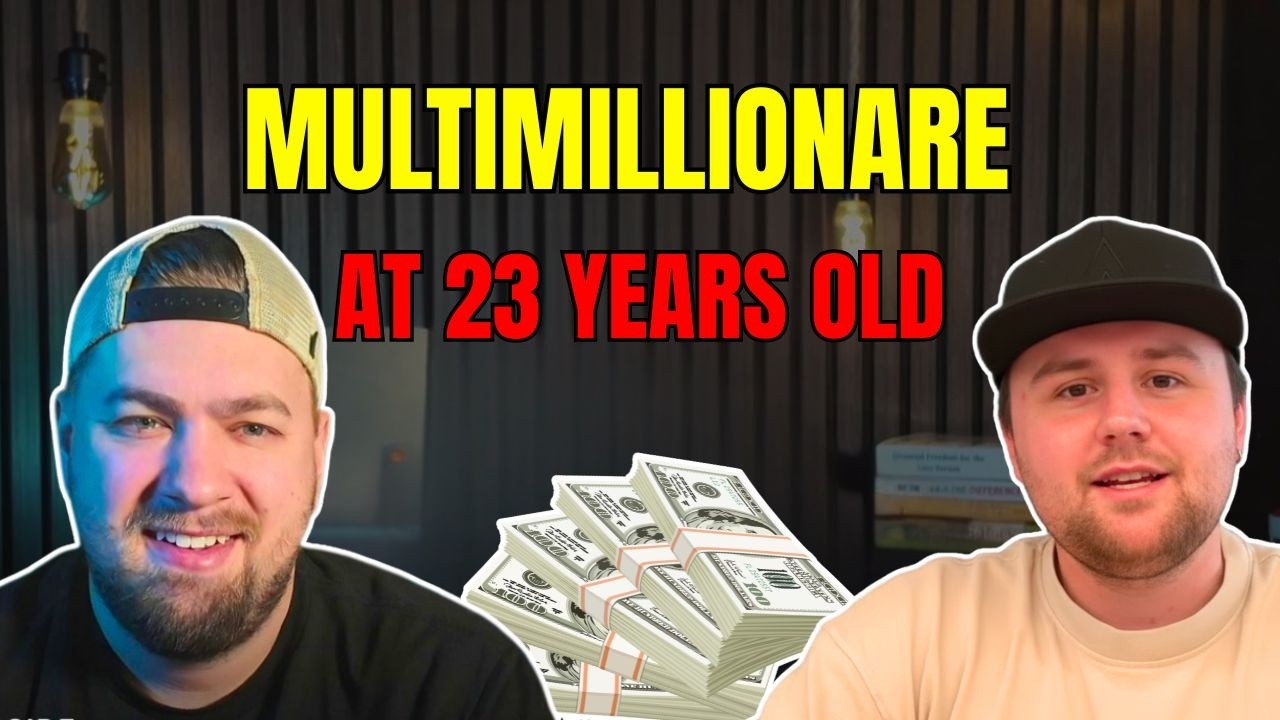
Caleb Hommel started at 18 with a Chase credit card and bounced mentorship payments. At 22 he closed a $5M Fannie Mae loan at 80% LTV. Here's how.
Caleb Hommel started buying real estate at 19 with no money, no credit, no experience, and no job. At 22 he's sitting at roughly 190 units, he just closed a 76-unit deal with a $5 million-plus loan direct from Fannie Mae at 80% LTV (which is supposed to be impossible in this market) and about ten days later he went under contract on 144 more units in Abilene, Texas, with an 81-unit property down the street lined up behind it. He also owns a property management company and a funnel-building agency, and between the two of them we employ at least 25 people.
Related reading: 413 Units at 23: Caleb Hommel on Senior Housing and Speed
I've had Caleb on the channel before, and I keep bringing him back because he's not a loud marketer. Most of the real estate world has no idea how far along he actually is. We recorded this one with him in studio B (the basement of my house) because I didn't want to move the second chair upstairs.
Here's how he did it, in his own words.
Confidence Came From Baseball, Not Real Estate
I asked him the obvious question first: at 18 and 19, with nothing, what made you think you'd succeed?
His answer wasn't about real estate at all. He played competitive baseball growing up in Southern California, and he wasn't good. Kids around him were already getting scholarship offers. At 5'10", 215, nobody cared how hard he worked. He started at the lower levels and by senior year of high school had become one of the better hitters in California: from, as he put it, horrendous to actually seeing pretty good levels of success. Good enough to play in college.
Then he got to college, looked around, and asked whether he wanted to slog out the baseball thing or treat it as a means to an end. He hated school. "I already did something hard once. Let's go try something hard again and try to build a business out of it."
That's the whole mental model. He'd already proven to himself that he could do something he wasn't supposed to be able to do.
The Chase Credit Card and the Bounced Payments
When I say Caleb started with no money, I mean it literally.
He joined Multifamily Strategy at 18, back when we ran a monthly subscription model. His first payment went through. The next three bounced. So did most of them for about eight months. I remember exactly where I was standing when I called him to ask what was going on, and his answer was, "I'm DoorDashing. I'll figure it out."
(We don't run a subscription model anymore: it's all one-time now. I don't believe in mentorships that are financially incentivized to keep you there longer. I want you to succeed and leave.)
If he couldn't cover a nominal monthly payment, he obviously didn't have $7,000 to $10,000 of earnest money sitting around either. So he funded the EMD and the early preliminary expenses while under contract with a Chase credit card.
Today Caleb lives near the penthouse of one of the nicer buildings in Dallas with a view of the skyline, new furniture, and a fiancée. He has at least six figures in the bank. At 22, I was screen printing t-shirts for $11 an hour with a degree I had no idea how to use.
How He Actually Got Liquid: Assignment Fees vs. Acquisition Fees
The thing that stops most people isn't finding deals. It's that buying rentals builds wealth slowly while your bank account stays empty. Caleb didn't know the answer going in either: his expectation was a slow burn, generational wealth, monthly cash flow, no big injection of cash.
Then he learned about assignment fees on joint ventures, and later acquisition fees on syndications.
The distinction is worth understanding:
- Assignment fees are associated with wholesaling, which in Caleb's experience shows up on smaller deals and joint ventures. Nobody's really wholesaling 100-, 200-, or 300-unit buildings: he sees offers for it but rarely sees them go through. In practice it's often wholesaling to yourself: you put a deal under contract as "Caleb Hommel and/or assigns," then assign it to an LLC you're a member of. He typically stays below 1% on a JV.
- Acquisition fees are the syndication equivalent and run a few percent up front. They're higher because a syndicated structure genuinely is more work: more legal fees, a capital raise, ongoing reporting, and harder financing to source. You're being compensated for real labor.
We both agreed on where this goes wrong, and it's the reason a lot of people still have a bad taste in their mouth about syndication. You see fee stacks like a 5% acquisition fee, 2% asset management, 2% property management, and you look at it and wonder where the investors actually get paid. The property management fee on top of paying a third-party PM is the one that gets Caleb: you're managing the manager, which is the dumbest thing I've ever heard.
Those are the groups that end up doing capital calls, and the GPs aren't the ones putting money back in. Their pockets are already lined and they're under contract on a thousand more units. Deals can go bad for honest reasons (the economy hits, 2008 happens) but the fee structure tells you a lot about who eats the loss.
The $5 Million Fannie Mae Loan at 22
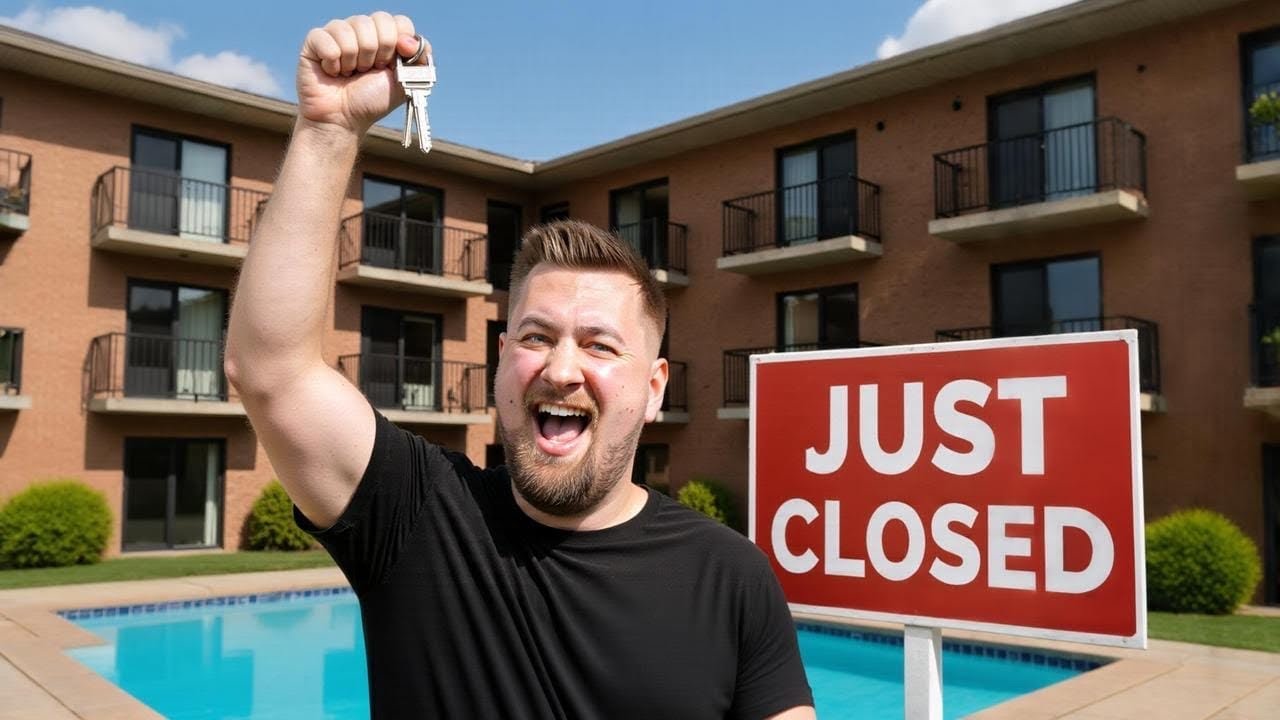
The 76-unit deal we closed together (Riverwalk) sits on 13.5 acres with a clubhouse, pool, computer lab, gym, and playgrounds. It's a LIHTC property, syndicated, financed by Fannie Mae at over $5 million and 80% loan-to-value.
Fannie is not handing out money right now, and they're not fans of syndicators. The scrutiny was extraordinary.
What Caleb learned under contract is that agency debt has market-by-market maximums. Some areas cap at 80% LTV, some at 70%, some at 65%: the more tertiary you go, the higher the DSCR requirement. Stephenville, where we bought this one, falls in an area allowing 80% leverage with a 1.25 DSCR requirement. That mattered, because the deal already sized comfortably: day-one DSCR was above 1.5 to 1.6. Ludicrous, frankly. Then we took it to Fannie through a delegated underwriting service.
The underwriting was the most arduous process either of us could have imagined. Caleb got flagged over a $20 late payment on a card he'd canceled right after turning 18: he'd told the bank he was canceling, they acknowledged it by email and phone, and he still got a late charge. Thirty-six months later Fannie wanted an explanation for it. We also had investors with names similar to other people living in a completely different part of the state, and those investors had to sign affidavits saying, essentially, "that's not me."
Shout out to Mark and Robbie at Arbor: the best originators and debt brokers I've worked with, and they had enormous patience with a debt product neither Caleb nor I had been through. We'd done bank debt, local credit unions, the standard stuff. This was different. And now that we've actually got agency debt done once, it's much easier to get it again.
That's what people miss. He's 22, I'm 33, and we were the point people on a loan most investors don't touch until much later in their careers. Now he qualifies for bigger and different deals.
Anson Park and the LIHTC Play
About ten days after closing the 76, Caleb went under contract on Anson Park One and Two in Abilene, Texas: 144 units, developed in two phases, functionally one project. The 81-unit property down the street would bring the package to 225.
Related reading: Inside My $6.4M 76-Unit Deal in Stephenville, Texas
Abilene was already a stable market before the news broke this year: three colleges, a military base, and aviation and mechanical engineering work tied to American Airlines subsidies. Then the Stargate project (the $500 billion development between OpenAI and Oracle) was announced roughly four to six minutes' drive away, on Old Anson Road. Hence the name. Anson Park is the closest apartment complex to the development, and the 81-unit next door is second closest. If both come together, Caleb owns the two nearest complexes to Stargate.
The capital raise is $5.5 to $6 million. His last one, on Riverwalk, was about $2.1 million and the first seven-figure raise of his life. He's already 20 to 25% into this one and isn't through feasibility yet, so there's no stress: LIHTC deals come with plenty of extensions built in, largely because the Department of Housing and Community Affairs will randomly extend timelines over what seem like the smallest things.
The strategy is a double-down on tax credit deals. Texas is one of the only states where you can buy a low-income housing tax credit property and successfully remove it from the program. The play:
- Buy super-stabilized LIHTC communities running 92%-plus occupancy.
- Execute the qualified contract to begin exiting the program.
- Take three years to burn off the subsidies.
- Bring the property to market rate and exit for close to double.
People ask why the previous owner never executed a qualified contract. The answer is that the sellers are REITs with 3,000 properties who don't even know this asset is on their books. They see low-income housing tax credits, they see stability, and it sits there.
Worth being clear about what this is not: we're not eliminating low-income housing or displacing residents. There are many ways to serve low-income tenants with government subsidy, and we're looking at the highest and best use of the property: using the existing system to house people through a program that makes more sense than simply restricting rent. Removing these projects from the program also frees up funding and availability for new LIHTC development, which the recent federal bill specifically expanded. Developers get an enormous tax write-off, they build, and five years later the next owner steps into a stable project with real upside.
Related reading: Dylan Osmon: From a $33,000 Triplex to 215 Units in Five Years
And we do the work. On the 76, contractors are coming in to rip out the old playground and build a new one, replace tattered flags, add safety features that should have been there originally, and fix ductwork. We've put roughly half a million dollars back into Stephenville, Texas so far. You can do good and make money at the same time.
Why Bigger Buildings Are Easier
Caleb's biggest regret at 22 (and he knows how that sounds) is that he didn't go bigger earlier.
He got that from Kathy, who joined our inspection and has managed over 80,000 units at one point in her career: bigger complexes are easier to run and harder to buy. Harder because the capital raise scales with the deal. Easier because everything is on site. Your property manager lives there. Your maintenance man lives there. You're not driving between scattered assets.
You're also buying a business rather than a property: one with on-site staff and employees.
His diagnosis of why people stay small is blunt. Scaling lives in the "you don't know what you don't know" box, and most people are too scared to venture into it. So they stay in the kiddie pool: one single family a year, then a fourplex, then maybe an eightplex five years later. If they'd had the confidence to dive in, accept that they'd make mistakes, and believe they'd figure it out, they'd have scaled far further.
I've watched this play out across the mentorship: Matt Wang, Chris Jordan, Phil Toth, Caleb. They buy again and again. You don't have to start with a duplex or a house hack. Those can be fine strategies, but the business you can scale is unbelievably easier to scale than most people make it.
How He Built the Network
Caleb has never raised $2 million before Riverwalk, and now he's running point on a $6 million raise. I helped prep the pitch deck; that's about it. He's finding the people and doing the presenting.
The confidence traces back to baseball: do hard things repeatedly and you stop believing the next one is impossible. The network came from advice he heard on a podcast years ago, possibly from Brandon Turner, and it's almost stupidly simple: talk to everybody about what you do. Anyone asks what he does, real estate comes out first, before any of his other businesses. And nearly everyone he meets either wants into real estate or is already in it. Say it enough and somebody eventually says, "Hey, Caleb's working on a deal right now: you've got a few hundred thousand to place, go talk to him."
Matt Wang texted me this week, past midnight Central because he's on the West Coast, to say that exact piece of advice (which we'd discussed over a year ago at one of my Robin Hood events) led directly to him going under contract on another deal.
Key Takeaways
- Earnest money is the real barrier for beginners; Caleb solved it with a credit card and made his bounced mentorship payments up by DoorDashing.
- Assignment fees (JVs, under 1%) and acquisition fees (syndications, a few percent) are how you build liquidity while building a portfolio, but stacking excessive fees is what leads to capital calls.
- Agency debt has market-specific LTV and DSCR caps; knowing which bucket your submarket falls in determines what leverage you can get.
- Texas LIHTC properties can be exited through a qualified contract, with roughly three years to burn off subsidies before taking rents to market.
- Larger complexes are easier to operate than small scattered ones because staff live on site: the hard part is the capital raise, not the management.
- Build a network by telling everyone you meet what you do. It works.
Watch the Full Episode
There's more in the conversation than fits here, including Caleb's funnel-building company and how Apex Asset Management grew across Stephenville, Waco, and Abilene. Watch the full episode above. If you want to reach Caleb about coaching, investing, or the Abilene deals, Instagram is the easiest way to find him.
If you want to learn how I buy apartments with seller financing, my mentorship is at mentorship overview. Our free course on getting started in multifamily is at multifamilystrategy.com/get-free-training. And the free community, which includes a free calculator, is on Skool under Multifamily Strategy.
Read the episode transcript
0:00 Hello and welcome back to the owner
0:01 meeting podcast with Christian Osgar,
0:03 your host. This is a multif family
0:05 strategy production and we are here with
0:07 my very good friend Caleb Haml who's
0:11 coming on for another episode. This kid
0:13 started at 19 years old. He's at just
0:16 about 200 rental units today at 22.
0:21 So about a 2 and a half year career.
0:24 He's done deals with joint ventures,
0:27 creative finance, conventional finance.
0:30 He's refinanced several of these. He
0:33 just got a $5 million bank loan direct
0:38 from Fanny at 22 years old. That is
0:41 supposed to be impossible to do. He
0:43 started with no money. The man, the
0:45 myth, the legend, Caleb Hmel, welcome
0:47 back to the channel, my friend.
0:48 Thanks for having me. Appreciate the big
0:51 introduction. Dude, you're a big deal in
0:53 real estate. I don't think most people
0:55 understand just how far you are, unlike
0:58 me. You are not as loud of a marketer,
1:02 which is fine, but I don't know that the
1:04 world knows how much stuff you've bought
1:06 or just how impressive you are. So, big
1:08 intro is what you deserve, my friend.
1:10 Uh, dude, I'm loving the background.
1:12 Loving the studio. Where are you uh
1:13 where are you joining from? Shockingly,
1:15 downstairs in your house. I didn't want
1:17 to move the other chair into the studio
1:19 today, so I relegated Caleb to the
1:21 basement. Thank you for
1:23 Thank you for joining from studio B. I
1:25 actually have three studios in my house,
1:27 but uh you're in the one that I usually
1:28 do a lot of mentorship from on the
1:30 laptop. So, welcome on into the podcast
1:34 from wherever you guys are joining,
1:35 whether you're on iTunes, Spotify,
1:37 YouTube, wherever you're viewing. This
1:39 is the owner meeting podcast. We want to
1:41 bring the owners of the best businesses,
1:43 especially real estate, but all business
1:45 to you to learn from them. Their
1:47 success, their mistakes, save you money,
1:50 make you money. This is how you build
1:52 business. You get connected with the
1:54 people who have done the thing you want
1:55 to do. Caleb, in many ways, you're
1:57 living the dream for people. First
1:59 question I have for you, let's just kick
2:00 off with the thing that I think
2:02 everyone's wondering.
2:04 You joined at 18 years old to multif
2:06 family strategy.
2:07 You graduated high school. What made you
2:09 at 18 and 19 years old think you could
2:11 succeed with no money, no credit, no
2:14 experience, no job? What made you think
2:18 that you would succeed just diving head
2:20 first into real estate? Yeah, that's a
2:23 heck of a question. I think the biggest
2:25 thing that just allowed just the belief
2:27 of success and the belief in myself was
2:30 played a lot of competitive baseball
2:31 growing up. Definitely wasn't as good as
2:33 most of the kids you could say. Growing
2:35 up, you had kids that were already
2:36 getting scholarship offers, all this
2:38 stuff, yada yada yada. Being 5'10, 215,
2:41 nobody really cared what I did or how
2:43 much I worked and started off kind of at
2:45 the lower levels and then by senior year
2:47 of high school had become one of the
2:50 better hitters in California. So, kind
2:51 of had gone from horrendous, you could
2:53 say, to actually seeing pretty good
2:55 levels of success, going to college,
2:56 playing baseball in college. And then
2:59 got there, started looking around. I was
3:00 like, do I really want to go slog out
3:02 this baseball thing or is this a means
3:04 to an end? I really hate school. I
3:06 already did something hard once. Let's
3:07 go try something hard again and try to
3:09 build a business out of it.
3:11 That's that's absolutely incredible.
3:13 With your first deal, for those who
3:15 haven't seen your past episodes, and we
3:16 will get into this $5 million bank loan
3:18 you just got.
3:19 Yeah.
3:20 But when you got started, how did you
3:23 get into and fund your first deal?
3:25 Because as we know, it's not free
3:28 to get into real estate. You have
3:29 earnest money. You have the main
3:31 obstacles that people who have little to
3:33 no money have is like, how do I even get
3:34 the seed capital to get through the
3:37 first two months of I went under
3:39 contract and I'm closing a deal. How did
3:41 you pull that off for deal number one
3:42 and deal number two as you were getting
3:44 started?
3:45 Um, I have a Chase credit card to thank
3:48 for that. That
3:50 fun funded EMD and some early
3:52 preliminary expenses while under
3:53 contract with the credit card. When
3:55 Christian said I truly had no money, it
3:56 was like payments to join multif family
3:59 strategy at 18. Payments bounce, what
4:01 would you say? Every single month for
4:03 about eight months. I just go door dash
4:05 the next week and make it up. So if I
4:07 can't pay,
4:07 we no longer do a subscription model.
4:09 It's now all just one time. I don't
4:11 believe in mentorships that are
4:14 incentivized to keep you there longer. I
4:16 would completely agree. I want you to
4:17 succeed. So we changed our billing model
4:19 since then, but it used to be nominal
4:21 price per month. And uh yes, I can say
4:23 for a fact uh after your first payment,
4:25 your next three all bounced.
4:27 And I I remember the call getting I
4:29 remember where I was when I got the call
4:30 from you asking what was going on. I was
4:32 like, I'm Door Dashing. I'll figure it
4:34 out. But if I didn't have if I didn't
4:36 have the money for that, I sure sack
4:38 didn't have like 7 to 10K in EMD earnest
4:40 money ready to go.
4:42 Well, you figured out as part of your
4:44 career, you figured out liquidity.
4:46 Yes. For context, Caleb today lives at
4:50 near the penthouse of one of the nicer
4:52 buildings in Dallas. He has a beautiful
4:54 view of the Dallas skyline, new
4:57 furniture. You're about to get married.
4:59 Uh he's engaged.
5:02 Incredible. You have estimated I don't
5:05 know if you have seven figures, but you
5:06 have at least six figures in your bank
5:07 account right now. You have income
5:09 coming in. You have all of these rental
5:12 properties
5:14 unbelievably farther than I was at 22,
5:17 which at 22 I was screen printing
5:19 t-shirts for $11 an hour, freshly
5:21 graduated from college with no idea what
5:22 to do with a degree I didn't know how to
5:24 use. You've absolutely killed it. So,
5:26 first of all, huge inspiration to a lot
5:29 of people. You've since figured out how
5:31 to get liquid buying deals and you have
5:35 done syndication, you have done JVS,
5:36 you've done it both ways when you're
5:39 closing on a joint venture, which is I
5:41 think where most people are starting and
5:42 should start.
5:44 Couldn't agree more.
5:45 How are you getting liquidity while
5:47 you're also building a portfolio? I
5:49 think a lot of people get stuck there. I
5:50 know I certainly didn't know this for my
5:52 first few years of real estate.
5:53 Yeah, it definitely wasn't something
5:55 where I went in off the bat were like,
5:56 "Hey, I'm going to go in and buy this
5:57 deal and get liquidity." That was not
5:59 the expectation going in. The
6:00 expectation was, hey, it's a slow burn.
6:02 We're going to build generational
6:03 wealth. There's going to be cash flow
6:04 every month, but it's not going to be
6:05 this giant injection of cash off the
6:07 bat. And then started learning about
6:09 assignment fees, what that could look
6:10 like on a joint venture. And then
6:12 eventually doing syndications,
6:13 realizing, oh, there's actually an
6:14 acquisition fee. And there these
6:16 different types of things. It's just
6:19 structured slightly differently from a
6:20 joint venture to a syndication. Just
6:22 making sure you're staying in the black
6:25 and white, not going too much into the
6:27 gray area of like taking a certain ACT
6:29 fee on a joint venture that's more than
6:31 you should or a syndication some things
6:33 like that. I wish more people would say
6:35 that taking too big of fees. I see a lot
6:38 and this is why I think people have a
6:39 bad taste in their mouth about
6:40 syndication still.
6:41 Couldn't agree more
6:42 is people do this like 5% acquisition
6:45 fee, 2% asset management fee, 2%
6:48 property management. You look at the fee
6:50 structure, you're like, "Oh my goodness,
6:52 where do the investors actually get
6:54 paid?" And those are the groups that
6:56 ended up doing capital calls on their
6:58 investors because they ran out of money
7:00 and needed more money.
7:01 Yeah. And then it's funny that those
7:02 people, this isn't to say deals can't go
7:04 bad. Stuff happens, economy hits, 2008,
7:07 whatever, but it's like, it's funny.
7:10 Those investors who were taking the 5%
7:11 ACT fee, the property management fee on
7:13 top of paying a PM is the thing that
7:15 gets me. It's like, "Hey, I'm going to
7:16 pay a third party PM and then charge my
7:18 investors as well." It's like, that
7:20 makes no sense to me sometimes.
7:22 We're managing the manager.
7:24 The dumbest thing I've ever heard.
7:25 I agree.
7:27 But it's funny, those groups are the
7:29 ones whose deals get capital calls, but
7:30 the GPS aren't the ones putting all the
7:33 money back into the deal. Their pockets
7:34 are lined. They're fine. They don't
7:36 care. They're under contract on a
7:38 thousand more units, not even thinking
7:40 about putting any of their own money
7:41 into anything.
7:42 What's the difference between an
7:44 assignment fee and an acquisition fee?
7:46 Because they're both paid to you, the
7:48 deal structure at close, but when do you
7:51 use each and what is a reasonable price
7:55 to actually charge for that?
7:56 Yeah, in my head, the assignment fees
7:59 are typically associated more with
8:00 wholesaling, which is associated with
8:02 joint ventures, smaller deals. You're
8:04 not you don't see a lot of people
8:05 wholesaling 100, 200, 300 unit
8:07 buildings. That's not something I really
8:09 see as much. I see offers for it but
8:11 don't see it going through. Assignment
8:14 fees, excuse me, are typically on
8:15 wholesaling. It's kind of like
8:16 wholesaling to yourself is kind of when
8:18 those come into play. Let's say I put a
8:20 deal under contract as Caleb Pommel and
8:22 or assigns that that for assigning that
8:25 project to an LLC, which I am going to
8:28 be a member of is usually I go below 1%.
8:30 Typically, I've seen on J on JVS with
8:32 the assignment fee. You can go a little
8:34 bit higher than on the ACT fee, the
8:36 acquisition fee for syndications. Those
8:39 typically are a few percent upfront. So
8:41 I think the ACT fees are a little higher
8:43 than the assignment fees are is
8:44 typically what I've seen. I've seen that
8:46 consistently as well. And a lot of that
8:47 is covering the fact that they're
8:49 typically more expensive to put
8:50 together, right? You have more legal
8:52 fees. There's more hoops to jump
8:54 through. A syndicated structure with the
8:56 capital raise, the reporting, the
8:58 effort, and the financing that you get
9:00 for them. It is actually more literal
9:03 work to put it together, which is what
9:05 you're getting compensated for. Dude, on
9:07 Riverwalk we just did the 76 you and I
9:09 just took out mo most arduous
9:11 underwriting process I could have
9:12 imagined. It was like I was not aware of
9:15 what I was stepping into. There was one
9:17 I had a late payment on a card I'd
9:19 canceled from when I just turned 18.
9:21 Literally $20 late payment. Told BFA I
9:24 was cancelceing the card. They said
9:25 acknowledged it via email and over the
9:27 phone. And then I still get a late
9:28 charge. I get an email like, "Hey, what
9:30 is this late charge from over 36 months
9:31 ago?" I'm like, "How did you even know
9:33 about this for less than $20?" Oh, and
9:36 we had investors on that deal who uh had
9:38 a similar name to other people who lived
9:40 in a totally different area of the state
9:42 and they had them sign a dendum saying
9:45 like essentially or an affidavit saying
9:47 like, "Hey, that's not me." Insane. The
9:50 level of scrutiny is very very high. The
9:53 level of legal bills was also very very
9:55 high on the lite-ch deal that is
9:56 syndicated with Fanny May. Dear
9:58 goodness, very difficult. And and you
10:01 pulled it off, which is what? So So
10:03 let's talk about that and let's talk
10:04 about your next deal, Anson Park. And
10:06 let's do it.
10:07 So you just closed 76 units.
10:09 Yep.
10:10 13 and a half acres.
10:13 Mhm.
10:13 Clubhouse, pool, computer lab, gym,
10:17 playgrounds, the whole nine yards. You
10:19 got at 22 a $5 million plus loan from
10:23 the bank. Now, right now in the market,
10:26 Fanny is not giving out money for free.
10:28 They are not a fan of syndicators.
10:30 That's why the scrutiny is so high. It
10:31 is very hard to get the debt that you
10:33 got on this. And you went 80% loan to
10:36 value, which is very rare in today's
10:38 market. How did you get these terms and
10:43 how honestly how much did you have to
10:44 scale your business to even qualify for
10:46 this? Yeah. So, let's start with how did
10:48 we get the terms? So, Fanny May like
10:51 they kind of break it down into certain
10:52 markets, per se. Like there's certain
10:54 cuto offs. I learned this actually under
10:55 contract that for agency debt, there's
10:58 maximums they have per area. So some
11:00 areas it's 80% LTV. Some areas it's 70%
11:03 LTV. Some are 65% LTV is more tertiary
11:06 you go that requires a higher DSCR. So
11:09 Stevenville where we bought this one
11:10 actually lies within an area that is a
11:12 1.25 DSCR requirement with 80% leverage.
11:16 So one, we already had a deal that could
11:18 size potentially. And I mean let's talk
11:20 about the deal we bought. I mean, I
11:21 think day one DSCR I saw was above a 1.5
11:24 to 1.6.
11:26 The D the DSCR was ludicrous. So, we
11:29 have that level of deal and we take it
11:30 to Fanny through a delegated
11:32 underwriting service. It makes it
11:33 getting the debt was a pain, but I've
11:35 heard horror stories of it being a lot
11:37 worse for sure.
11:38 Yeah. Shout out to uh Mark and Robbie.
11:41 Literally getting it done.
11:44 Best best originator, best debt broker
11:46 I've worked with.
11:47 Yeah, they're they're with Arbor.
11:48 Absolutely. Uh they they are incredible
11:50 and they had a lot of patience because
11:52 this is a debt product that I had not
11:54 been through. Caleb had not been through
11:55 before. We've done bank debt. We've gone
11:57 through local credit unions. We've gone
11:58 through banks. We've done the the
12:00 standard things.
12:01 Yep.
12:02 They had the patience to work with us on
12:04 a a very sizable loan. And now that we
12:07 actually have the debt from Fanny, now
12:09 it's much easier to get it again.
12:11 But I just I just want to point out what
12:13 a huge accomplishment that is. You got a
12:15 bank to look at you as a 22-y old and
12:18 granted we're working on it together. So
12:19 me as a 33-y old, you as a 22-y old, but
12:21 we're the point people on this deal.
12:23 Yeah.
12:23 You're talking young people
12:26 at the time. You you were not super
12:28 super liquid.
12:30 You have some liquidity, but you didn't
12:31 have really high liquidity. You do have
12:32 very high
12:34 not funing the down payment by myself,
12:35 that's for sure.
12:36 And we figured out how to put together
12:38 that deal. We got debt that's hard to
12:40 get. uh what you pulled off at 22 is
12:43 something that most people don't pull
12:45 off till much much much much later in
12:47 their career. Now you qualify for bigger
12:50 and different deals. Uh so the natural
12:52 response to this within a few weeks of
12:54 closing the 76 I believe within about 10
12:56 days. I think it was about 10 days you
12:58 went under contract for Anson Park one
13:01 and two.
13:03 Tell us about that deal.
13:05 Yeah Park one and two um is in Abene
13:08 Texas. For those who don't know, um,
13:10 Abene, Texas, even before the news that
13:11 broke a little bit earlier this year,
13:12 was a pretty stable market. You've got
13:14 three colleges, you've got a military
13:15 base, you actually got some aviation,
13:17 mechanical, um, engineering areas with
13:19 American Airlines subsidies. You got
13:21 pretty stable economy there. And then
13:24 you go ahead and add the fact that the
13:25 Stargate project between um, between
13:27 Open AI and Oracle announces a 500
13:30 billion dollar development, which
13:32 happens to be less. What would you say
13:34 that was a six minute drive
13:36 from four to four to six minutes? It's
13:39 Yeah,
13:39 it's on Old Anson Road. The name of
13:41 Anson Park being, you know, it's on Old
13:44 Anen Road.
13:45 Yeah, right next door. I believe it is
13:49 the closest or maybe second closest
13:51 apartment complex to the development. I
13:53 think we're second clo actually. No,
13:55 we're closest cuz the other complex
13:56 we're looking at attaching to this one
13:58 and buying the next deal right after
14:00 this is the second closest one, I
14:02 believe. So, we're going to be the two
14:03 closest complexes to the Stargate
14:06 project. That's ridiculous. Okay. So,
14:08 how many total units then assuming that
14:10 the other one comes together? So, you
14:12 have Anthem Park one and two, which is
14:13 one package. Then you have
14:15 the other property. How large is that?
14:18 So, with Anson Park one and two, which
14:20 essentially is one project was developed
14:22 in two phases in a few years, that is
14:25 144 units. Then the other project is 81
14:27 units right down the street.
14:30 Dude, that's a lot of real estate.
14:31 You're talking like 225 units.
14:35 Exactly. I'm talking 225 units. That is
14:38 is a wildly large transaction. How big
14:41 of a capital raise is this going to be?
14:43 We're looking closer to the five and a
14:45 half to $6 million mark on the total
14:47 capital raise. Woo.
14:50 All right. Uh now the last capital raise
14:52 you did was what about $2 million to
14:54 close out the
14:55 right about 2.1. This is a lot larger
14:58 raise. How far into that raise are you
15:00 so far?
15:01 We're looking around the 20 to 25% mark.
15:04 We already we aren't even through
15:05 feasibility yet. So, we have plenty of
15:08 time to go. We've got plenty of
15:09 extensions built into these things,
15:10 especially for
15:12 LITC. A lot of people don't know out
15:13 there.
15:14 The hardest part of closing lit is
15:16 dealing with the housing comm the
15:20 department of housing community and
15:21 affairs will randomly throw extensions
15:24 on those timelines sometimes for seems
15:25 like the littlest things ever. So, we've
15:28 got plenty of time to raise the rest.
15:30 Really zero stress about it. That's So,
15:32 you you just raised $2 million. Like,
15:34 first time ever you've done a seven
15:36 figure raise,
15:36 correct?
15:37 You're already over a million dollars
15:39 into your raise for your next 5 to$6
15:42 million raise. You're 22 years old. And
15:45 by the way, Kayla's running point on
15:46 this raise. This is I I helped with the
15:48 I helped prep the pitch deck. That's
15:50 that's that's about as much as I've done
15:52 on the on the capital raise part so far.
15:54 So Caleb is presenting this, finding
15:56 people, reaching out. How did you build
15:59 your network to a size and build the
16:02 confidence going under contract? You've
16:03 never raised this type of money before.
16:05 You had never raised $2 million in your
16:06 life.
16:07 Not at all.
16:07 How did you have the confidence to raise
16:08 $2 million? How did you come off that
16:10 with the confidence of like, oh, I just
16:12 did two. Let's do five. That I think for
16:14 most people that seems incomprehensible.
16:17 Yeah. Confidence. We can go back to kind
16:19 of tracing it all the way back literally
16:20 to that high school baseball story of
16:22 thinking, hey, nobody really is supposed
16:23 to do this and I did something that
16:26 wasn't supposed to happen. Granted,
16:27 baseball in Southern California is
16:29 already extremely competitive. Did that
16:31 and I was like, let's go buy real
16:32 estate. Ended up buying 100 doors. Then
16:34 I was like, why don't we just if I want
16:36 to go bigger and I want to be who I say
16:37 I want to be, I'm going to have to climb
16:39 this mountain at some point. Why not
16:40 now? So got Riverwalk out of the way.
16:43 And as far as building the network goes
16:45 with that, it's actually some advice I
16:47 heard on a podcast a long time ago. Came
16:49 over as Brandon Turner or somebody else,
16:51 but it was something super silly of just
16:53 talking to everybody about what you do
16:55 and have applied that to essentially my
16:57 life and anybody asked what I do. It
16:58 starts off with real estate before any
16:59 of my other businesses. That's the first
17:01 thing that comes up. And everybody that
17:03 I've ever met pretty much wants to get
17:05 into real estate or is in real estate in
17:07 some capacity. And if you just keep
17:09 talking about what you do enough, that's
17:10 going to lead to people are like, "Hey,
17:11 do you know Caleb is actually working on
17:13 a deal right now? You've got a few
17:14 hundred,000 to place. You should go talk
17:15 to him about this.
17:17 If you just keep talking about what you
17:18 do enough, it works." I actually had um
17:20 one of both of our good friends, Mr.
17:22 Wang, text me this week, and we talked
17:24 about Matt on the podcast. I love Matt.
17:26 Yeah, we had talked about this advice
17:27 actually over a year ago at one of your
17:29 Robin Hood events. I had a text from him
17:31 came in at like I think it was past
17:33 midnight central time because he's on
17:34 the west coast and he was like hey the
17:36 advice literally this advice we talked
17:38 about led to him he's about to go under
17:39 contract on another deal it looks like
17:42 after this one. So it's just the
17:43 confidence comes from just doing hard
17:45 things kind of over and over and then
17:47 that network comes from just talking
17:48 about what you do with anyone and
17:50 everyone you come across has been my
17:52 biggest finding it. So this has been the
17:54 biggest gifting in in watching what
17:57 multif family strategy has become over
17:58 the last 5 years. Guys like Matt Wang,
18:01 Chris Jordan, Phil Toth, you I've had
18:04 all you guys on the podcast. We've got a
18:06 lot more mentees who bought real estate,
18:08 but these are people who go and they buy
18:09 again and again and again. And what you
18:12 find is people think that you need to
18:14 start with the duplex or the single
18:16 family house. You don't. But the speed
18:19 in which you can go, like you got to 100
18:21 units and you went, "Oh, that's not that
18:23 bad." Bought a 76, bought another 26,
18:26 bought a 44, you're buying 144 and
18:29 you're like, "Hey, you know what? While
18:30 we're out here, let's buy the 81 unit
18:32 next door at the same time." The
18:35 illustration here is if you are sitting
18:37 here stuck on the single family or the
18:39 duplex or the house hack, it doesn't
18:42 mean you can't buy those. House hacking
18:43 can be a great strategy,
18:45 but the business that you can scale is
18:47 easier to scale than you think. It's not
18:50 that it's easy, but it's unbelievably
18:53 easier than I think most people make it.
18:55 I would totally agree. I think even
18:57 going back to like certain problems we
18:58 face in our current business or even
18:59 going back to when I was getting
19:00 started, it's this mindset of you just
19:03 you put it it's in the you don't know
19:04 what you don't know box. And a lot of
19:06 people are too scared to even venture
19:08 into that box and kind of jump in the
19:09 deep end and have the confidence in
19:11 themselves that they will figure it out.
19:12 So they just keep playing in the kitty
19:14 the kitty pool so to speak with buying
19:16 one single family a year. Okay, now I'm
19:17 in a forplex. Okay, 5 years later I
19:19 might buy an eightplex. It's like if
19:21 they just had the confidence to dive in,
19:23 be like realize the fact they're going
19:24 to make some mistakes along the way.
19:26 Nobody's going to be perfect, but you're
19:28 going to sink or swim. And having the
19:30 belief in yourself that you're going to
19:31 make it through would have allowed them
19:32 to scale so much farther. And I've
19:34 already seen that in myself in a few
19:35 years. I wish I would I sound so stupid
19:38 because I'm already I'm 22. I wish I
19:40 would have gone bigger earlier talking
19:41 to um Kathy at our inspection who's
19:43 managed over 80,000 units at one time in
19:45 her career.
19:46 It was these bigger complexes are
19:48 actually easier to run, harder to buy
19:50 because the capital raise size of deals
19:52 are bigger when you're scaling up.
19:54 So much easier to run. You don't have to
19:56 be offsite. Everything is on site.
19:57 Everybody is at the complex. Your your
20:00 property manager lives there. Your
20:01 maintenance man lives there. And just
20:03 having the belief once you get to that
20:04 point, the game already I'm seeing on
20:06 deals that are coming across my desk
20:08 even today has started changing even
20:10 more.
20:10 Well, and and now what you've done is is
20:12 you're you're really buying a business,
20:14 right? You're buying a business that has
20:16 that has some on-site staff. You have
20:18 employees. Speaking of at 22, you have a
20:22 portfolio of real estate, which is the
20:24 core of your business. You also have a
20:25 portfolio of companies. What does your
20:28 portfolio look like today? like just
20:30 give us the high level buildings and
20:32 unit counts and then other companies
20:35 that you own and operate. Yeah, I think
20:38 I'm at 100. I actually don't even know
20:40 how many real estate units I'm at. I'm
20:41 at 180. I'm either at 185 or 195 units
20:44 currently. Buying another 144 to 224.
20:48 So, I'll be over probably what around
20:50 that 300 to 400 mark by the end of the
20:52 year pretty easily. 400 actually. And
20:54 then on top of that um have the property
20:56 management company Apex Asset Management
20:58 based out of North and Central Texas
21:00 primarily in Stevenville, Waco and
21:01 Abalene. And then on top of that um also
21:04 have funnel stacking which is for
21:05 coaches, consultants and mentors. We
21:08 handle the sales and funnel in the name
21:10 funnel stacking the funnel buildout for
21:12 these mentors to allow them to build
21:13 their programs and mentorships.
21:15 And that company has been incredible too
21:16 watching what that's done. It it helps
21:18 power multif family strategy. But we
21:20 have some there's some other clients
21:21 that you represent that are just awesome
21:24 big names real estate and other coaching
21:26 programs. I I love what you've done with
21:28 that company.
21:29 How many employees do you have in that?
21:31 Cuz you're the CEO of that company. How
21:32 many how many employees do you have
21:35 currently in that company?
21:37 Gosh, after staffing this weekend, we'll
21:40 be at one, two, three, four, five,
21:45 about eight more there. We're going to
21:46 be at about 12 to 14 people in the org.
21:49 probably by after we finish this next
21:50 round of hiring.
21:52 That's not half bad. Caleb has taken
21:54 that company. I love the way that it
21:56 works. So, this is just a shameless plug
21:57 to it.
21:58 But they only take coaches who've
22:02 actually done the thing that they talk
22:03 about. So, there's no there's no people
22:05 who are like, "Hey, look at my boat and
22:07 my cars and my fancy watch." Not that
22:09 some of his coaches don't have those
22:11 things.
22:12 Absolutely they do.
22:13 I'm thinking of uh uh Anthony with the
22:16 the section A guys. They
22:17 Yep. He he's hilarious, but they
22:20 actually do the thing. Like you can go
22:22 out, you can watch them do their
22:23 properties. They their student success
22:25 is incredible. You take the
22:27 non-influencer brands
22:30 and you build them a million dollar a
22:31 year business.
22:33 Mhm.
22:34 Which is it's just it is incredible to
22:36 see the way that it scaled the
22:38 communities. I think the the thing that
22:39 I'm most excited about with watching you
22:42 grow that company is the ability to find
22:45 people who really A lot of these people
22:47 have been burned by one, two, three,
22:49 four other coaches.
22:50 Absolutely.
22:51 You get them into a program that
22:52 actually delivers and then you get these
22:54 amazing testimonial success stories of
22:57 you have all these students who learn
22:58 from the right people
23:00 and the brands grow organically.
23:02 Incredible what you've done with that
23:03 company.
23:04 Apex, you and I own that bad boy
23:06 together. That company is expanding like
23:08 I never imagined it could.
23:11 But you've ended up with this portfolio
23:13 of business. I don't even know how many
23:14 people we employ there. If you account
23:16 the for for the maintenance stuff. Lots.
23:18 Yeah. I we probably employ what and
23:20 everything at least 25 people at this
23:22 point. I'd imagine.
23:22 We have 25 people minimum working around
23:24 the clock.
23:25 Yeah.
23:26 It's just incredible to see the scale
23:28 and impact you've had. You've moved to
23:30 Texas. You've been here about two years.
23:32 And the impact that you've had on Texas.
23:34 You employ all of these people. uh you
23:36 know within state and out of state. The
23:39 companies are all moving. You've done a
23:42 lot of good for a lot of people. You
23:43 provide great housing. The rena work
23:45 that we've done together I'm really
23:47 really proud of. We came into agree beat
23:49 up entry level housing on some of them.
23:51 Some of them are just nice.
23:52 But a good deal. We had beat up property
23:54 that's mismanaged. We fixed the
23:56 management. We fixed the actual
23:58 properties. cuz we invested
24:01 I don't know at this point probably
24:02 about half a million dollars back into
24:04 Stevenville, Texas so far
24:06 at least
24:07 at least maybe a little bit more.
24:10 It's been a fun adventure to see what
24:13 you can do at your age. A lot of it
24:15 seems almost impossible in in buying
24:18 ants and park
24:20 cuz that that's exciting. That will more
24:21 than double your portfolio. Everything
24:23 you've done is dwarfed by one
24:25 transaction which is kind of insane to
24:27 think about, right? Yeah. The
24:30 what is the overall strategy for that
24:33 deal? So So we know we know you're
24:35 you're raised another $4 million. You're
24:37 going to be bringing in people, but what
24:38 is the what is the actual vision for the
24:40 project?
24:42 Yeah. Actual vision. I was also just
24:43 doing the unit count. After that one,
24:44 I'll be about 415 units.
24:47 I was doing the math. There was too many
24:49 there's too many properties like doing
24:50 my heads. Let's just write it on a
24:51 calculator. I'll be at 413 units after
24:53 that actual vision for Anson Park. And
24:57 then the other deal we're buying next
24:58 door, we're not mutual yet, is really so
25:00 we're buying a lot of LAC. We're kind of
25:01 doubling down on tax credit deals. Texas
25:03 is one of the only states where you can
25:05 buy these low-income housing tax credit
25:07 properties and actually remove them from
25:09 said program successfully, exit the
25:12 program and actually take them to market
25:14 rate over the next few years. So that's
25:15 the same plan with Anson Park, same plan
25:18 the next deal we're looking at is we're
25:19 going into these super stabilized
25:21 communities. That's the beauty beauty of
25:22 LITC. I get people all the time asking
25:24 me, "Hey, why don't why didn't the
25:25 previous owner execute a qualified
25:27 contract?" It's when you have these
25:28 Titans, these REITs that you and I are
25:30 now buying from with 3,000 properties.
25:32 They don't even know this thing is on
25:33 their books. They just see low-inccome
25:35 housing tax credits. It's stable. It
25:38 adds so much stability to their books.
25:40 All these deals are 92 plus% occupancy.
25:43 So, we're going to come in there. We're
25:45 going to work on executing the qualified
25:46 contract. We're going to work through
25:47 the process of bringing this out of the
25:49 low-inccome housing tax credit program.
25:51 We're gonna take the three years to burn
25:53 off the subsidies and we're going to
25:54 take this thing to market rate and we're
25:56 going to be exiting for almost double is
25:58 kind of the game plan on this project.
26:01 It's ridiculous what you do. And by the
26:03 way, by removing from these programs,
26:05 we're not eliminating all the low-income
26:07 housing programs.
26:08 Absolutely. There's a ton of different
26:09 ways to do lowinccome and with
26:11 government subsidy with working with
26:13 tenants. We're not trying to displace
26:15 people or push them out of a property.
26:17 We are kidding.
26:18 No, you're looking at the the highest
26:20 and best use of the property and how we
26:22 use the existing system to house people
26:24 in a program that makes more sense than
26:26 simply let's restrict the rent and get
26:28 people in here. Let's get people the
26:30 help they need with the systems they
26:32 have, but also maximize the
26:34 profitability of the property. So, you
26:35 can you can do both. Sometimes we get
26:38 the the question of like, well, can you
26:40 can you actually do good and make money
26:42 at the same time? And the answer is
26:43 absolutely you can
26:45 without a doubt. Yeah. And it's also
26:47 helps even helps people more if you
26:49 think about it because after we're
26:50 buying these projects, we're removing
26:52 them from that program that opens up
26:54 more funding and more availability for
26:56 said program. So that actually allows
26:58 these programs that was actually in
27:00 Trump's big beautiful bill is there was
27:02 stuff specifically for this to allow for
27:04 more of these LITC opportunities to
27:06 build which is great for developers. The
27:08 tax write off these developers get is
27:10 ludicrous on the tax credit side. And
27:12 it's also for these next owners after
27:14 these five years after the developers
27:15 build it, they can sell. And then these
27:17 next owners can actually step into a
27:19 project with a lot of upside, a lot of
27:21 stability, and ride that project out and
27:23 eventually get it out of the program and
27:24 see a nice exit for themselves and have
27:26 people a good place to live. And that's
27:29 the way that we want to see these things
27:30 come together every single time. That is
27:33 the that is the push is you come into
27:35 the project, you run it well, you don't
27:37 displace a bunch of people, uh, and you
27:39 do the improvements. uh 76 unit. You
27:41 know, we're already getting, you know,
27:43 contractors will be coming in pretty
27:44 soon, ripping out the old playground,
27:45 building a new playground,
27:47 fixing the old tattered flags. We're
27:49 adding all the safety features that
27:50 needed to be added originally, fixing
27:53 duct work, the whole nine yards,
27:55 getting the projects done, right? Super
27:58 exciting to follow what you're doing.
28:00 And Caleb, if uh if people wanted to
28:02 connect with you, if coaches wanted to
28:04 reach out to you about your program, if
28:06 investors wanted to reach out to you
28:08 about the Abene deal, I don't know where
28:09 you're at with um with with filing and
28:11 capital raising and all, but with your
28:15 deals and your companies, if someone
28:17 wanted to connect with you, what is the
28:19 easiest way for them to find?
28:20 Yeah, easiest way to find me is on
28:22 Instagram. It's Caleb. It's pretty easy.
28:25 Real estate pops up pretty easy there.
28:26 Um, that's the easiest way to reach me.
28:27 Whether you want to talk sales,
28:29 business, real estate, Anson Park,
28:31 Abalene and Stevenville, you name it,
28:32 that's the best place to reach me. That
28:34 is fantastic. Kale, thank you so much
28:36 for joining. I'll see you downstairs in
28:37 my house here in about five minutes.
28:39 Everyone, thank you so much for
28:40 listening. Follow, subscribe to wherever
28:44 you're listening to this, and we'll see
28:45 you all on the next episode. See you.
Put these ideas to work.
Get support from Christian and the coaching team with your next multifamily deal. See how the mentorship works or start your application.
Apply Now