Markets and property types
The Binder Strategy: How to Get Tenants to Ask for a Rent Increase
Dion McNeeley's binder strategy turned a $1,460 rent into $1,790 because the tenant proposed it. Here's exactly what goes in the binder and when to use it.
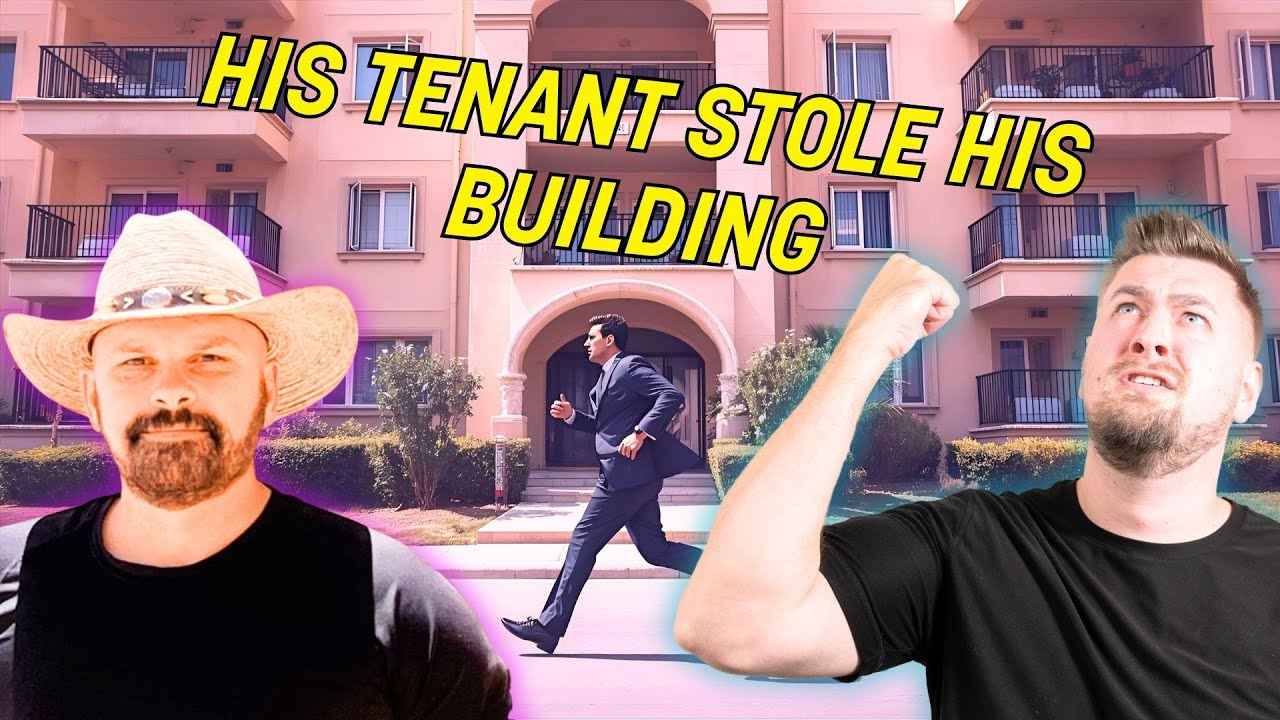
Dion McNeeley walked me through his binder strategy, including how he assembles the supporting information. The approach uses market comparisons to start a conversation with a tenant about rent. The aim is to understand the comparison together rather than open with a demand.
Related reading: $89,000 in Debt at 40 to Retired at 52: Dion McNeeley's Model
Dion calls himself the lazy investor: financial freedom from the right amount of cash flow off the fewest units possible. His numbers back it up. Eighteen rentals producing about $35,000 a month in rent, a little over $9,000 a month going out in mortgages, and $5,150 set aside monthly for repairs, maintenance and vacancy: a cop joke, since that's the code for holding the crazy person. That leaves roughly $21,000 a month, and he lives on a little less than $5,000, usually around four. The portfolio keeps growing as a byproduct, not a goal.
He also didn't start until he was 40. He was laid off from law enforcement after the 2008 crash, was a single parent with three kids, discovered about $89,000 in bad debt in his name during the divorce, and was teaching at a CDL school for $17 an hour. He retired in 2022. The binder strategy is a big part of how he got there, and it has a full chapter in his book, Financial Freedom for the Lazy Person.
Why He Buys Occupied Properties on Purpose
Most investors want vacant. Vacant means a shiny rehab, forced value, and market rents on day one, and it's probably the best return on your money. Dion went the other way and invested for over a decade without doing a single rehab. His first BRRRR came after he retired.
His reasoning is practical. Properties listed with tenants in place usually belong to an owner who has neglected the place and the people in it. Rents are below market, which is exactly why they aren't making enough money and why they want out. And when tenants are in place, there is usually power, usually running water, and usually floors.
That gets him two things at once:
- A better price, because the rents are below area average.
- Less competition, because investors who only want vacant units are out, and so are investors who only want market rents already in place.
He was working full-time raising three kids. He says he's lazy; he thinks he was mostly just busy. If buying a property meant buying more work, he'd have been less motivated to buy at all. He wanted his money working so he didn't have to. He wasn't buying a job.
The other half of it is the tenant's side. Dion has been a renter, and he's blunt that tenants live in fear. What if the owner sells and I get kicked out? What if the buyer moves in? What if they double or triple the rent? What if they don't allow pets? Those are valid concerns. The binder lets him alleviate all of them while still moving rent up, because happy tenants don't trash your property and happy tenants don't leave.
When to Run It
Do not binder on day one. Those are inherited tenants: you didn't get to run their credit, check work history, or look at eviction history. Dion waits at least two full calendar months, because the usual outcome of a binder isn't only a rent increase, it's a longer lease, and you shouldn't sign a long lease with someone you haven't tested.
In those two months he's screening for three things: do they pay rent on time, do they call for trivial things, and do you get noise complaints.
He's also spending those two months changing what the tenants think an owner is. The previous owner probably wasn't raising rent, which they liked, but probably wasn't fixing anything either. Dion works off the inspection report from the purchase: an emergency honey-do list for the handyman, a longer list for later, and a few small upgrades. Motion-sensor LED exterior lights. Coded locks: he buys class C properties on purpose, and those tenants are almost always used to keys, so a code is an upgrade.
And he asks the tenants a question: if you owned this place, what's the first thing you'd fix? Nobody has ever answered "add a bedroom." It's screens with holes in them, a screen door, a squeaky fan. A couple hundred bucks later, two months in, the tenants understand they now have an owner who takes care of the place.
After that, his baseline was a 5% increase every other year: nothing one year, 5% the next. That worked from 2013 to 2020. He only re-binders for a black swan event: something that drastically changes home values, interest rates, or rents. 2020's pandemic and eviction moratorium. 2021's end of forbearance. 2023, when rent control was threatened in Washington, where he invests: that's when he binder-strategied all of his tenants.
What Actually Goes in the Binder
It's a literal three-ring binder. It works the same over email or text, but Dion prefers it in person on the table, because setting it down signals that this is a conversation about the property.
Page by page, here's the build he walked through:
- The cover: a Zillow screenshot of the property itself. Zillow, Redfin, Realtor, your MLS photo: whatever the tenant can go look up themselves. This shows the property value has increased, which drives insurance and property taxes.
- The map. Screenshots of rental listings around the property, from whichever platform your market actually uses. He lists on Hemlane, which pushes to 50-odd platforms, but most of his responses come from Zillow, so that's what he screenshots.
- Fair market rents. Just Google it: HUD publishes them every year by October. He opens with a casual question: what would the government pay me if you moved out? In his market that came to about $2,000 for a two-bedroom duplex side, including utilities.
- BAH, if you're near a base or a college. His property is close to Joint Base Lewis-McChord. He highlights the E5 line, because E1 through E4 mostly get paid the same and are usually in barracks, while E5s are older, more likely to have families, and more likely to live off base. Around that base, an E5 with a family is paid $2,430 a month for housing; single, $1,980.
- Three to five apples-to-apples comps. Not three to five dozen: people get stuck on details.
The key discipline on the map and the comps is that he doesn't cherry-pick. He isn't pointing at the $2,900s and $2,500s, and he isn't pointing at the $1,700s either. He's looking for the mode: the most common number a tenant would find. A lot of $1,800s, $1,900s and $2,000s meant he set the area average around $2,000. The lumberjack landlord describes the same idea as removing the top and removing the bottom.
He also narrates the comps honestly. One listing wasn't obviously a duplex, so he touched the photo and pointed out it's a duplex near them in Spanaway at $1,970, two-bed one-bath, like theirs. Another was $1,960. One looked nicer with newer paint, so he asked about it: how's the parking, where's the pet-friendly fenced yard, how many stairs? That's not spin: tenants will find the $1,700s themselves, and they'll figure out those are income-restricted, no pets, or in an area like Lakewood, where the cops don't go alone. Local tenants already know the bad parts of your market.
One thing he does not do is argue about his costs. Tenants don't care about your insurance or your property taxes, and he can prove it: if they did, a paid-off rental would rent for less than a mortgaged one. Area average rent sets rent. He shows public data for a different reason: so the tenant can verify every single page independently.
The $330 Increase the Tenant Asked For
Here's the conversation that came out of the rent control threat. His rents were low; he'd been going 5% every other year since these tenants moved in, and the area average had spiked about 40% from 2021 to 2022.
He's realistic about his own product: the property isn't especially pretty and it doesn't have the best amenities, so vacant he wasn't getting $2,500 for a two-bed one-bath in that area. He'd get around $2,000, and Section 8 would pay just under $2,000 with utilities included.
He talked to the right tenant first. In a duplex, triplex, fourplex, or even an apartment complex, tenants talk, and the last thing you want is a $300 gap between two nearly identical units. Whatever the first binder settles on is usually what the rest agree to.
Related reading: Dylan Osmon: From a $33,000 Triplex to 215 Units in Five Years
Those tenants went from $1,460 to $1,790. They asked for an increase of over $300 a month ($600 a month across the duplex) off a 10-minute conversation and maybe 10 minutes of printing screenshots.
Compare that to just raising the rent $100. Now you're the jerk. You get flamed on social media, you may eat the turnover, and it feels like you pushed someone out of their home. Instead, after they've seen the property value, the map, fair market rents, BAH and the comps, you ask the tenant what's fair.
Sometimes they overshoot. Dion ran a binder with a woman who'd been binder-strategied before, did her own research, and came back higher than he was comfortable with, so he lowered it. She was happy, he was happy, and it was still a big increase. His investor friends Michelle and Dan have both told him the same thing happens to them.
Sometimes they undershoot. Nobody has ever asked for rent to stay flat or go down, but he's had someone propose $100. The answer is a conversation, not a rejection: going from $1,460 to $1,560 does sound fair to you, but is it fair to me? How far is $1,560 from $2,000? Hold your hands up, draw lines on paper, and work it out.
Section 8, Property Managers, and Rent Control
With Section 8, there's an order of operations. Your lease is with the tenant; what you have with the housing authority is an agreement. So binder the tenant first, agree on a number, and sign a lease with a caveat that it's pending housing authority approval.
Then do the work for the counselor. If you just call and say rent is going up $350, a person in an office hears a big number and says no, because their goal is to pay the smallest amount possible so they can help more tenants. Instead, send them the fair market rents for the state, the county, and maybe the zip code; show what BAH pays; show comps going for more than you're asking. A counselor can't tell their manager they like you. A counselor can hand their manager the data.
One housing authority told Dion $1,800 was the most they'd pay on a unit. He binder-strategied the tenant, they agreed to $2,200, he sent the packet: the authority's limit and the comps were both above $2,200, and they approved it. That rent is now $3,000 a couple of years later.
Dion diversifies deliberately: about one-third Section 8, one-third military, one-third working or retired. Of his 18 units, three are Section 8 right now and he'd like at least four.
Related reading: Dion McNeeley and Matt Hawkins on 18 Units vs. 150 Units
With a property manager, it works the same way. Are your rents above, at, or below area average? Area average sets rents, not your expenses and not your wish list. Do the work for the manager: email the comps and ask why you're so far off. Maybe they know something you don't. He borrows the lumberjack landlord's hire slow, fire fast, and his own law enforcement training: ask, tell, make. Ask why the rents are off the comps. If the answer isn't good enough, tell them you want rents in line with the comps. If they won't, you make them, by firing them.
Then there's rent control. Dion's view is that rent control makes landlords richer and more tenants homeless: he did a whiteboard breakdown of it on his own channel, Dion Talk Financial Freedom, and he expects to make $138,000 more over the next two years because of rent control in his market.
The mechanics are simple. Rent control forces you to raise rent every year, because you can no longer take a bigger increase when a black swan hits. His maximum allowable increase is 7% plus inflation, capped at 10%, under the 2025 bill. So instead of 5% every other year, he's doing 7% every year, and pointing out to tenants that he's not even adding the inflation piece.
Rent control also pushes market rents up, because plenty of landlords stop renewing leases: 90 days to get out, I'm rehabbing; 90 days, I'm moving in; 90 days, I'm selling. Educated tenants see that happening around them. The one change in the script is that Dion no longer asks what's fair: he shows the increase, and he blames rent control. It's nice having the evil government as the bad guy so he doesn't have to be.
When the Binder Fails
It has failed once, and it was the best outcome he could have gotten.
Two remote workers were in a two-bedroom house with a third room that was technically a den, since it had no closet. Their rent was well below area average and they'd been binder-strategied once already. This time they said they couldn't afford an increase and were moving to a lower cost-of-living area (about half a state away) to geo-arbitrage and save money.
Dion spent $700 adding a closet, and the place rented for roughly $990 more than he'd been getting. Almost $1,000 a month, and he got market rent on a genuine three-bedroom instead of a two. He points out why he couldn't have engineered that outcome: the unit was a two-bedroom when he bought it, and it isn't really fair to add a closet and inform your sitting tenants they now live in a three-bedroom. Most investors would kick the tenants out, put the closet in, and make more money: mathematically that makes the most sense. He'd rather sleep knowing he didn't rip anyone off. The tenants left because they were educated and chose to, not because he displaced them.
Key Takeaways
- Buy occupied, below-market properties on purpose. Less competition, better price, and no rehab required.
- Wait at least two calendar months before running a binder, so you can screen the inherited tenants and fix enough to change their opinion of ownership.
- Build the binder from sources the tenant can verify themselves: the listing, a map of comps, HUD fair market rents, BAH if you're near a base, and three to five apples-to-apples comparables.
- Never cherry-pick. Find the mode, cut the top and the bottom, and let the tenant name the number.
- For Section 8, binder the tenant first, sign pending approval, then hand the counselor the data they need to justify it upward.
- Under rent control, switch from 5% every other year to the maximum annual increase, and let the policy be the bad guy.
That last line of Dion's is the whole thesis: happy tenants don't trash your property, happy tenants don't leave, and happy landlords don't quit. Whether you want hundreds of units or just enough cash flow to be free, your life is easier when you get a bigger increase without a rehab, a vacancy, and a fresh screening cycle.
Watch the full video to see every page of the binder as Dion assembles it. His book, Financial Freedom for the Lazy Person, covers the same chapter in print, and he says he's happy to answer questions directly if you reach out. If you want our side of it, there's a video about the mentorship at mentorship overview, a free multifamily starter course at multifamilystrategy.com/get-free-training, and a free calculator waiting in our Skool community.
Read the episode transcript
0:03 Howdy. Welcome back to Multif Family Strategies. This is going to be a section where I cover the binder
0:09 strategy or how I get my tenants to ask me to raise the rents.
0:15 My name is Dion McNeely. If you are unfamiliar with who I am, I am the lazy
0:21 investor who reached financial freedom by looking for the right amount of cash flow from the least amount of units. And
0:27 the binder strategy has been a huge part in how I've been able to reach financial freedom. I'm also the author of the book
0:34 Financial Freedom for the Lazy Person, which will be available on Amazon and Audible. And in that book, there's
0:40 actually a chapter on the binder strategy and what we're going to cover today, just for those people who like to
0:45 see it in print instead of hear me talk on a video. Uh, if you're not familiar with who I
0:51 am, uh, as the lazy investor, I am somebody who didn't start investing until I was 40. I got laid off from law
0:59 enforcement because of the 2008 housing crash. You know, when cities aren't making any money anymore, they don't
1:04 have taxes coming in to pay wages. So, I got laid off with a lot of qualified officers. At the same time, I was a
1:11 single parent with three kids. Found out about $89,000 in bad debt in my name I didn't know existed until the divorce.
1:18 and I started teaching at a CDL school making $17 an hour. So, that was my starting position. It's not the best. Uh
1:24 there are worse. I think the only thing I was really missing would be like a major health concern or something, but I
1:30 had checked all the boxes on this is going to be a rough start. After investing for about a decade, I retired
1:37 in 2022. And here's what the numbers look like for those number nerds out there like
1:42 me. I have 18 rentals, so I don't have a huge portfolio. That wasn't my goal. I
1:47 understand some people have that goal. Mine was the right amount of cash flow from the least amount of units. As the lazy investor, my strategy will also
1:54 help people who have a larger portfolio. I uh have 18 rental units that produce
2:00 about $35,000 a month in rent. I have a little over 9,000 a month going out in mortgages. I set aside 5,150 a month,
2:09 which is a cop joke because that's the uh code for holding the crazy person.
2:14 That's for future repairs, maintenance, and vacancy. And uh that leaves me about
2:20 $21,000 a month to figure out how to spend. I live on a little less than 5,000 a month, usually around four. So
2:26 I'm still adding to the portfolio, not as a goal, just as a byproduct of the money piles up. Where the binder
2:33 strategy comes from is as the lazy investor, I actually prefer to buy
2:38 properties with tenants in place. I understand a lot of people, a lot of investors want to buy vacant properties
2:44 because you get to do a shiny new rehab, look at value ad and get those market rents and it's probably the best return
2:50 on your money. So, the the most logical thing to do as a landlord is to buy vacant properties or to buy properties
2:57 and kick your tenants out. But, I was working full-time raising three kids. Uh, I call myself lazy and I really
3:03 think I was just busy. As the lazy investor, I like to buy houses with tenants in place because of a few
3:09 things. Usually, when they're for sale with tenants in place, it's a previous owner who hasn't really been taking care
3:15 of the place. They've kind of neglected the tenants. The rents are below market. That's probably why they're not making
3:21 enough money and that's why they want to sell. But if tenants are in place, not always, but a lot of the time there's
3:29 going to be power, right? There is electricity. There is probably running
3:35 water, maybe even there's floors, right? I get you can buy it and do a rehab, but
3:42 I invested for over a decade without doing one rehab on any one of my properties. I didn't do a burr until
3:47 after I retired. It was my first rehab. So, my goal was to buy
3:52 rent ready or already occupied properties. Yeah, the margin would be better if you did more work, but I
3:57 didn't have the time. And if I thought buying a property was going to mean more work, I'd probably be less motivated to actually buy a property. I wanted to put
4:04 my money to work so that I didn't have to. I wasn't buying a job. So, the goal
4:09 with buying properties with tenants in place is that the rents are below area
4:15 average. That's why I got a good deal. I eliminated competition. There's a lot of investors who only want to buy vacant, so they're out of the picture. There's a
4:21 lot of other investors who only want to buy it if the market rents are already in place. I'm buying them usually with
4:27 low rents. But I want to look at it from the perspective of the tenants. I've been a tenant. I've been a renter.
4:34 Tenants live in fear. You know, if the if the owner is going to sell, what if they kick him out to sell it? What if
4:39 somebody else buys it and kicks him out because they're going to own or occupy it? What if somebody buys it and doubles
4:45 or triples the rent? What if they don't allow pets? Like,
4:50 these are valid concerns of the tenant. And as an investor, I don't want to be heartless. I actually want to feel
4:55 ethical in the way that I invest. So, one of the reasons I use the binder strategy is because with my goal, I get
5:02 to alleviate the tenants fear. It's not my goal to kick them out. It's not my goal to not let them have pets. I do
5:10 want to increase the rents, but I also want to keep the tenants happy. It's very important to me to have happy
5:15 tenants because happy tenants don't trash your property and happy tenants don't leave.
5:22 So, with the binder strategy, I call it a binder because you can see here it's actually a three- ring binder.
5:29 You can do it through email, you can do it through text messages, but I prefer in person with the binder. And I will
5:35 explain some situations where you do it through email or text and it makes more sense. But when do you want a
5:42 binder? Cuz if you buy a property and you just go binder the first day and you get a new shiny long lease cuz maybe the
5:48 tenants run monthtomonth or their lease was about up, do you even know if you want to keep those tenants? You didn't
5:54 get to vet them. You didn't get to run their credit. You didn't get to uh check their work history, know their eviction
6:00 history. So these are called by most people inherited tenants. So I like to
6:05 wait a couple months. I want to wait at least two calendar months before I go
6:11 and use the binder strategy because the result is usually a longer lease, not just the rent increase. But in those two
6:17 months, I get to do a few things. I get to go, do I want to keep these tenants? There's
6:25 usually three things that matter that we're screening for to hope these three things go well. Do they pay their rent
6:30 on time? So, are they likely to pay their rent? Do they call you for super trivial things?
6:37 or do you get noise complaints? Right? We're we're trying to vet our tenants, which you didn't get to do in this case,
6:43 to make sure those things go as smooth as possible. So, in those two months, I'm actually testing the tenant.
6:50 I'm also taking those two months to get a few things done to change the tenants's opinion of the owner because
6:55 the previous owner had already neglected them. They, you know, not raised the rent, which was a great thing, but they probably weren't fixing things either.
7:01 and I have an inspection report from the purchase to go through and go, "Okay, here's my honeydew list for my handyman to get these emergency things done. And
7:07 then here's some things that'll get done eventually. But I'll also do some minor upgrades. I put in motion sensor LED exterior
7:14 lights. I put in coated locks. I buy class C properties on purpose. That's my targeted type of of rental. They're not
7:21 used to having coded locks. They almost always have to have keys. So, it's kind of an upgrade. I actually asked the
7:26 tenants if they're if if they owned the place, what would be the first thing that they fix? And I've never had a
7:31 tenant ask for something major like, well, I would add another bedroom. It's usually something small like the screens have holes in them or I would like a
7:37 screen door or the fan squeaks. Spend a couple hundred bucks, do my normal upgrades, and in 2 months, those tenants
7:44 understand that I'm now an owner who's going to take care of the place. So, that's how I time the binder with a
7:50 purchase. Generally after buying or strateging my tenants I would do a 5% rent increase every other year. So every
7:57 other year there's no increase and every other year 5% increase. From 2013 to 2020 that pretty much worked for me
8:03 every time. But we want to pay attention to the market and we want to understand if there's ever a black swan event,
8:10 right? This is something that happens to the market or your local market that drastically changes home values,
8:18 interest rates or rents that we, you know, you can refinance to a lower rate.
8:23 You can uh understand prices are about to shoot up if rates go down. But when
8:28 rents change, I will do something uh for a black swan event like 2020 when we had
8:34 a pandemic, an eviction moratorum or in 2021 when forbearance ended or in 2023
8:40 in my state of Washington where I invest uh rent control was threatened. So I went and binder strategy all of my
8:46 tenants. That's actually the binder we're going to make together today in this video.
8:51 So it's generally a couple of months after closing. I would not bind her again unless there was a black swan
8:56 event. Unless rent control is initiated, which I'm going to cover later in this video as well. So, that's when to bind
9:04 her. Now, how do you bind her? How does this actually work? I have a three- ring
9:09 binder. This would look the same in email. This would look the same in text. This is actually just a screenshot from
9:15 Zillow. You can read use Red Fin, Realtor, your MLS picture, whatever you want. But I would prefer it to be
9:20 something that the tenant has access to. Because what we're doing is we're showing here's what the value of this
9:27 property is, which was my first house hack. This is the duplex that I bought, which is my preferred style. Side by
9:32 side units, garages in the middle, no shared living space, pet friendly fence yards in the back. Checked off a lot of
9:37 boxes. Didn't make a lot of money with those first rents, but after the binder strategy, after me
9:43 moving out into my next house hack, I'll show you what it looks like a little bit later. So,
9:50 I'm showing the tenant that my property value has increased. So, my insurance
9:55 and my property taxes are based on this new value. And that the rent they might have been paying with the previous owner or that they might have been paying with
10:01 me before the black swan event made sense, but it doesn't make sense currently. Now, the tenants don't
10:08 actually care about your cost. They don't care about your insurance. They don't care about your property taxes.
10:14 And I can prove this by saying if you had a paidoff rental property or a
10:20 property with a mortgage, they would rent differently if tenants cared about your expenses. But area
10:27 average rent set rents, not your expenses. I'm not sharing this because I want them to go, look, it cost me more
10:33 to own the property. I'm sharing this to go, this is a public website. Everything
10:38 I'm going to share with you today, you have access to. Not only can you verify, but you can go and get a feel for what I
10:44 did here. You can you can prove what I'm talking about. And I continue to do that
10:50 every page through the binder. So, showing them the front page like this, this is the cover. Setting it on
10:56 the the table lets them know that we're here to talk about the property. The tenant knows we're probably going to talk about the rent, but I don't just
11:02 jump into I'm going to raise your rent. Because remember, as an owner of a property, if I want to raise the rent
11:08 $100 a month, the tenants would hate it. I'm a jerk. They could flame you on
11:14 social media. They might just move out. Tenants don't think the way owners do.
11:20 Tenants think you haven't improved the property. You haven't done new paint. I have older appliances. Why would the
11:27 rent go up if the service you're providing hasn't changed? Owners understand that rent goes up because the
11:32 dollar has lost value to inflation. Handymen cost more, materials cost more. So all of our expenses, not just
11:39 property taxes and insurance, are going to cost us more. So rent goes up because the dollar lost value, not because we're
11:44 providing a better service. But tenants don't think that way. So instead of raising the rent $100 and being a jerk,
11:51 I use the binder strategy. I show them the cover and then I open the binder and I show them the very first page is the
11:58 map. Go to Zillow, Redfin, Realtor, whatever, you know, Facebook Marketplace, Craigslist, whatever has
12:05 the most rentals in your area, the way the people in your market tend to find their rentals or list their rentals. In
12:10 mine, it tends to be Zillow. I use Hemline and most of my responses, even though Hemline puts it out on 50 15
12:17 platforms, most of my responses come from Zillow. So, I take the screenshots from Zillow. might be Red Fin in your
12:23 area, might be Realtor. So, looking at this map, I'm not going to cherrypick. I'm not going to point
12:30 out the 2900s or the 2500s, and I'm not going to point out the 1700s. I'm looking for kind of what I call the
12:36 mode. So, kind of the median, kind of the average, but what is the most common number people are going to find? There's
12:42 a lot of 1800s, a lot of 1900s, a lot of 2000s. So, in my mind, I kind of set the
12:48 area average here at about 2,000. There are nicer places that will rent for more
12:54 and there are worse places that will rent for less. But the tenants's not thinking nicer or worse. They're thinking how many bedrooms. They're
13:01 thinking how far to work, how far to the school, how far to the water to go play
13:06 at the park. They're looking at the map with a little little less information
13:12 than the quality of the rental. So, I share this and I just kind of point out
13:17 my property is pretty much central to this map. So, the tenants think of all of these listings around here, these are
13:23 the ones closest to where they live. Then I go to fair market rents. You can
13:28 actually just Google fair market rents. The housing authority, not the housing
13:33 authority, the is it housing and urban development or something like the HUD puts out fair
13:39 market rents. They're required to put them out every year by October. And so for next year, you'll get updates in
13:45 October for 2026. By October of this year, the current tenants are paying
13:51 1460. At the beginning of this conversation, I actually say, "What
13:56 would the government pay me if you moved out?"
14:01 This is just kind of a casual question. I would just say, "This is what the government would would give me if you moved out." Now, this does include
14:07 utilities, but in in my market, this is a two-bedroom each side duplex, about
14:13 $2,000. Kind of the area average, right? There were some properties for more. There
14:18 were some properties for less. But I let them go. I let the tenants understand
14:23 that the big evil government will pay me more than what you're paying me to live here. Letting the tenants kind of know
14:31 that to me the best possible outcome is you decide to move out.
14:36 My property is close to Joint Base Lewis McCord. So, it's a large military installation. if you are near a base or
14:43 a college because anybody attending a college using their GI Bill will get paid at E5 level. The reason I reference
14:51 E5 and in person in my binder I'll probably have it highlighted is because if you look at E1 through E4, they
14:57 basically get paid the same because most of the time in the military, this is when you're in boot camp or your MOS training or just getting to a base and
15:03 you might not have your family there with you yet. So, you're either staying in barracks. But at E5, we tend to get
15:09 more people living off base. They're usually not 19 or 20. They might have a family now. They might be not there
15:16 might not be enough housing on the base to to accommodate all of the service members. So they live off base and get
15:22 paid what's called basic allowance for housing. So near this base or attending a college
15:29 near here using the GI Bill, people are paid $2,430
15:34 a month if they have a family. $1,98 if they're single. Usually single lives on post though. So I'm just referencing
15:41 that to say here's what the military is being paid to live around this base.
15:46 Then I'm actually going to try to compare as close as possible apples to apples
15:53 listings from the, like I said, the most used platform in your market. Could be
15:58 Redf Fin, could be Realtor, could be Zillow. With this one, if you look at the picture, it's not easy to tell
16:04 that's a duplex. So, I actually might kind of take my finger, touch the blue area, and say this is a duplex here
16:10 close to where we are in Spanaway that's renting for $1,970 a month. It's two-bedroom, one bath. like the one that
16:16 you're in. Apples to apples, as close of a comparison as possible.
16:22 Then I'll pick some other ones. So the first one, the rent was 1970. The second one's 1960. So we're close to that 2,000
16:29 range. Again, I'm not cherry-picking. I could scare the crap out of the tenant and show them the 2900s or the 2500s.
16:34 The tenant is also, if they look themselves, going to notice and look for and find the 1700s, which could be low
16:43 income requirement, no pets, could be reasons why, or it could be in like in that map I showed you, there's an area
16:49 called Lakewood, which is um the cops can't go there alone kind of area. So,
16:54 the rents can be lower there. Local tenants know the bad areas in your market usually.
17:01 So, I'll reference this one. I'll say this one looks a little bit better than mine. It's got newer paint and everything, but how's the parking?
17:07 There's no pet friendly fence yard. You got a lot of stairs, right? So, the rent's kind of close to that area. Average. And then I'll show another one.
17:14 This one, the rent's a little bit higher, but the inside kind of was about the same quality as mine is uh as as as
17:20 the tenant is living in it. It's kind of the upgrades. I might have newer lights than this, and I definitely remove wood
17:26 burning stoves, but this was one close in the area, and the rent was where I needed. Again, not the maximum, not the
17:32 bottom. The lumberjack landlord talks about removing the top and removing the bottom. He does a version of this through text and email. Uh, but those
17:40 are the examples that I used. I used three of them. You might use three to five. Try not to overload them with too much information because people will get
17:47 stuck on details. I'm just going here's a reference of some of the ones that are available in this market.
17:52 Here's what happened with the conversation with these tenants when rent control was threatened. My rents were low. I had been going up 5% every
17:59 other year since they moved in. area average spiked about 40%
18:04 in 2021 to 2022. So, it was a massive increase. So, area average rent set
18:11 rents. If the tenant moved out, my property is not super prettyl looking. I don't have all of the best amenities.
18:18 I'm not going to get that $2,500 rent for a two-bedroom, one bath in this area, but I would get around 2,000.
18:24 Section A would pay just under 2,000 because it would have to include utilities. I talked to the right tenant first.
18:32 Understand your tenants. There's you you'll know their situations. You'll know which ones to talk to because in a
18:38 small multif family duplex, triplex or forplex or or or even an apartment complex, tenants talk. And what I don't
18:46 want is tenants to think, "Wow, there's a $300 difference between my rent and their rent and our places are almost
18:51 exactly the same." So, whatever the first binder strategy settles on is usually what the rest are going to agree
18:58 to. These tenants went to 1790.
19:03 From 1460 to$,790, the tenants asked for over a $300 a month increase.
19:11 That's $600 a month from a duplex. That's a lot of money per year based on
19:18 a 10-minute conversation where it took me 10 minutes to print out the information. I went to fair market rents. I went to the BAH. I printed out
19:25 the screenshot from Zillow of the property. I looked up three to five rentals and and captured screenshots. I
19:31 put the binder together and I had a 10-minute conversation. If I raise the rent $100,
19:37 I'm a jerk and I get flamed on social media and I probably have to deal with the tenant turnover. But I also feel
19:43 like I just kicked someone out of their place because I raised the rent. Instead, I go and have this conversation. The tenant asked for the rent to go up. Sometimes they ask for it
19:50 to go up too much. I've done a binder strategy with a lady who also had already been binder strategied. If you
19:56 can make a verb out of that, and she did the research and came back much higher than I was comfortable with the increase
20:03 being for her. So, I lowered it. She was happy. I was happy because it was still a big increase. I've had friends like uh
20:09 I have a friend Michelle who's a local investor. Dan is a local investor. They've both told me times where they got a recommendation from the tenant and
20:16 said that's too much. Let's go a little bit less. Happy tenants, happy landlord. I have had tenants ask for too small of
20:24 an increase. I've never asked for one never had one ask for the rent to stay the same or for it to go down, but I
20:29 have had one ask for, you know, in a case like this maybe for the rent to go up $100. Well, I just point out that,
20:36 you know, going from 1460 to 1560 does really sound fair to the tenant, but is
20:41 it fair to me? How far off is 1560 from 2000? You can hold your hands up and
20:48 make an example of it. You can draw lines on a piece of paper. This is a conversation. The tenant doesn't just
20:54 recommend something because after you show them all of this information, you actually show them the property, the
21:00 map, fair market rents, BAH, couple of examples. You ask the tenant what's
21:05 fair. These tenants suggested that increase and I agreed.
21:13 I don't have tenant turnover. I got a bigger increase than I probably could have got myself if I just went and
21:18 raised it myself. And I end with happy tenants.
21:24 What do you do if you have section 8? Because this is a diversification strategy that I use. I have about 1/3
21:30 section 8, 1/3 military, and 1/3 working or retired. So, in my portfolio of 18, I think right now I have three section 8
21:36 tenants. I like to have at least four. I assume my next ones I might target a section 8 tenant legally finding a
21:43 section 8 tenant. But what do you do if you're dealing
21:48 with the tenant and the housing authority? With section 8, there's an order of
21:54 operations. The first thing I do is I binder strategy the tenant. Your lease is between you and the tenant. What you
22:00 have is a contract between you and the housing authority, an agreement. So, I
22:06 get the tenant to agree to the rent increase. I show them what BAH pays. I show them what the housing authority pays. I show them the comps. I tell the
22:12 tenant, "Look, what makes sense?" We come to a number. We agree on it. We sign a lease. In the lease is a caveat
22:19 that says, you know, this lease is pending the approval of the housing authority. Then
22:26 with the housing authority, you do the work for the counselor. If you just call them and say, "Hey, the
22:32 rent's going up $350 or whatever the increase is," they might say, "That's too big of an increase."
22:38 Because it's a person sitting in an office. And 350 sounds like a lot because their goal is to pay the
22:44 smallest amount that they can because in their mind, the smaller amount they pay to each tenant, the more number of
22:49 tenants they can help. I understand the mentality. So, I do the work for them.
22:54 Show them that you're an educated landlord. Send the section 8 housing authority a
23:02 screenshot of the fair market rents for the state and the county and maybe even
23:07 the zip code depending on how populated your area is that your rental is in. Show them what BAH would pay. Show them
23:14 the comps in the area that are going for more than what you're asking for.
23:21 Once you've done the work for the counselor, you have a signed lease from the tenant. I had this the housing authority tell me in one instance that
23:28 $1,800 was the most they would pay for a rental that I had. I did the binder strategy with the tenant. We agreed to
23:34 2,200. I sent the information to the housing authority. They could their agreement their limit was higher than
23:40 2200. The comps were higher than 2200. Housing authority agreed. The rent it's
23:46 now at 3,000 a couple of years later because rents have gone up more in that county. But I binder strategy them every time to get to that amount
23:53 because the counselor can't go to their boss and say, "We really like this landlord. Can we give them an increase?"
23:58 But the counselor can go to their manager and say, "I got here's the information. Here's what we'll pay.
24:03 Here's what BAH pays. Here's the comps in the area. The landlord is not even trying to go to area. They're just going up from where they were. The amount of
24:10 the increase doesn't matter as much as that you're not increasing more than what the limits are for the area.
24:16 Then what if you're not like me? What if you have a property manager? What if you do want that bigger portfolio or you're
24:22 investing at a distance and it makes sense to have a property manager for you?
24:29 With the property manager, it basically works the same way.
24:36 Are your rents above, at, or below area average rents? Because area average
24:42 rents set rents, not your expenses, not your wish list, but what are the rents in the area?
24:48 How do your rents compare to the area average? Do the work for your property manager. If the comps are significantly
24:54 higher, maybe email some comps to the manager and say, um, why are we so far off of what these rentals are that I'm
25:00 finding available? Maybe they know something about the market that you don't, and there's a reason.
25:05 But it's the area average comps, too. Don't cherrypick. Not the highest, not the lowest.
25:10 with a property manager. I I like the lumberjack landlord's theory of you hire fast or you have hire slow, fire fast.
25:17 And I take from my law enforcement background that whenever you're dealing with a contractor, a handyman, an agent,
25:24 a lender, a property manager, any situation like this, I follow the same thing that a cop does when they're on
25:31 patrol. Ask, tell, make.
25:36 Ask the property manager, "Why are my rents so far off of the comps that I found?" If the answer isn't good enough
25:44 for you, tell them, "I want the rents to be more in line with the comps that I'm finding in the area." And if they don't
25:50 agree to it, then then you make them by firing them and finding a new property manager.
25:57 Now, the big scary bugaboo in the room is rent control. What happens when rent
26:02 control happens or is even threatened? Rent control makes landlords richer and
26:08 more tenants homeless. I'm going to make, no kidding, I did a whiteboard video on my YouTube channel, which is Dion Talk Financial Freedom. Uh, I'm
26:16 going to make $138,000 more in the next two years than I was going to make because there's rent
26:21 control in my market. So, the binder strategy for me becomes more important. If you just raise the
26:29 rent because there's rent control, which is what it does, it forces you to raise the rent every year because you can't do a bigger increase when there is a black
26:35 swan event. You have to keep up with rents by doing an increase every year. The reason the binder strategy becomes
26:41 important is because educated tenants understand when the
26:46 market rents go up significantly, which is what happens with rent control because a lot of the landlords don't
26:51 renew leases. They force tenants out. They say, "You have 90 days to get out. I'm going to rehab. You have 90 days to get out. I'm going to move in. You have
26:56 90 days to get out. I'm going to sell the rehab it and rent it out for a significantly higher amount. So rents get pushed up.
27:03 So what is your maximum allowable increase from your rents? In my market, it's 7% plus inflation with a cap of 10
27:10 because of the new bill that just came out in 2025. I'm doing a 7% increase every year.
27:16 Instead of doing 5% every other year, which I had done from 2013 to 2020, then
27:22 black swan events can do a bigger event, right? A bigger increase. But now I can't do the bigger increases for black
27:28 swan events. I have to increase every year. So instead of 5% every other year.
27:34 I'm now doing 7% every year. But I'm showing the tenants I'm not al I'm also
27:40 not doing the cost of inflation. I'm only doing the 7%. Here's area market rents. Here's what
27:46 section 8 would pay. Your rent is below area average. The increase is below area average. The change is I don't ask them
27:52 what's fair. I show them what the rent increase is. I blame rent control because it's nice having the evil government there as the bad guy so I
27:59 don't have to be the bad guy. Educated tenants understanding
28:07 tenants are more likely to be happy tenants. So what if the binder strategy
28:12 fails? Because it is entirely possible that it does. I've had one instance where it failed uh and it was the best
28:18 possible outcome. I had two remote workers uh in a two-bedroom house that
28:24 had a third bedroom that was technically a den because it didn't have a closet.
28:30 Well, they were remote workers and their rent was significantly below the area average and they they had been binder
28:36 strateged once in the past. So, I went to binder strategy them again and they said, "Hey, we're remote workers. We can't afford an increase. So, we're
28:42 going to move to a lower cost of living area." So, they moved I don't know half a state away from us, which is good.
28:48 They get to save money. They're remote. They can geo arbitrage and save money. I spent $700 adding a closet to a a
28:55 bedroom and the place rented out for like $990 more. So almost $1,000 more than what I
29:02 was getting. I didn't displace the tenant. They were educated. They were choosing to move because they understood
29:07 they didn't want to pay more rent. And they make $1,000 more a month.
29:13 I didn't kick them out. I get to feel ethical. And now I get market rents. Not only do I get market rents, but I get
29:18 market rents for the third bedroom, which was significantly more than even a binder strategy would have went because
29:23 a good binder strategy or a good rent increase would have had them there. They were in a two-bedroom unit when I bought
29:29 the place. Not really fair to go and add a closet to a bedroom and tell your tenants, "You now live in a
29:34 three-bedroom." Most investors would kick the tenants out, put the closet in, and make more money. I totally
29:40 understand. Mathematically, that makes the most sense. But I like to sleep feeling like I haven't ripped anybody
29:46 off. Happy tenants don't trash your property.
29:51 Happy tenants don't leave. And happy landlords don't quit.
29:57 It doesn't matter to me if you are looking for a massive portfolio with hundreds of units or if you just want
30:04 enough cash flow to be financially free. Your life is easier if your tenants are
30:10 happy. Your life is easier if you get better cash flow without having to do rehabs and giving up your time and
30:17 energy and effort to do all of those extra things to rehab the unit,
30:23 advertise the unit, screen the tenants when you can sometimes keep the tenant in place, get a bigger increase than you
30:29 would ask for, and have happy tenants. If you have any questions, you can
30:35 always reach out to me dion.com. happy to help you and uh good job
30:42 choosing multif family strategies. I am still learning from Christian every time I talk to him. A financially free person
30:49 with rentals is still learning every time I interact with Christian.
30:55 Have a day full of awesome.
Put these ideas to work.
Get support from Christian and the coaching team with your next multifamily deal. See how the mentorship works or start your application.
Apply Now